
Strategy becomes reality only when industry can deliver.
Industrial capacity and market structure determine what nations can actually build, sustain, and scale. From manufacturing throughput and supplier ecosystems to testing regimes and investment incentives, industrial systems quietly shape strategic outcomes long before deployment.
The Industry, Markets & Supply Chains magazine analyzes the economic and industrial foundations of defense and strategic technology. Our focus is on capacity, resilience, and execution—how industries respond to demand, absorb shocks, and translate capital and policy into real capability.
This magazine connects markets to strategy, revealing why production realities often matter more than technological ambition.
IDST Intelligence Briefings
Defense spending trends, industrial policy shifts, investment flows, mergers, and market concentration,industrial capacity, manufacturing, supply bottlenecks, testing, and market signals
Why This Magazine Exists
Strategic discussions often assume that technology can be produced on demand. In practice, industrial constraints, market incentives, and testing pipelines define what is feasible.
This magazine exists to analyze how industrial systems actually perform under pressure, and why production,
What We Track
- Defense and strategic market trends
- Investment patterns and capital allocation
- Industrial policy and regulation
- Market concentration and competition
- Cost escalation and affordability
STRATEGIC SUB-MAGAZINES
Modern military power emerges from the interaction of platforms, people, doctrine, and integration across domains. The Defense & Military Systems magazine is structured into focused sub-magazines that examine how combat capability is built, sustained, and employed across air, land, sea, weapons, and human systems.
Industry & Market Dynamics
Industrial outcomes are shaped as much by incentives, policy, and market structure as by engineering. Price signals, investment cycles, and regulatory frameworks quietly determine which technologies scale, stagnate, or fail.
This sub-magazine examines how markets behave under strategic pressure—where capital flows, how demand signals distort decisions, and why some industries adapt faster than others.
Explore the Industry & Market Dynamics Sub-Magazine →
Manufacturing
Manufacturing determines whether designs remain concepts or become operational systems. Production capacity, tooling, workforce skills, and quality control define the pace and scale of capability delivery.
This sub-magazine focuses on how things are actually built—and where production bottlenecks emerge under stress.
Explore the Manufacturing Sub-Magazine →
Test & Measurement
Before systems enter service, they must be tested, validated, and measured against real-world constraints. Test infrastructure often becomes the hidden bottleneck in capability development.
This sub-magazine examines the role of testing, validation, and measurement in determining system reliability and readiness.
Explore the Test & Measurement Sub-Magazine →
Latest Analysis & Intelligence
-

Agentic AI in Cybersecurity: The Rise of Autonomous Defense
Introduction: From AI-Assisted Security to Autonomous Cyber Defense For nearly three decades, cybersecurity has largely been a human-centered discipline. Security analysts collected logs, correlated alerts, investigated incidents, and manually orchestrated defensive actions while automation handled repetitive tasks through predefined rules. Artificial intelligence improved detection by identifying anomalies and prioritizing alerts, but the human analyst remained…
-
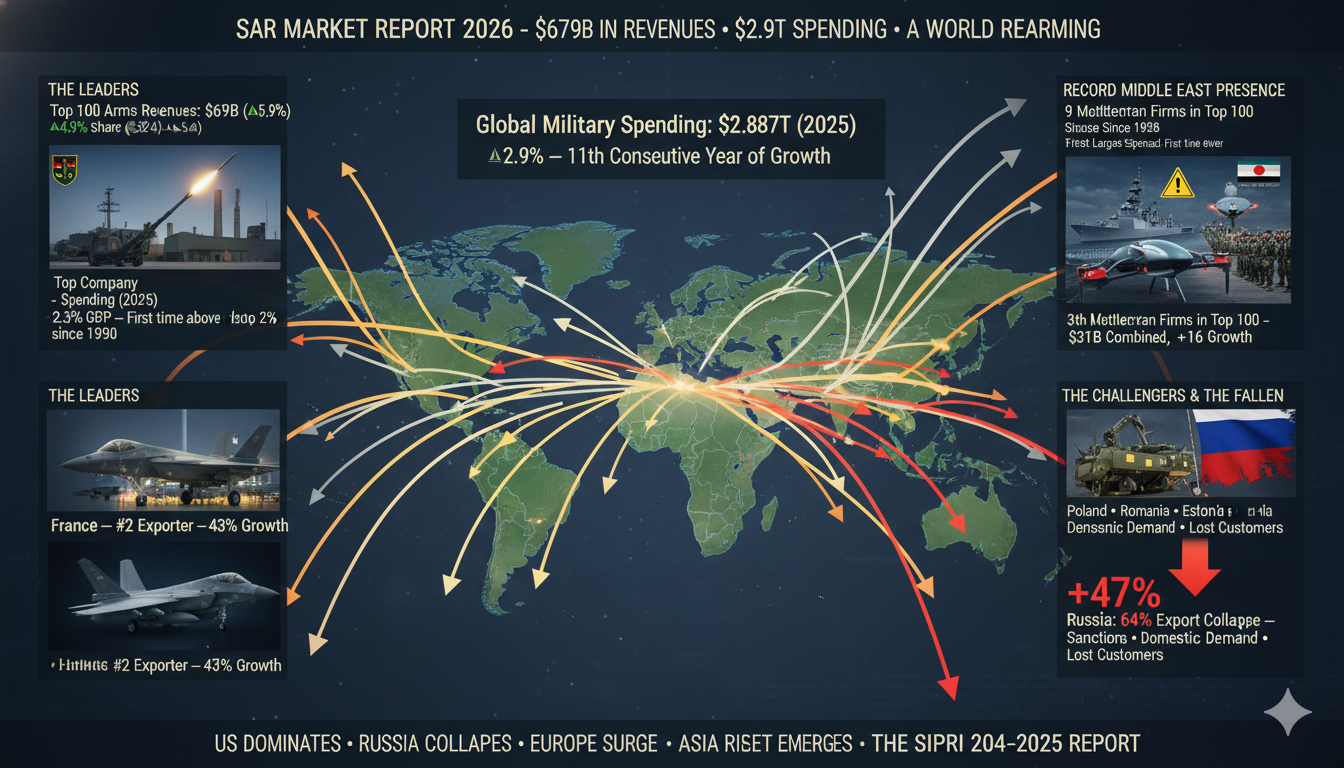
The Global Arms Industry: Trends, Shifts, and the Rise of New Powers
Introduction: A World Entering the Era of Permanent Rearmament The global defense industry is undergoing the most dramatic transformation since the end of the Cold War. What initially appeared to be a temporary increase in military spending following Russia’s invasion of Ukraine has evolved into a structural and long-term global rearmament cycle driven by geopolitical…
-

Synthetic Aperture Radar (SAR) Market Report 2026: Strategic Competition, Commercial Disruption, and the Race for Persistent All-Weather Intelligence
Introduction: SAR Enters the Strategic Mainstream Between 2024 and 2026, Synthetic Aperture Radar (SAR) transitioned from a specialized military reconnaissance capability into a foundational layer of global intelligence, climate monitoring, maritime security, and commercial geospatial analytics. The convergence of low-cost launch systems, miniaturized radar electronics, AI-driven analytics, cloud computing, and proliferating commercial SAR constellations has…
-
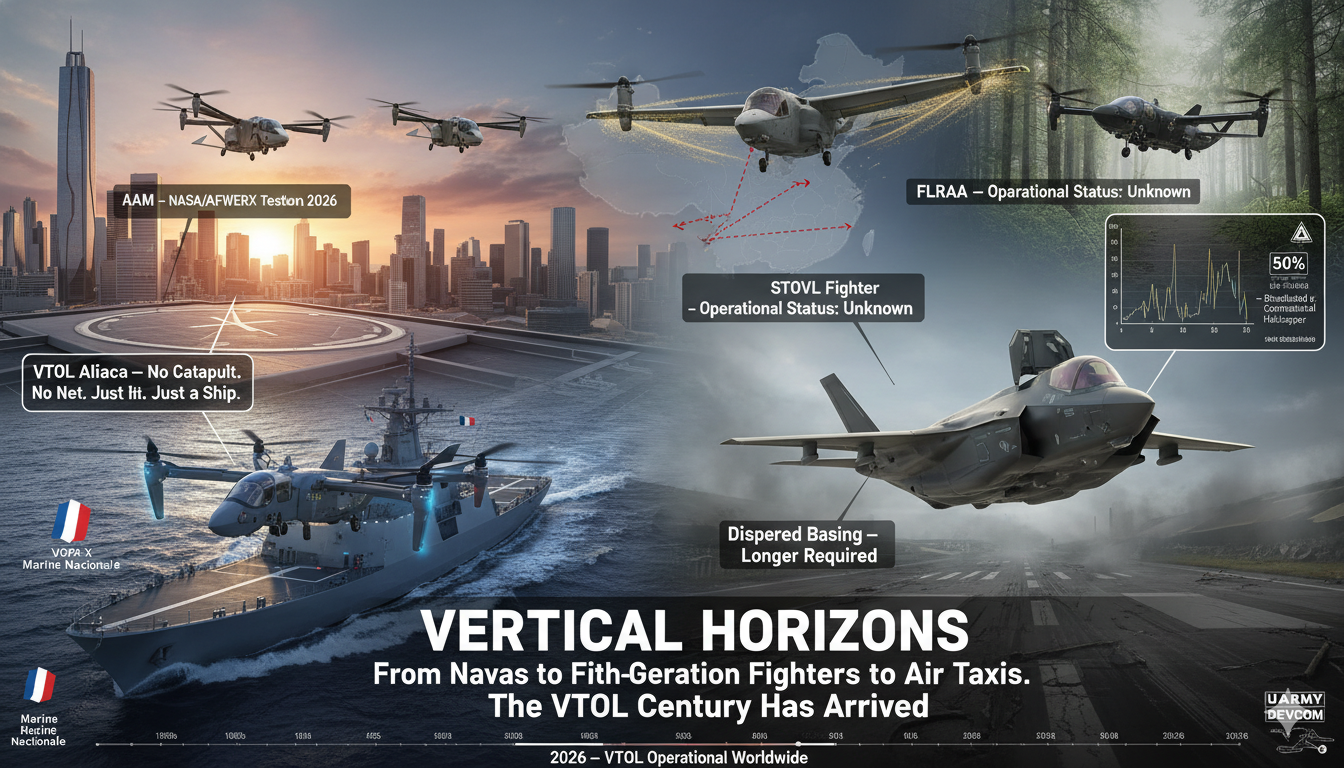
The Silent Revolution: VTOL Aircraft in Future Warfare and Urban Mobility
From the combat decks of amphibious assault ships to the vertiports rising above megacities, Vertical Takeoff and Landing (VTOL) aviation is undergoing its most significant transformation since the helicopter age began. What was once considered a niche or technically impractical capability has become central to both future warfare and next-generation transportation systems. The convergence of…
-

The Cutting Edge of Light Control: Nonlinear Optical Materials and Devices Revolutionizing Technology (2026 Update)
Introduction: Nonlinear Optics at the Center of the Photonic Revolution As artificial intelligence, quantum technologies, advanced sensing systems, and directed-energy weapons push conventional electronics toward fundamental performance limits, light itself is increasingly becoming the preferred medium for computation, communication, and control. At the center of this transformation lies nonlinear optics (NLO)—the science of manipulating light…
-
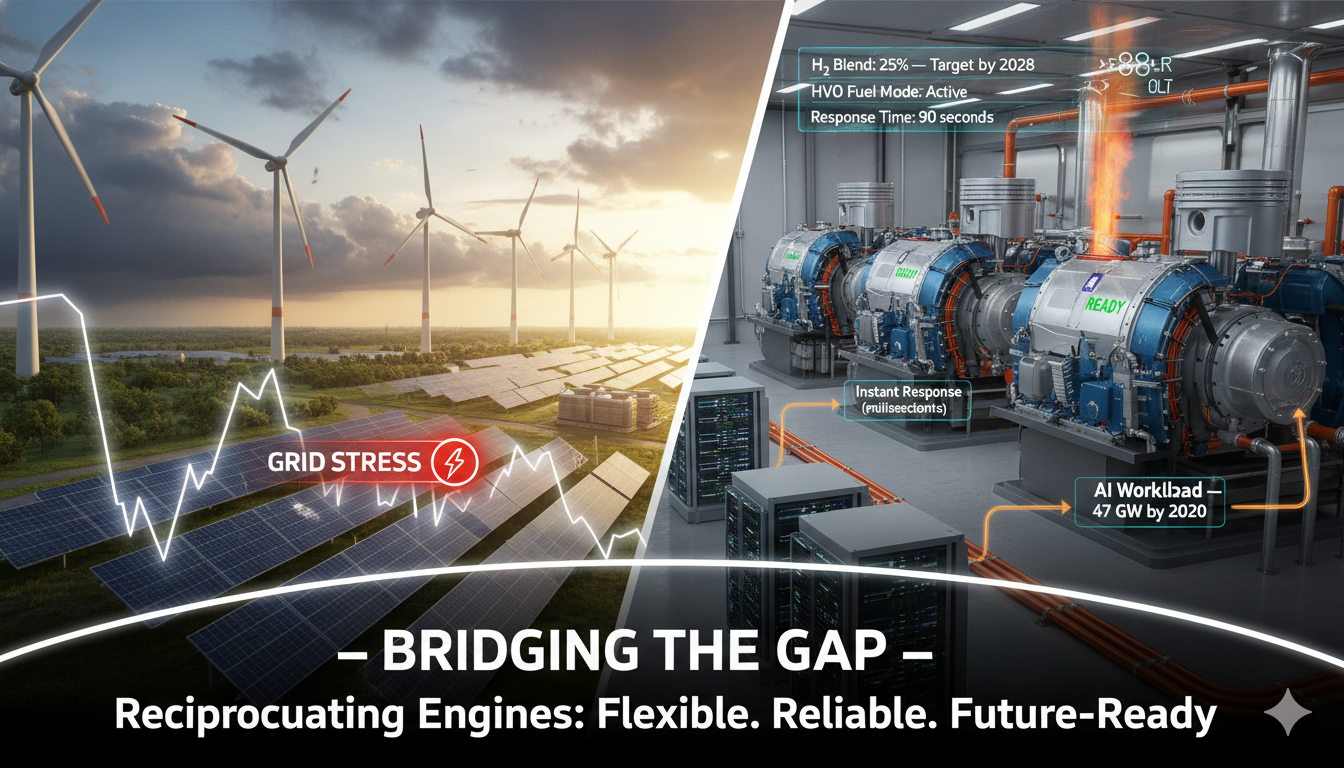
Modern Reciprocating Engines: The Critical Bridge to a Renewable-Powered Future (2026 Update)
Introduction: Dispatchable Power in the Age of AI and Renewable Volatility The global energy transition is entering a more difficult and technically demanding phase. Solar and wind power are expanding at record speed, but their intermittency is exposing structural weaknesses in electric grids designed for stable, centralized fossil-fuel generation. At the same time, the explosive…
-
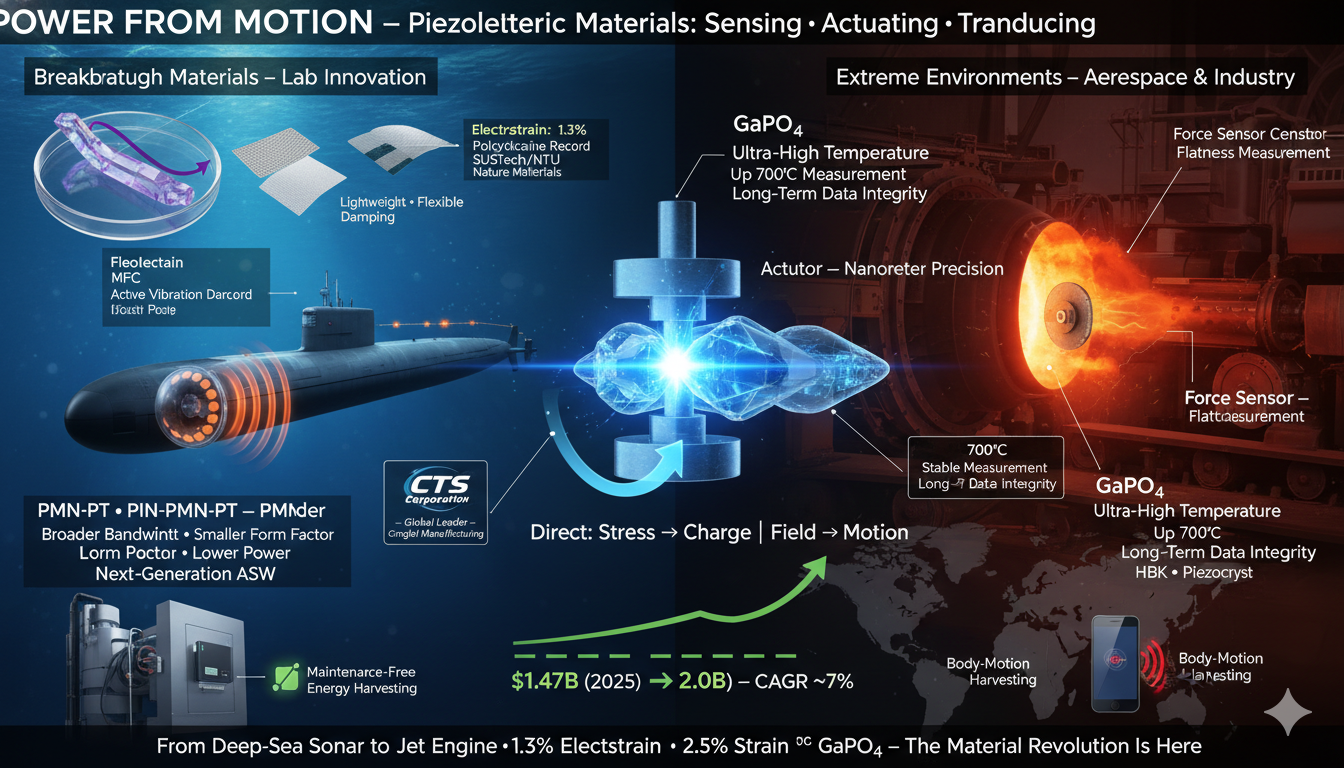
Power from Motion: The Revolution in Piezoelectric Materials for Smart Sensors, Actuators, Sonar Systems, and Energy Harvesting (2026 Update)
Introduction: The Invisible Technology Powering the Intelligent Age The twenty-first century is increasingly defined by machines that can sense, adapt, communicate, and make decisions in real time. From autonomous vehicles and industrial robots to underwater surveillance networks and hypersonic weapons, modern systems rely on a continuous flow of information about the physical world. At the…
Related Domains & Cross-Cutting Themes
Procurement systems, supply chains, industrial governance, and strategic economics.
Industrial capacity and supply chains
Cyber-physical security
Climate, geography, and environmental stress
Human-machine coordination
System survivability under disruption
Explore the Critical & Emerging Technologies Magazine →
Explore the Industry, Markets & Supply Chains Magazine →
Explore the Space Technology, Defense & Exploration Magazine →