
Strategy becomes reality only when industry can deliver.
Industrial capacity and market structure determine what nations can actually build, sustain, and scale. From manufacturing throughput and supplier ecosystems to testing regimes and investment incentives, industrial systems quietly shape strategic outcomes long before deployment.
The Industry, Markets & Supply Chains magazine analyzes the economic and industrial foundations of defense and strategic technology. Our focus is on capacity, resilience, and execution—how industries respond to demand, absorb shocks, and translate capital and policy into real capability.
This magazine connects markets to strategy, revealing why production realities often matter more than technological ambition.
IDST Intelligence Briefings
Defense spending trends, industrial policy shifts, investment flows, mergers, and market concentration,industrial capacity, manufacturing, supply bottlenecks, testing, and market signals
Why This Magazine Exists
Strategic discussions often assume that technology can be produced on demand. In practice, industrial constraints, market incentives, and testing pipelines define what is feasible.
This magazine exists to analyze how industrial systems actually perform under pressure, and why production,
What We Track
- Defense and strategic market trends
- Investment patterns and capital allocation
- Industrial policy and regulation
- Market concentration and competition
- Cost escalation and affordability
STRATEGIC SUB-MAGAZINES
Modern military power emerges from the interaction of platforms, people, doctrine, and integration across domains. The Defense & Military Systems magazine is structured into focused sub-magazines that examine how combat capability is built, sustained, and employed across air, land, sea, weapons, and human systems.
Industry & Market Dynamics
Industrial outcomes are shaped as much by incentives, policy, and market structure as by engineering. Price signals, investment cycles, and regulatory frameworks quietly determine which technologies scale, stagnate, or fail.
This sub-magazine examines how markets behave under strategic pressure—where capital flows, how demand signals distort decisions, and why some industries adapt faster than others.
Explore the Industry & Market Dynamics Sub-Magazine →
Manufacturing
Manufacturing determines whether designs remain concepts or become operational systems. Production capacity, tooling, workforce skills, and quality control define the pace and scale of capability delivery.
This sub-magazine focuses on how things are actually built—and where production bottlenecks emerge under stress.
Explore the Manufacturing Sub-Magazine →
Test & Measurement
Before systems enter service, they must be tested, validated, and measured against real-world constraints. Test infrastructure often becomes the hidden bottleneck in capability development.
This sub-magazine examines the role of testing, validation, and measurement in determining system reliability and readiness.
Explore the Test & Measurement Sub-Magazine →
Latest Analysis & Intelligence
-

India’s Defence Exports Soar: A Strategic Leap Toward Global Leadership
Introduction: From Importer to Exporter—India’s Defence Transformation The global defence industry is undergoing one of its most significant realignments since the end of the Cold War. Supply-chain disruptions, geopolitical fragmentation, the Russia-Ukraine conflict, growing Indo-Pacific tensions, and rising military modernization programs have compelled nations to diversify defence suppliers and reduce dependence on traditional arms exporters.…
-
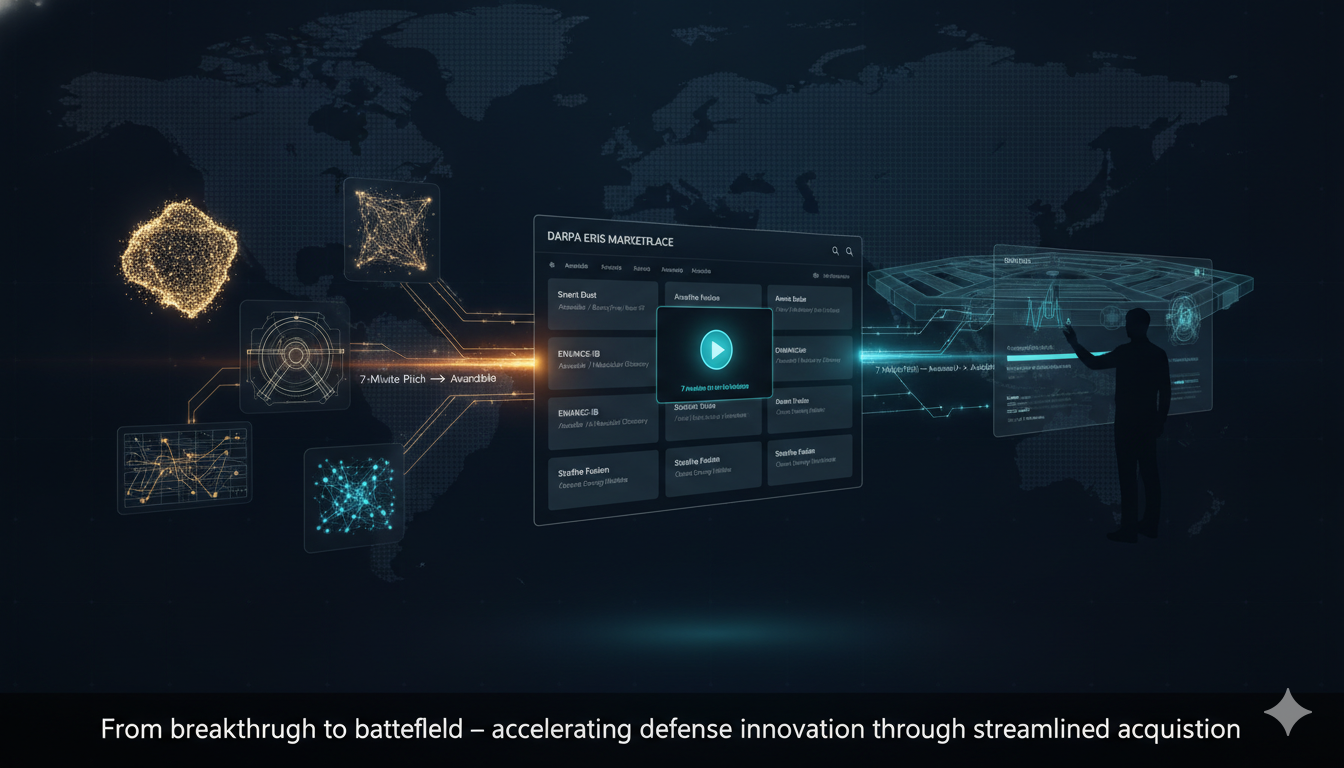
DARPA ERIS Marketplace: Reinventing Defense Acquisition for the Age of Strategic Competition
Introduction: Why Defense Innovation Matters Now The character of technological competition is changing faster than traditional defense acquisition systems can respond. Artificial intelligence, autonomous systems, biotechnology, quantum technologies, advanced semiconductors, and space capabilities are evolving on commercial innovation cycles measured in months rather than decades. At the same time, geopolitical competition among major powers has…
-

2D Transistors in 2026: The Post-Silicon Revolution Has Begun
Introduction: Why 2D Transistors Matter Now The global semiconductor industry is entering one of the most consequential technological transitions since the invention of the integrated circuit. For more than fifty years, silicon transistors have served as the foundation of modern computing, enabling the steady progression of Moore’s Law and fueling advances across consumer electronics, cloud…
-

Agentic AI in Cybersecurity: The Rise of Autonomous Defense
Introduction: From AI-Assisted Security to Autonomous Cyber Defense For nearly three decades, cybersecurity has largely been a human-centered discipline. Security analysts collected logs, correlated alerts, investigated incidents, and manually orchestrated defensive actions while automation handled repetitive tasks through predefined rules. Artificial intelligence improved detection by identifying anomalies and prioritizing alerts, but the human analyst remained…
-
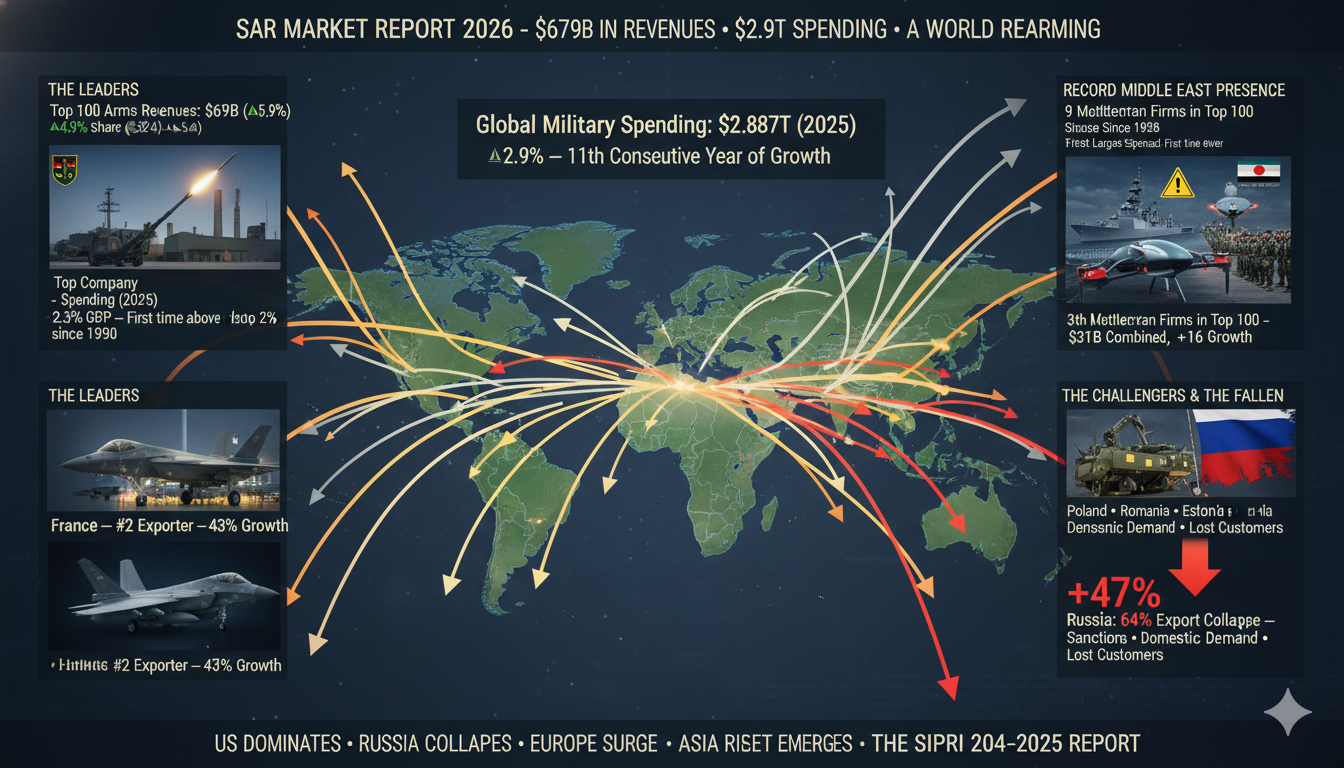
The Global Arms Industry: Trends, Shifts, and the Rise of New Powers
Introduction: A World Entering the Era of Permanent Rearmament The global defense industry is undergoing the most dramatic transformation since the end of the Cold War. What initially appeared to be a temporary increase in military spending following Russia’s invasion of Ukraine has evolved into a structural and long-term global rearmament cycle driven by geopolitical…
-
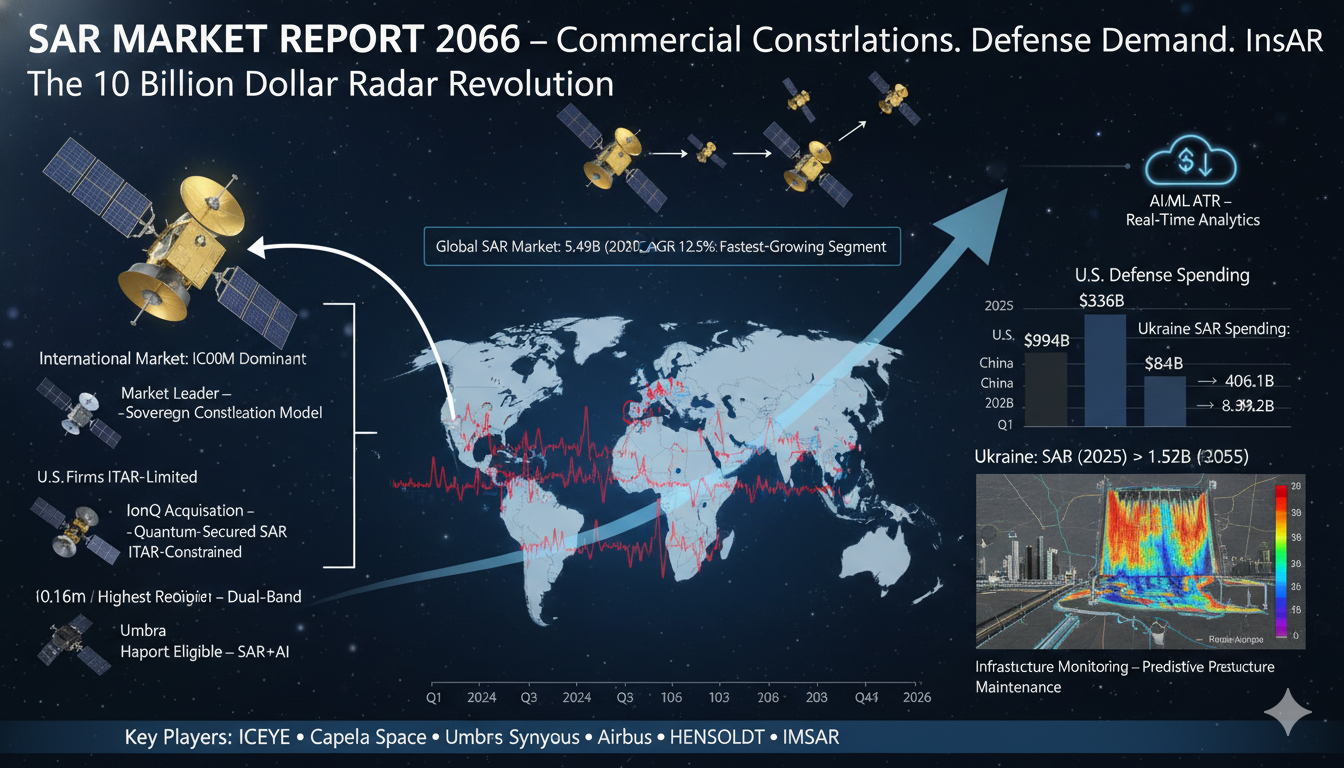
Synthetic Aperture Radar (SAR) Market Report 2026: Strategic Competition, Commercial Disruption, and the Race for Persistent All-Weather Intelligence
Introduction: SAR Enters the Strategic Mainstream Between 2024 and 2026, Synthetic Aperture Radar (SAR) transitioned from a specialized military reconnaissance capability into a foundational layer of global intelligence, climate monitoring, maritime security, and commercial geospatial analytics. The convergence of low-cost launch systems, miniaturized radar electronics, AI-driven analytics, cloud computing, and proliferating commercial SAR constellations has…
-
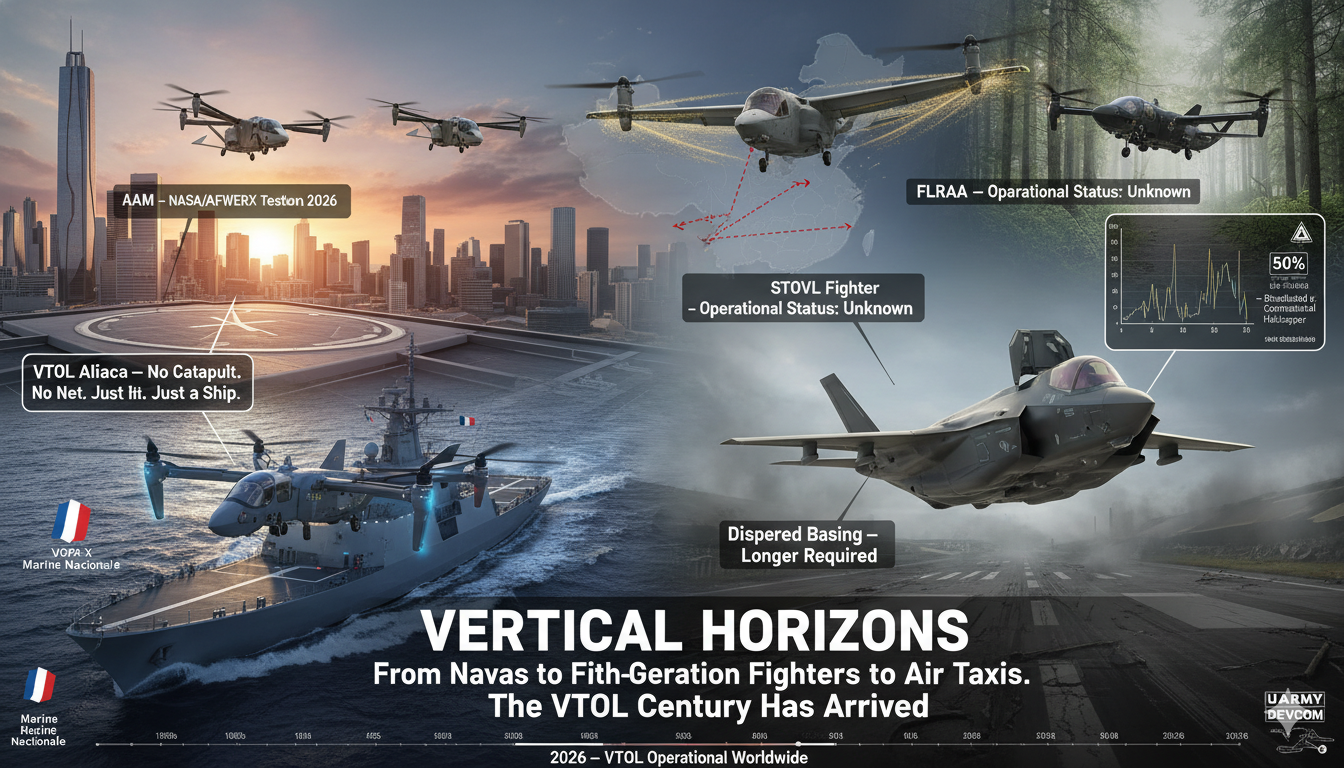
The Silent Revolution: VTOL Aircraft in Future Warfare and Urban Mobility
From the combat decks of amphibious assault ships to the vertiports rising above megacities, Vertical Takeoff and Landing (VTOL) aviation is undergoing its most significant transformation since the helicopter age began. What was once considered a niche or technically impractical capability has become central to both future warfare and next-generation transportation systems. The convergence of…
Related Domains & Cross-Cutting Themes
Procurement systems, supply chains, industrial governance, and strategic economics.
Industrial capacity and supply chains
Cyber-physical security
Climate, geography, and environmental stress
Human-machine coordination
System survivability under disruption
Explore the Critical & Emerging Technologies Magazine →
Explore the Industry, Markets & Supply Chains Magazine →
Explore the Space Technology, Defense & Exploration Magazine →