

The quest for quantum computing supremacy is a geopolitical priority for Europe, China, Canada, Australia and the United States. The quantum computing market was valued at $472m earlier in 2021 and is expected to reach $1.7bn by 2026, according to a Markets and Markets projection. Boston Consulting Group’s 2018 report that estimates a quantum computing market of nearing $60 billion in 2035, which would grow further to $295 billion in 2050, which explains why nations, corporates and startups alike are all jockeying for first position. Advantage gained by acquiring the first computer that renders all other computers obsolete would be enormous and bestow economic, military and public health advantages to the winner.
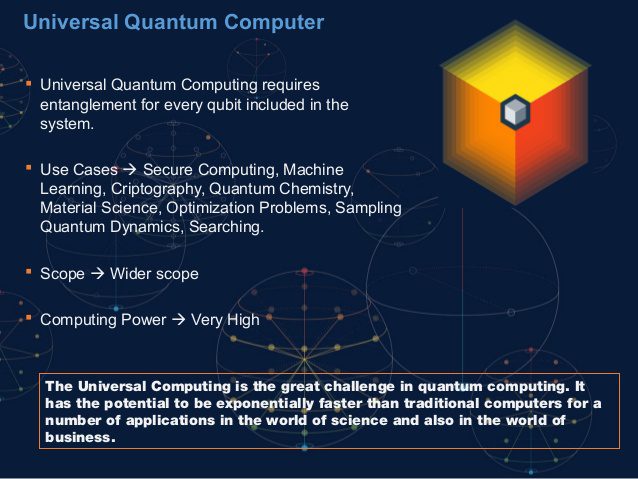
Unlike digital computer which understands only a bit that can have only one of two values: “1” or “0,” qubits have special property termed superposition, which can simultaneously be a 0 and/or a 1. This enables quantum computers to weed through millions of solutions all at once, while desktop PCs would have to consider them one at a time. Researchers are racing to develop universal quantum computer can be programmed to perform any computing task and will be exponentially faster than classical computers for a number of important applications for science and business. But current machines contain just a few dozen quantum bits, or qubits, too few to do anything dazzling.
The IBM Quantum team builds quantum processors—computer processors that rely on the mathematics of elementary particles in order to expand our computational capabilities, running quantum circuits rather than the logic circuits of digital computers. We represent data using the electronic quantum states of artificial atoms known as superconducting transmon qubits, which are connected and manipulated by sequences of microwave pulses in order to run these circuits. But qubits quickly forget their quantum states due to interaction with the outside world. The biggest challenge facing our team today is figuring out how to control large systems of these qubits for long enough, and with few enough errors, to run the complex quantum circuits required by future quantum applications.
IBM had planned a massive $3 billion research and development investment over the next 5 years into quantum computers, post-silicon era chips, neurosynaptic computers which mimic the behavior of living brains, carbon nanotubes, graphene tools and a variety of other technologies. IBM’s investment is one of the largest for quantum computing to date.
We put the first quantum computer on the cloud in 2016, and in 2017, we introduced an open source software development kit for programming these quantum computers, called Qiskit. Aside from their 50-qubit machine, IBM also has a 20-qubit quantum computing system that’s accessible to third-party users through their cloud computing platform. IBM managed to maintain the quantum state for both systems for a total of 90 microseconds, a record feat in the quantum world.
We debuted the first integrated quantum computer system, called the IBM Quantum System One, in 2019, then in 2020 we released our development roadmap showing how we planned to mature quantum computers into a commercial technology.
As part of that roadmap, in 2021 we released our IBM Quantum broke the 100‑qubit processor barrier in 2021 127-qubit IBM Quantum Eagle processor and launched Qiskit Runtime, a runtime environment of co-located classical systems and quantum systems built to support containerized execution of quantum circuits at speed and scale. In 2021, we demonstrated a 120x speedup in simulating molecules thanks to a host of improvements, including the ability to run quantum programs entirely on the cloud with Qiskit Runtime.120x speedup on a research-grade quantum workload. Earlier this year, we launched the Qiskit Runtime Services with primitives: pre-built programs that allow algorithm developers easy access to the outputs of quantum computations without requiring intricate understanding of the hardware.
IBM announced earlier that the U.S. Intelligence Advanced Research Projects Activity (IARPA) program has notified IBM that it will award its scientists a major multi-year research grant to advance the building blocks for a universal quantum computer. The spy agencies are now giving thrust to development of Quantum computers which can break this encryption used by terrorists.