

Mobile subscribers are growing rapidly, by 2020, around three-fifths of the global population or 4.6 billion users will have a mobile subscription. In the future billions of machines will use mobile networks to connect with each other. All of these causes is leading to tremendous increase in data traffic. Mobile operators are continuously making their networks more efficient by investing in new generations of mobile technology (e.g. 5G) and rolling out ever increasing numbers of cellular base stations as well as public Wi-Fi.
Even with the use of new wireless technologies and Wi-Fi, the GSMA has calculated, based on traffic growth estimates, 600-800MHz of additional spectrum will need to be made available for mobile broadband use by 2020 in order to meet growing consumer demand. The availability of this additional harmonised spectrum will be critical for the future vitality of mobile services and the broader digital economy.
Current frequency spectrum crunch is one of the biggest challenges researchers are grappling with and it is clear that today’s wireless networks will not be able to support tomorrow’s data deluge. One of the most well-known constraints in wireless RF has been that it is generally impossible to transmit and receive at the same time on the same frequencies because the act of transmission creates a massive amount of interference for the receiver, preventing the receiver from “hearing” the desired signal coming from the environment.
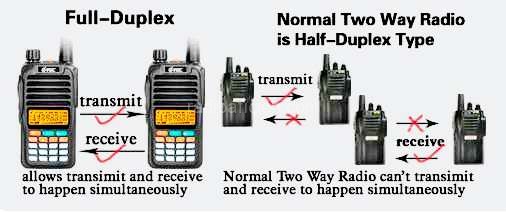
Therefore, today’s wireless networks are only half duplex. Transmitters and receivers either transmit and receive in different time slots (which is called time division duplexing, or TDD) or at the same time but at different frequencies (frequency division duplexing, or FDD). Because time or frequency resources are being used only part of the time, such networks achieve only half the basic network capacity that is possible in an ideal full duplex network.
A full-duplex radio, which transmits and receives simultaneously over the same frequency band, ideally cuts the spectrum requirement to half, i.e., it can either double the spectral efficiency of a half-duplex system, or it has the capacity to accommodate twice the number of users in the same cell zone. To enable full-duplex communication, a radio is required to suppress the self-interference signal to the receiver’s noise floor. Any residual self-interference raises the noise floor for the desired signal, which results in reduced signal-to-noise ratio (SNR), and lower system throughput.
Recent works have presented different techniques and system architectures to suppress this self-interference for reliable full-duplex transmission. Military is also interested to develop full duplex technology as military spectrum requirements are increasing exponentially. Military operations increasingly rely on access to the wireless spectrum in order to assess the tactical environment and coordinate and execute their critical missions. TrellisWare, a member of the National Spectrum Consortium (NSC), has been selected to develop the Military Full Duplex Radio (MFDR) to simplify frequency planning for civil and military communication systems.