
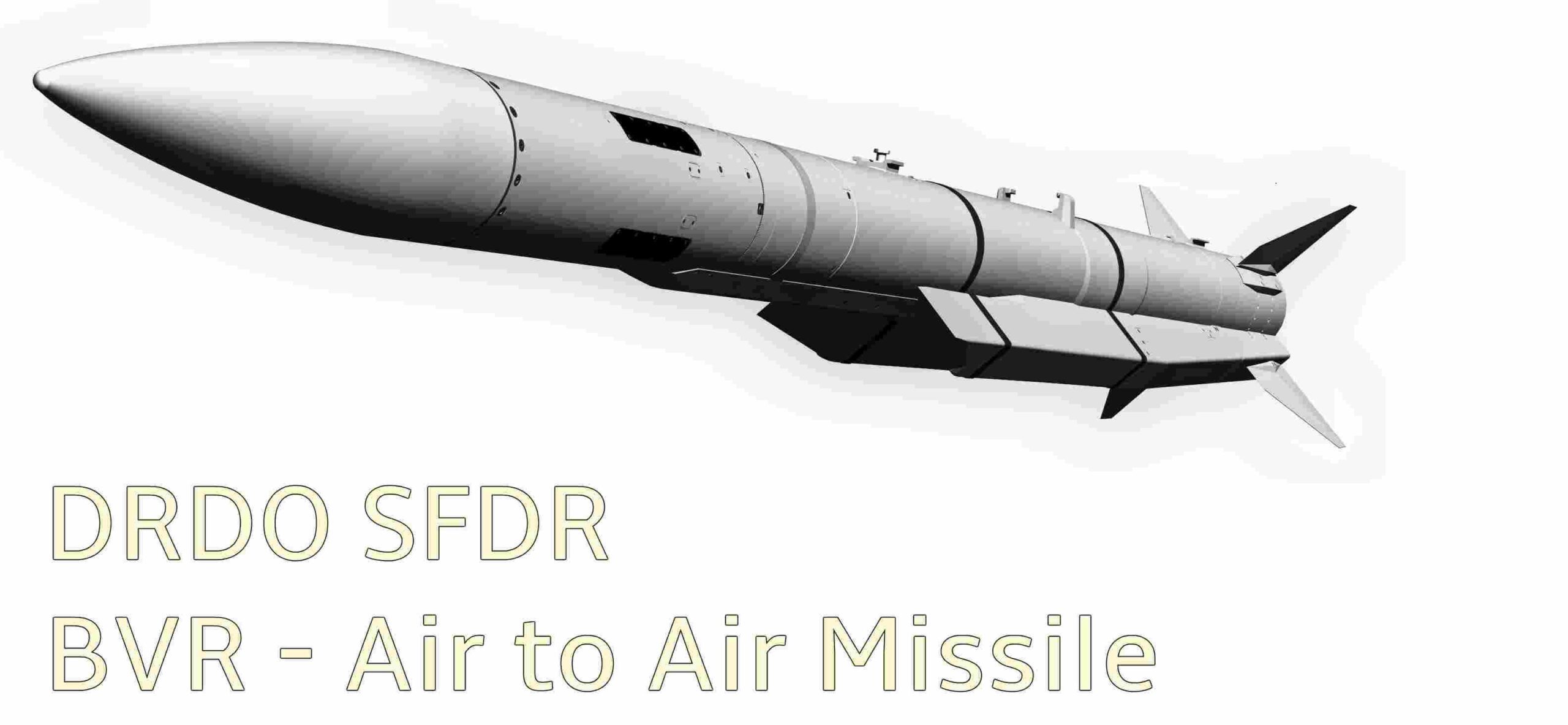

Traditional missiles powered by rocket motors typically carry both fuel and oxidizer. An air-breathing ramjet missile can dispense with the separate oxidizer payload, reducing the size of a propulsion package. Thanks to ramjets, smaller missiles use that space for other things, like a bigger warhead or more fuel. Ramjets, according to NASA, are the “ideal propulsion system” for “high supersonic” or hypersonic flight. As a missile or aircraft flies along, it compresses the air in front of it. This is known as ram pressure. Rather than force their way through this pressure wave, ramjets suck it in, using the abundant oxygen in it as an oxidizer. The air is mixed with burning fuel and then pushed out a nozzle in the rear, creating thrust.
Ramjets have made somewhat of a comeback in military technology recently especially in air-to-air role by missiles such as the MBDA Meteor . Ramjets were first developed for use on missiles in the late 1940s as a technology to allow missiles to sustain supersonic speeds for long durations and powered many anti-air missiles throughout the Cold War, more recent designs eschewed them in favor of multi-stage rocket boosters or simply more powerful rockets. First gen missile ramjets such as those featured on the RIM-8, 2K12, 2K11, and Sea Dart all relied on liquid fuel in their ramjets, so they had to be very very large.
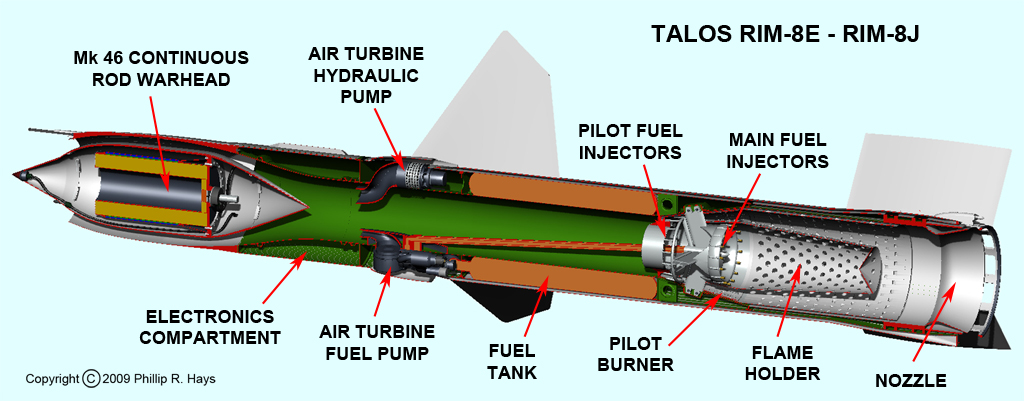
The new ramjets use solid fuel instead, allowing them to be more compact. They also have a limited “throttling” capability, allowing the missile to control the rate at which it uses fuel.
Countries are now racing to develop long range AAMs. The U.S. Army is developing long-range missiles and artillery to extend its reach for great power competition. US Air Force which awarded a half-billion-dollar contract to Raytheon long range air-to-air missile, capable of hitting enemy planes from 100 miles (160 kilometers) away. The Meteor, a new European equivalent, may be even more deadly. But China’s latest offering, the PL-15, has a largest range than either.
USAF has released a request for information (RFI) in May 2020 as part of a broad search of new long-range air-to-air missile technologies. The ideas would inform the service’s technology roadmap. Interest in beyond-visual-range missiles come as China’s air-to-air PL-15 missile, introduced in 2018, has outdistanced the range of the USAF’s currently fielded AIM-120. Beijing’s weapon reportedly has a reach of 108nm (200km). Fears of being outgunned has sparked an arms race. To catch up in the short-term, the USAF is investing in the AIM-260. Details on that missile are sparse and the service declines to comment on its progress. The AIM-260 is reportedly scheduled to reach initial operating capability in 2022.
One of the important technology in long range AAMs is new propulsion technology. Most current missiles use a booster/sustainer configuration with solid or liquid propellants. The booster stage propels them to top speeds after which the sustainer sustains the missile velocity for some time before complete burnout after which they glide towards the target. While this is a simple and tested means, it has limitations of maximum engagement ranges especially against manoeuvring targets which can bleed the energy of conventional missiles.
To improve endgame manoeuvring missiles started incorporating multi-pulse rocket motors like the ones in the Astra MK1 and Rafael Stunner, the second pulse doesn’t fire simultaneously but rather at the terminal stages when the seeker has locked onto the target, greatly enhancing endgame manoeuvrability. The MBDA meteor missile broke the impasse by incorporating a Throttleable Ducted Rocket (TDR) version of the ramjet made by the famous propellant manufacturer Bayern-Chemie of Germany. The TDR acts like an extended sustainer with variable thrust in a solid propellant but can sustain thrust for far longer periods as it gets the oxidiser from the air, instead storing it as in solid fuelled missiles.
Artillery shells are another application where the continual thrust of a ramjet engine is a desirable feature. Unlike current rocket-assisted projectile shells, which suffer from the same drawbacks of only being able to provide thrust for a relatively small time, ramjet shells can provide a “boost” for much longer.