

The GPS system provides critical positioning capabilities to military, civil, and commercial users around the world. However, in many environments in which military operates (inside buildings, in urban canyons, under dense foliage, underwater, and underground) have limited or no GPS access. It can be significantly degraded or unavailable during solar storms.
GPS signals are also subject to electronic attacks such as jamming by adversaries. “Threats to military GPS have evolved and improved at a rapid pace — from a proliferation of small-scale commercial jamming devices that can readily be purchased on eBay to large-scale military anti-access/area-denial (A2/AD) capabilities,” said MAJ Christopher Brown, assistant program manager Dismounted PNT within the Assured PNT program. Apart from jamming by adversaries, GPS signals are also subject GPS-spoofing attacks whereby a malicious entity generates a GPS-like signal designed to mislead GPS receivers.
To address this problem, DARPA is giving thrust to multiple programs that are exploring innovative technologies and approaches that could eventually provide reliable, highly accurate PNT capabilities when GPS capabilities are degraded or unavailable.
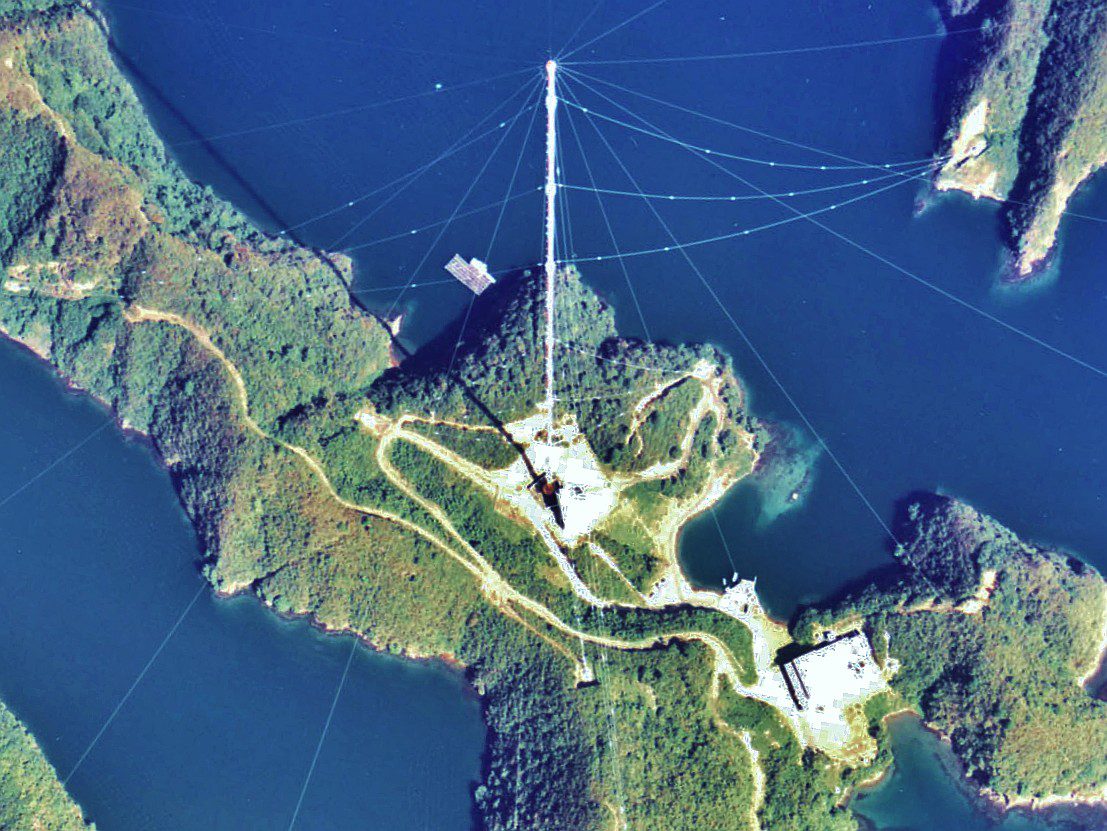
DARPA wants to build radio navigation based on VLF radio signals under its Spatial, Temporal and Orientation Information in Contested Environments (STOIC) program. The Defense Advanced Research Projects Agency (DARPA) recently announced the award of Phase II and III of the Spatial, Temporal and Orientation Information in Contested Environments (STOIC) Very Low Frequency (VLF) Positioning System to a team led by Leidos and supported by ENSCO.
The US Defense Advanced Research Projects Agency (DARPA) is planning to conduct demonstrations that centre on the possibility of performing position, navigation, and timing (PNT) in GPS-denied or degraded environments using very low frequency (VLF) signals . DARPA’s present approach is to monitor the ionosphere – between 90 and 500 km above the Earth – using VLF receivers and then attempts to track its movement in real-time. By doing so, the agency hopes to get a more precise location than in previous efforts using VLF signals.
VLF signals get trapped in the wave guide between the ionosphere and earth, so they just keep propagating; and VLF signals travel extremely far, Tremper said. “If you know where [the VLF signal] is being transmitted from you can detect [it at] a very long distance and then establish a range for yourself from where it came from,” he explained. Using VLF signals to do positioning is not a new concept, Tremper noted. A comparable method had been employed for the Omega navigation system, which supported PNT requirements before GPS was introduced.