
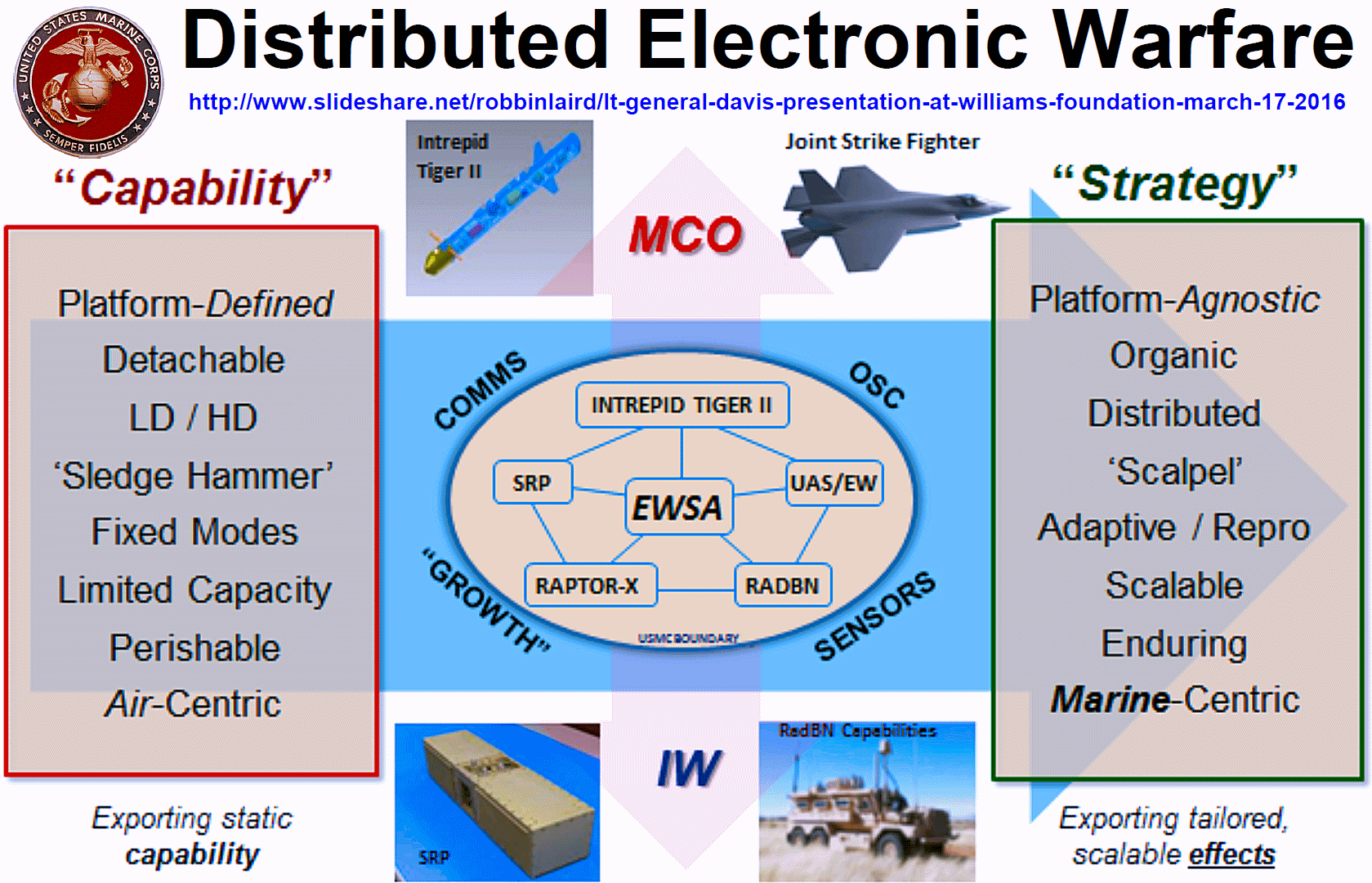

The adversaries are fielding increasingly sophisticated networked and agile systems, RF sensing and communications systems, including short-range tactical communications, long-range command and control (C2) communications networks, networked defensive systems, and RF seekers. This is partly due to rising commercial investments in RF materials, components, and subsystems thereby reducing the cost to deploy high power, agile systems, says DARPA. US electromagnetic strategy calls for development of Agile, adaptive and integrated electronic warfare’ to ensure continued US superiority across the electromagnetic spectrum
NATO is also planning to improve Electronic Warfare (EW) capabilities to dominate the Electromagnetic Environment (EME). However, research in the commercial communications market is driving the technology forward at a rapid pace. Asymmetric adversaries can easily obtain advanced communications technology by simply buying smartphones.
Symmetric adversaries can put this kind of technology in a ruggedised box, or extract key technologies. NATO is in an arms race where EW technology needs to maintain pace with commercial development. This is becoming increasingly difficult due to the introduction of increasingly complex signals (e.g. 4G/5G technology). With communications becoming more widespread and our adversaries making increasing use of Electronic Attack (EA), NATO EW equipment will need to operate in an increasingly congested and contested EME.