
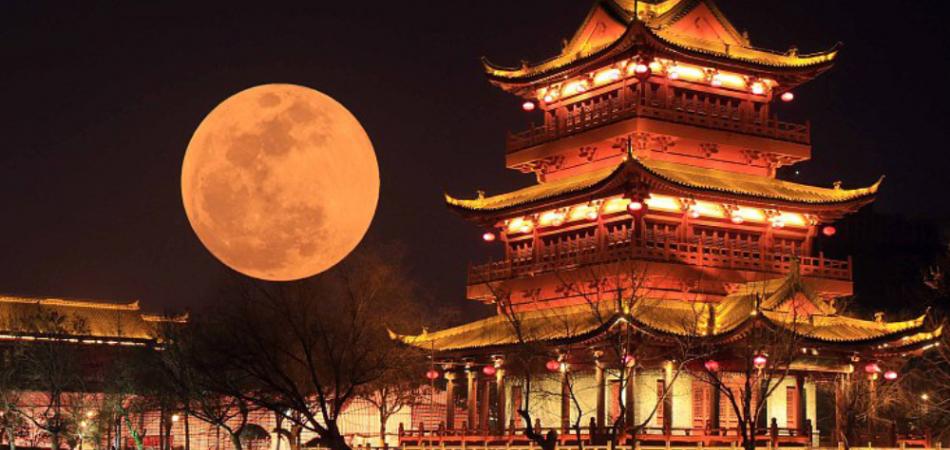

China is planning to launch its own ‘artificial moon’ by 2020 to replace streetlamps and lower electricity costs in urban areas, state media reported. The Tian Fu New Area Science Society plans to launch the so-called “illumination satellite” would orbit above the Chinese city of Chengdu and glow in conjunction with the actual moon, but shine eight times brighter. At that intensity, this satellite won’t brighten the entire sky, but it should give off what one Harbin Institute of Technology scientist described as a “dusk-like” glow. It would reflect the sun’s light at night, and supplement street lighting in Chengdu, which has a population of 1.6 million.
The organization says it will launch three more satellites in 2022 — potentially replacing streetlights in urban areas. The plans were announced by Wu Chunfeng, head of the society, at an innovation conference in Chengdu on October 10. Chunfeng told China Daily that the satellite, launching from the Xichang Satellite Launch Center, will orbit about 300 miles (500 kilometers) above the city and use its mirror-like coating to reflect sunlight down to Earth.
Chungfeng says the object is able to focus its reflected light onto a very specific portion of the Earth’s surface, illuminating a small area with a diameter of 6.2 to 50 miles (10 to 80 kilometers). That won’t be nearly enough to cover Chengdu, which encompasses 4,787 square miles (12,400 square kilometers). But by Chungfeng’s estimate, if the satellite illuminates just 19 square miles (50 square kilometers) of the city, Chengdu could scale back its urban lighting infrastructure and thus save 1.2 billion yuan — or $173 million — annually. The extraterrestrial source of light could also help rescue efforts in disaster zones during blackouts, he added.
The three follow-up moons, though, will be able to cover much more ground. The trio will take turns, based on who’s facing the Sun, beaming light on the city streets. Working together, they’ll be able to illuminate 2,000 to 4,000 square miles (3,600 to 6,400 square kilometers) for up to 24 hours.
Despite shining light in a similar way, the satellite boasts one advantage that the moon doesn’t — human control. Chunfeng says that both the location and brightness of the human-made moon can be changed, and that it can be completely shut off if necessary. And since the satellite is mobile, it can assist in disaster relief by beaming light on areas that lost power.
In addition to Tian Fu New Area Science Society, other universities and institutes, including the Harbin Institute of Technology and China Aerospace Science and Industry Corp, are involved in developing Chengdu’s illumination satellites.
If China’s researchers could really control the location and brightness, then PLA might be able to have nighttime advantage over their adversaries, by having the power to illuminate the locations and activities of their adversaries.