
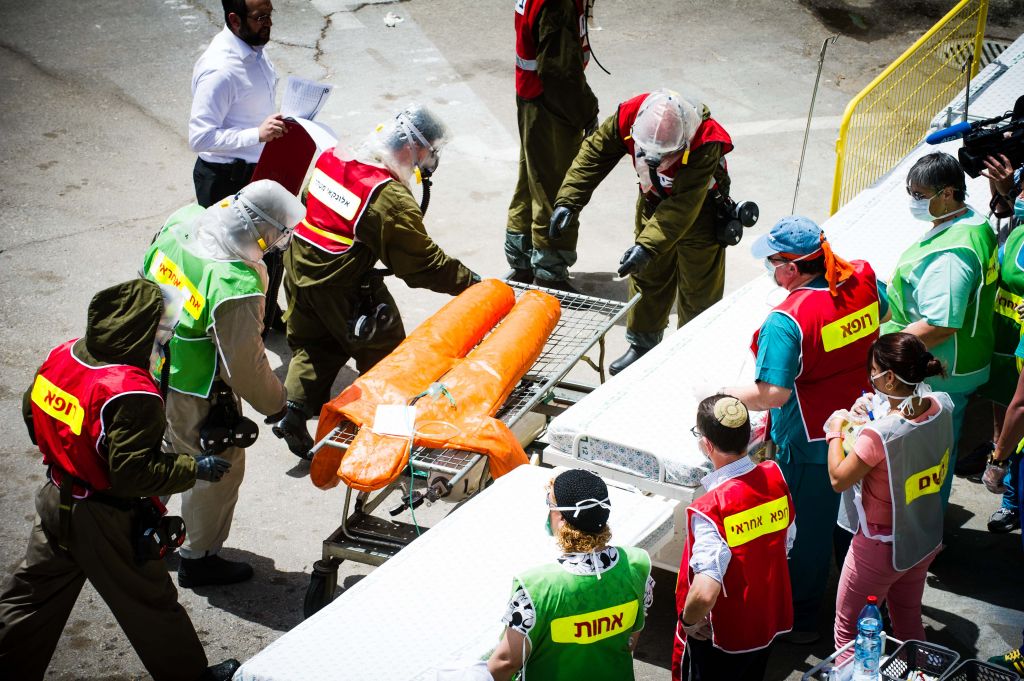

Nerve agents, a class of synthetic phosphorous-containing compounds, are among the most toxic substances known. Brief exposure to the most potent variants can lead to death within minutes. Once nerve agents enter the body, they irreversibly inhibit a vitally important enzyme called acetylcholinesterase. Its normal job within the nervous system is to help brain and muscle communicate. When a nerve agent shuts down this enzyme, classes of neurons throughout the central and peripheral nervous systems quickly get overstimulated, leading to profuse sweating, convulsions and an excruciating death by asphyxiation.
US considers Nation-state efforts to develop or acquire weapons of mass destruction (WMD), their delivery systems, or their underlying technologies constitute a major threat to the security of the United States, its deployed troops, and allies. The Chemical and Biological Defense Program (CBDP) is vital to our Nation’s ability to counter current and future threats posed by chemical and biological (CB) weapons. The hazards posed by CB weapons remain real and evolving. An increased willingness to use these types of weapons either for assassinations(e.g. Russia and North Korea) or to achieve asymmetric advantages(e.g. Syria and ISIS in Iraq)indicates eroding international norms against the use of CB weapons. This paradigm shift challenges the ability of the Joint Force to operate unencumbered. The proliferation of knowledge and technology, increased ease of access, difficulty in detecting illicit activities, emerging threats, improved delivery capabilities, and our limited ability to anticipate how adversaries might employ Weapons of Mass Destruction (WMD) heighten the risk of attacks against the U.S. or its allies.
The Defense Threat Reduction Agency enables the Department of Defense, the United States Government and International Partners to counter and deter Weapons of Mass Destruction and Improvised Threat Networks. DTRA addresses WMD threats through four core functions: threat control, threat reduction, combat support, and technology development.
DOD technology requirements before deployment, are detection and monitoring of harmful agents in the intended theater of deployment for intelligence purposes and for planning exposure assessments. During a deployment, real-time detection of harmful agents will be required to ensure that mission objectives are met and for continued monitoring. The information can be archived and used to determine low levels of chemical concentrations for dose reconstruction and long-term health risk assessments. Biological samples could also be collected for studies of postdeployment health effects.
Measuring the concentration of a chemical substance can be visualized as a three-step process (NRC, 1991b). First, the medium (air, soil, water, or food) containing the chemical substance is sampled. Next, the chemical substance of interest must be separated from or otherwise distinguished from other chemical species that are present. Third, the chemical is identified.
A wide variety of measurement equipment is available to DoD. Testing kits, detectors, and monitors of varying sensitivity (lowest level detectable) and specificity (ability to distinguish the target substance from similar substances) have been developed and/or used by the armed forces to identify concentrations of harmful agents. In addition, DoD, other federal agencies (e.g., EPA), and the private sector continue to develop technologies and equipment for detecting and monitoring concentrations of TICs in multiple environmental media.