
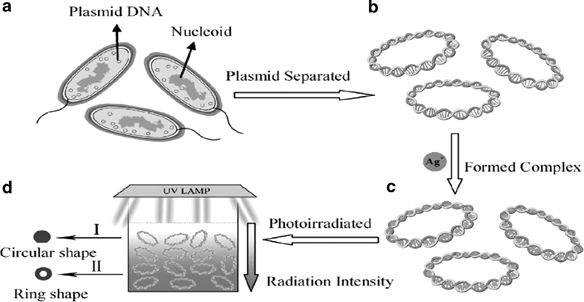

Nanoparticles have unique thermal, optical, physical, chemical, magnetic and electrical properties compared to their bulk material counterparts. These features can be exploited for next generation biosensors, electronics, catalysts and antimicrobials. Metallic nanoparticles are one important and widely studied group of materials, showing great diversity and many different uses
Over the past few decades interest in metallic nanoparticles and their synthesis has greatly increased. This has resulted in the development of numerous ways of producing metallic nanoparticles using chemical and physical methods. However, drawbacks such as the involvement of toxic chemicals and the high-energy requirements of production make it difficult for them to be widely implemented.
An alternative way of synthesising metallic nanoparticles is by using living organisms such as bacteria, fungi and plants. In order to survive in environments containing high levels of metals, organisms have adapted by evolving mechanisms to cope with them. These mechanisms may involve altering the chemical nature of the toxic metal so that it no longer causes toxicity, resulting in the formation of nanoparticles of the metal concerned. Thus nanoparticle formation is the “by-product” of a resistance mechanism against a specific metal, and this can be used as an alternative way of producing them. This “green” method of biological nanoparticle production is a promising approach that allows synthesis in aqueous conditions, with low energy requirements and low-costs.
There are important links between the way nanoparticles are synthesised and their potential uses. Silver nanoparticles (AgNPs) have been shown in numerous studies to display antibacterial properties. With the rise in antibiotic resistance in recent years and the development of fewer new antibiotics, research has begun to focus on these antibacterial nanoparticles as potential new medical tools. Silver nanoparticles have also been used as optical sensors for the formation of small molecule adsorbates. Whereas catalysts based on Pt nanoparticles have been shown to exhibit high activity for the electrooxidation of formic acid.
Research has focused heavily on prokaryotes as a means of synthesising metallic nanoparticles. They provide advantages such as their abundance in the environment and their ability to adapt to extreme conditions. They are also fast growing, inexpensive to cultivate and easy to manipulate. Growth conditions such as temperature, oxygenation and incubation time can be easily controlled.