
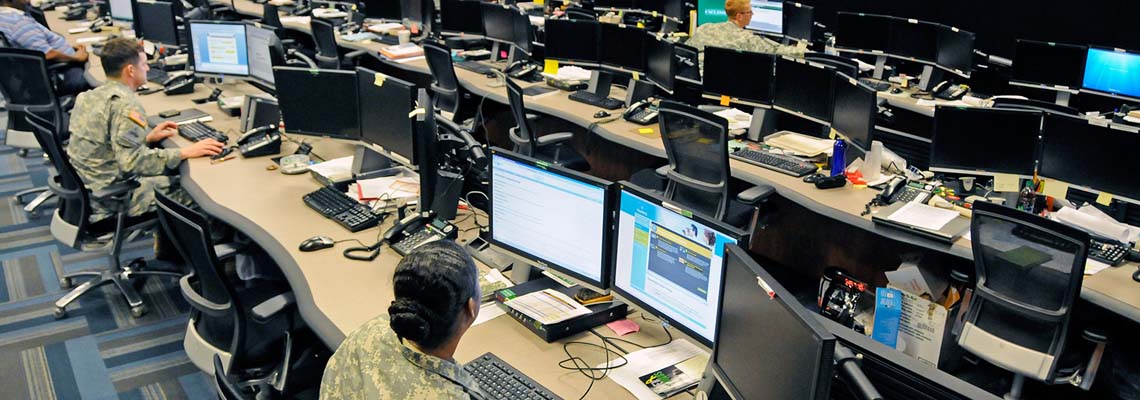

United States opened a new line of combat against the Islamic State, directing the military’s eight-year-old Cyber Command for the first time to mount computer-network attacks that are now being used alongside more traditional weapons. In 2009, US established, USCYBERCOM for more effective and coordinated efforts for conducting cyberspace operations. Cyber Command, which was focused largely on Russia, China, Iran and North Korea — where cyberattacks on the United States most frequently originate — was given responsibility for operations against what has become the most dangerous terrorist organization in the world.
Britain carried out its first major cyber-attack in 2017, disrupting ISIS’s communications and propaganda infrastructure for much of the year, one of Britain’s intelligence agency (GCHQ) chiefs has revealed. The operation hindered the group’s ability to co-ordinate attacks and suppressed its propaganda, former MI5 agent Jeremy Fleming said. Mr Fleming made the remarks in his first public speech as GCHQ director.
He said other operations might “look to deny service, disrupt a specific online activity, deter an individual or a group, or perhaps destroy equipment and networks.” “The outcomes of these operations are wide-ranging,” he told the Cyber UK conference in Manchester. “In 2017 there were times when Daesh [an alternative name for Islamic State] found it almost impossible to spread their hate online, to use their normal channels to spread their rhetoric, or trust their publications.”
While U.S. Cyber Command claimed success in carrying out what was called Operation Glowing Symphony, under which Cyber Command obtained the passwords to a number of Islamic State administrator accounts and then used them to access the accounts, change the passwords and delete content such as battlefield video. It also shut the group’s propaganda specialists out of their accounts, former officials said.
However, then-Defense Secretary Ash Carter expressed frustration that the United States was losing the cyberwar against the militants. He pushed the Cyber Command to be more aggressive. In response, the Pentagon undertook an effort to incorporate cyber technology into its daily military fight, including new ways to disrupt the enemy’s communications, recruiting, fundraising and propaganda.
In the 2018,it was revealed that Di5s3nSi0N, together with the Iraqi hackers of DaeshGram, inflicted very hard blows on Isis in cyberspace. The first by means of traditional cyber attacks aiming at putting all the propaganda channels used by the Islamic State on the web offline. Furthermore to humiliate the jihadists even more they pre announced the cyberwarfare actions. The second went different. They created and put online an alternative version of Amaq, creating great confusion among the online sympathizing Daesh militants.
Besides, this operation caused internal wars between the groups of terrorists who were disseminating cyber contents in support of Isis. As a matter of fact, on various occasions they have accused each others of treason or of being an enemy agent through socials. This has created very serious damage to the capacity of recruitment and radicalization of the net, which will not easily be recovered till the hackers collectives operate.