

In this new age of information revolution, Media has become an important pillar of national Power, with power to influence public opinion. Media shapes the perception of decision-makers and people. In addition, based on these perceptions the political decision-makers formulate policies, choose lines of actions. Abraham Lincoln, the 16th President of the US, who also led his country through its bloodiest civil war in history, stated, “Public opinion is everything. With it nothing can fail, without it nothing can succeed.”
Another complex issue in the media-national security connection is the new media or the so-called social media considered by some specialists a challenge for democracies. Because social media channels such as social networks and blogs present powerful tools to spread information to the masses.
Social media platforms like YouTube, Facebook and Twitter have also become important for terrorists to further their goals and spread their message, because of its convenience, affordability and broad reach of social media. Al-Qaeda has an Internet presence spanning nearly two decades. Al-Qaeda terrorists use the internet to distribute material anonymously or ‘meet in dark spaces’. The Czech Military Intelligence Service commented that Al-Qaeda are spreading its ideology among the Muslim community in Europe, mainly through the means of social media. ISIS use of social media platforms has been as phenomenal as its successes in the battlefield.
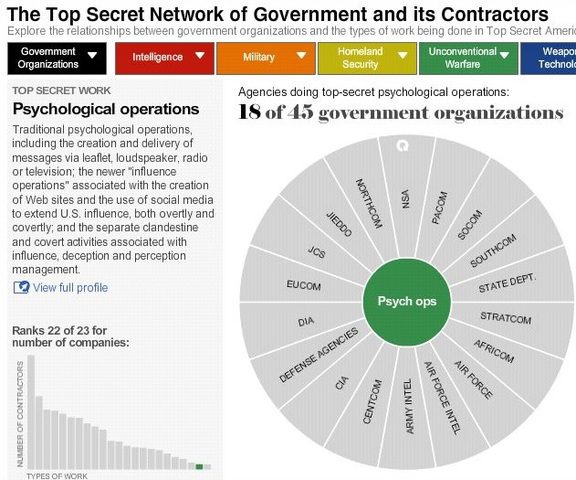
Social media has also become element of Psychological warfare that involves the planned use of propaganda and other psychological operations to influence the opinions, emotions, motives, reasoning, attitudes, and behavior of opposition groups. Psychological operations target foreign governments, organizations, groups and individuals.
The most recent incident was comprehensive psychological warfare campaign unleashed by China in recent India-China Doklam crisis. Beijing tried to exploit the political divisions to sow dissensions in India by calling Sushma Swaraj a “liar”, reaching out to Modi’s opponents, including Rahul Gandhi, and attacking his “Hindu nationalism.” The aim was to use Indians to put pressure on the Indian government and get them to withdraw, largely by doubting India’s own assertions. In J & K, Social Media has been used to rally people against the State and the Armed Forces.
Social Media is all pervasive and at the professional level it impacts operations, administration, motivation, morale, functioning and fighting at all levels from the lowest to the highest, said Lt Gen Vinod Bhatia, PVSM, AVSM, SM (Retd), Director CENJOWS. He wondered whether the armed forces are ready to face this new warfare and said that the truth is somewhere in between. He emphasized that for the Indian Armed Forces to effectively exploit Social Media there was a requirement to look into the existing procedures, policies and structures
Therefore experts feel it is imperative to develop a coordinated strategic communications strategy and a specific agency to deal with these media threats and efficient media management. There is also need for armed forces to use Social Media as a effective force multiplier in the security domain.