
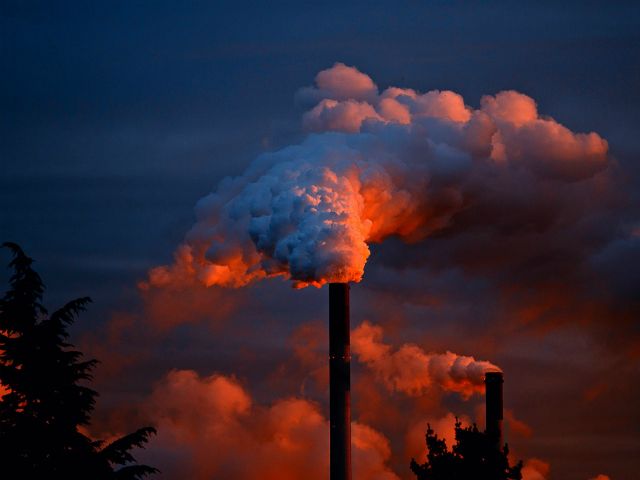

Atmospheric pollution is a growing problem, particularly in urban areas and in less developed countries. With half the world has no access to clean fuels or technologies (e.g. stoves, lamps), the very air we breathe is growing dangerously polluted. More than 8 million people around the world die each year as a result of breathing polluted air that contains particles from fossil fuels, a new study has found.
Since the industrial revolution, urbanisation and industrialisation, together with economic development, have led to increases in energy consumption and waste production. Exposures to air pollution, toxic chemicals, and pesticides are the main forms of pollution today causing disease in high-income countries. In low-and-middle-income countries, household air pollution and contaminated drinking water are long-established forms of environmental contamination. Hazardous waste sites and contamination of soil and abandoned mines have killed hundreds of thousands people each year.
However, during the past decade, with the spread of Western lifestyles, and the increasing globalisation of the chemical manufacturing industry, toxic chemicals, highly hazardous pesticides, and chemical wastes that previously were found only in high-income settings have been rapidly penetrating in low-and-middle-income countries too. Exposure of millions of people to asbestos in China, south and southeast Asia, and sub-Saharan Africa, lead intoxication from lead-acid battery recycling, and exposure to mercury from gold extraction are only a few dramatic examples of the growing exposure to toxic chemicals.
According to the World Health Organization, one out of every nine deaths can be attributed to diseases caused by air pollution. Organic pollutants, such as nitrogen oxides and volatile compounds, are the main cause of this, and they are mostly emitted by vehicle exhausts and industry. In the case of air pollution, the number of deaths in India from ambient air pollution was 1.09 million, while deaths from household air pollution from solid fuels were 0.97 million. In the case of water pollution, 0.5 million deaths were caused by unsafe water source, while unsafe sanitation caused 0.32 million deaths.
The health effects of air pollution are serious – one third of deaths from stroke, lung cancer and heart disease are due to air pollution. Microscopic pollutants in the air can slip past our body’s defences, penetrating deep into our respiratory and circulatory system, damaging our lungs, heart and brain. This is having an equivalent effect to that of smoking tobacco, and much higher than, say, the effects of eating too much salt.
Because environmental problems pose risks to the health, safety, and security of troops, they can influence combat operations. In most contingencies over the past two decades, U.S. forces have remained in the theater for much longer than anticipated, getting deeply involved in such non-combat activities as stabilization, reconstruction, and nation-building.
The agenda of the UN’s Sustainable Development Goals (SDGs) 1 challenge to develop transformative technologies that help to protect, even expand our planet’s habitability. Thus, environmental sustainability is at the core of the Sustainable Development Goals (SDGs) proclaimed by the United Nations in 2015. One key aspect of this pledge is the need to produce goods and products in a way that is both economically viable and ecologically sustainable. However, reducing and eventually stopping harmful emissions is not sufficient; it will also require large-scale interventions to restore ecological balances and remove pollution by industrial and urban activities.