

GPS has become ubiquitous technology that provides real-time positioning, navigation and timing (PNT) data in cars, boats, planes, trains, smartphones and wristwatches, and has enabled advances as wide-ranging as driverless cars, precision munitions, and automated supply chain management. Phones and other GPS-enabled devices pinpoint your location on Earth by contacting at least four satellites bearing atomic clocks. Each of these satellites provides a time stamp, and the system calculates your location based on the relative differences among those times.
The atomic clocks used on today’s satellites are based on natural oscillation of the cesium atom — a frequency in the microwave region of the electromagnetic spectrum. Atomic clocks are extremely accurate because they are based on natural and universal atom vibrations. However, even the best atomic microwave clocks can still accumulate an error of about 1 nanosecond over a month. The accuracy of GPS Navigation is primary degraded due to Earth’s ionosphere, which interferes with the timing signals as they commute from a satellite to your GPS receiver. But the second biggest contribution of error comes from the stability of the clocks onboard the GPS satellites.
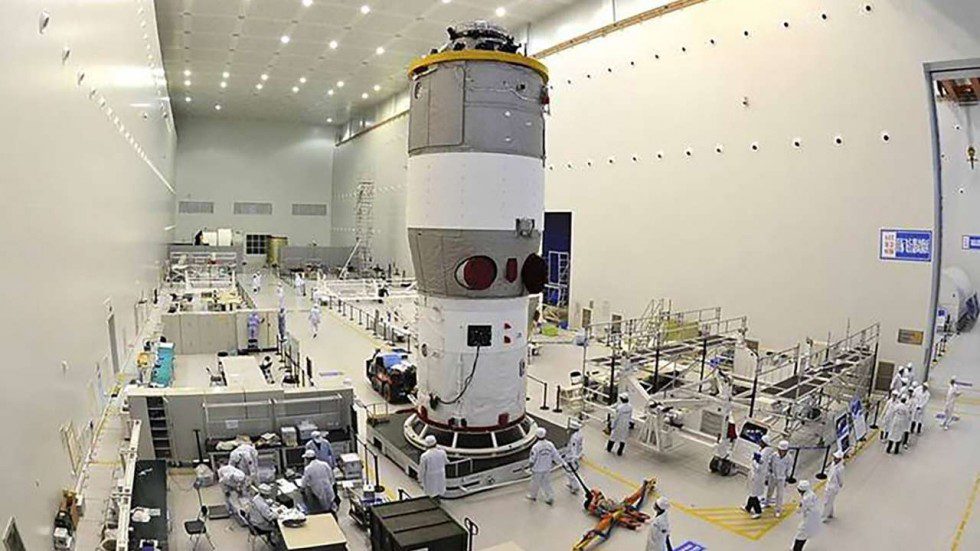
Now, scientists in China have successfully demonstrated a cold atom clock in space, an achievement that could lead to more accurate terrestrial timekeeping and better tests of fundamental physics. The device, called Cacs, or Cold Atomic Clock in Space, was launched in Sep 2017 along with other instruments of the Tiangong-2, China’s second orbital lab. According to the South China Morning Post, it will slow down by only one second in a billion years. In comparison, the NIST-F2 atomic clock, which serves as the United States’ primary time and frequency standard, loses a second every 300 million years.
“It is the world’s first cold atomic clock to operate in space … it will have military and civilian applications,” said Professor Xu Zhen, a scientist involved with the Cacs project.
China’s Beidou satellite navigation network currently provides less precise guidance than the US GPS system, but Xu said that using Cacs as a time reference in space would give a “significant boost” to Beidou’s performance.