

Chinese firms have become significant investors in American start-ups working on cutting-edge technologies with potential military applications. The start-ups include companies that make rocket engines for spacecraft, sensors for autonomous navy ships, and printers that make flexible screens that could be used in fighter-plane cockpits. Many of the Chinese firms are owned by state-owned companies or have connections to Chinese leaders, as reported by Paul Mozur and Jane Perlez in New York Times.
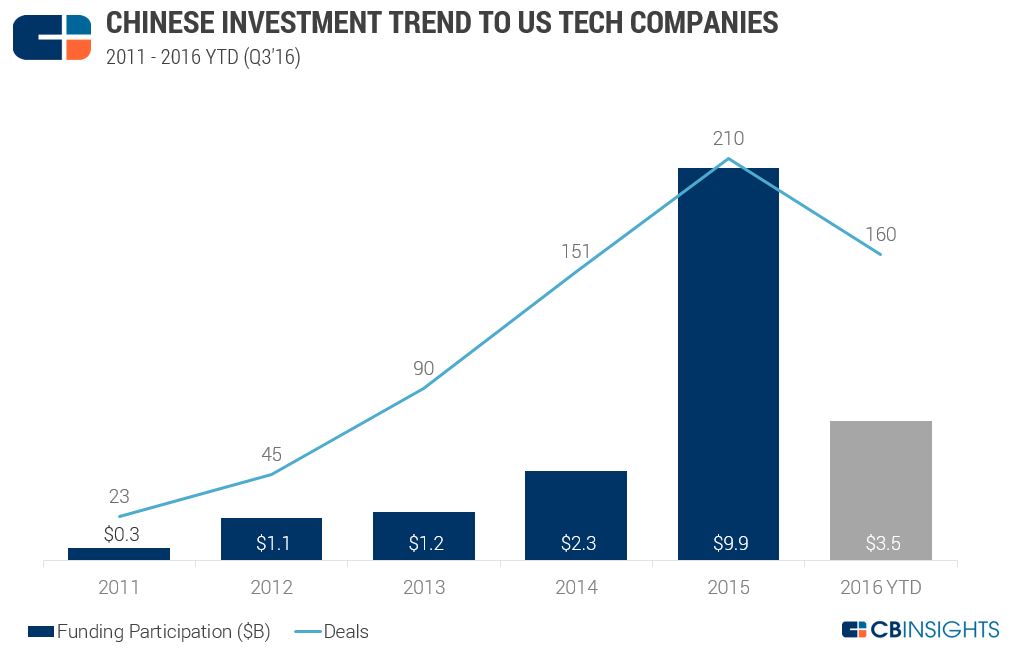
Over all, China has been increasingly active in the American start-up world, participating in investment rounds worth $9.9 billion in 2015, according to data from the research firm CB Insights, more than four times the level the year before. Chinese investors have a bigger appetite for risk and a willingness to do deals fast, said Neurala’s chief executive, Max Versace. American military officials have “figured out a very good way to give $10 billion to Raytheon,” he said. “But to give a start-up $1 million to develop a proof of concept? That’s still very, very hard.”
China has developed strategy to boost its military innovation through Military civil Integration. At a key Communist Party meeting in October, Xi identified innovation as the most critical of five concepts for development, followed by coordination, “green” development, opening up and sharing. Xi called for better integration between the military and the civilian sector to boost innovation in both the army and the nation. “Through in-depth development of military-civilian integration, military technologies are gradually applied in civilian fields, making high-tech equipment available to commercial markets. At the same time, we have also emphasized the importance of encouraging more civilian product suppliers to actively participate in the defense-building process,” said Dai Hao, Director-General of China’s Institute of Command and Control.
The deals are ringing alarm bells in Washington. According to a new white paper commissioned by the Department of Defense, Beijing is encouraging Chinese companies with close government ties to invest in American start-ups specializing in critical technologies like artificial intelligence and robots to advance China’s military capacity as well as its economy.
“What drives a lot of the concern is that China is a military competitor,” said James Lewis, a senior fellow at the Center for Strategic and International Studies, who is familiar with the report. “How do you deal with a military competitor playing in your most innovative market?”
US military has also planned to boost innovation by investments in startups, global and grassroots innovations. New group under the U.S. Department of Defense, called Defense Innovation Unit Experimental, or DIUx has been formed with an office in Silicon Valley and in several other tech hubs across the U.S., the mission of DIUx is to bridge the different cultures of tech startups and the U.S. military to meet national security needs.