

All over the world Cyber attacks are becoming increasing in number and sophistication. Many organizations in Europe and the US have been crippled by a ransomware attack such as “Petya” , WannaCry or WannaCrypt ransomware attack affected more than 230,000 computers in over 150 countries. Number of incidents such as the Stuxnet worm affecting the Iranian nuclear plant, cyber attack induced power outage in Ukraine and Israel, attack on German steel plant, attack on New York hydro-electric plant etc., has raised concern among cyber security researchers.
There are many threats facing critical infrastructure today.The most famous threats in this day and age are the threatsposed by terroristic groups and hostile nation states. Theseare organized groups with a clear goal and some level ofsophistication. There is also a threat posed by a company’sown employees. Company insiders have access to internalcontrols and data, and either by accident or malicious intentcan cause equipment outages. A third category of threat isthe threat posed by casual hackers, known as ”script kiddies”.These are people without great computer ability who downloadand use prepackaged tools.
New technologies are increasing the vulnerability of the critical infrastructure to cyber security threats. With the advent of ‘smart’ infrastructure systems that integrate digital communications and controls with physical control systems and human operators or beneficiaries. These infrastructures and their services have created more new vulnerabilities than would exist if the sub-systems were isolated from one another. Sophisticated cyberattacks can exploit these vulnerabilities to disrupt or even completely disable the operations of our critical infrastructures and their services. The recent embrace of Internet of Things (IoT), autonomous driving, and cloud computing will further exacerbate the cybersecurity problem.
Dealing with these threats and determining vulnerabilities is an important task for utilities. It is common practice in modern cyber security analysis to utilize Operational networks that is real systems of computers, routers, switches, firewalls, etc. to analyze the interplay between cyber threats and safeguards. However, using operational networks for cyber security testing has many disadvantages. Firstly, there is a high risk of adverse impacts on that network and its services. Secondly, operational networks cannot be fully controlled, so tests are not generally repeatable as required for rigorous experimentation.
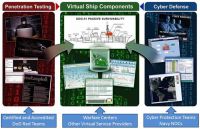
Determining the vulnerabilities of systems using thesedevices is a complicated process because of the complexhardware and software interactions that must be considered. One approach is to build a comparatively simple system that captures the relevant complexity i.e. a Cyber testbed could be a key element in dealing with this threat by assessing the vulnerabilities, testing critical infrastructure on cyber responsiveness for research & development, for awareness and training, for standards and norms, etc.
Therefore, many Cyber test beds have been developed for a number of specialized areas including: LAN/WAN enterprise equipment, telecommunications carriers, SCADA systems, data-centers, for example servers, SANs, clusters, MILCOMs networks, mission critical control systems, for example avionics and end-user environments, for example desktop SOEs, smart phones, printers, MFDs. Some of the few well-known Internet event simulators and
testbeds are Emulab: “a configurable Internet emulator in a room;” DETER: “an evolving infrastructure—facilities, tools, and processes—to provide a national resource for experimentation in cyber security;” and PlanetLab: “a safe and secure environment for testing and operating peer-to-peer algorithms and monitoring their activities.”
There are many testbeds, physical, virtual and simulations for critical infrastructures and cyber systems. Furthermore, it is extremely difficult for one organization to have all the required expertise to perform research and development on these heterogeneous testbeds, and it is cost prohibitive to own and manage these testbeds. One of the project of ACL of COIC is exploring innovative techniques to allow seamlessly composition of a federated testbed that consists of several heterogeneous testbeds include virtual cybersecurity testbeds, IoT testbeds and cyber-physical testbeds.