

Cyber warfare has developed into a more sophisticated type of combat between countries, where you can destroy communications and other digital infrastructure of adversaries. Cyberwarfare involves digital attacks on the networks, systems and data of another state, with the aim of creating significant disruption or destruction. That might involve destroying, altering or stealing data, or making it impossible to access online services, whether they are used by the military and broader society. These digital attacks may also be designed to cause physical damage in the real world – such as hacking into a dam’s control systems to opening its floodgates, says Techrepublic. A wider definition of cyberwarfare could also include some elements of what is also known as information warfare — including online propaganda and disinformation, such as the use of ‘troll armies’ to promote a certain view of the world across social media.
Cyber warfare has become great alternative to conventional weapons. “It is cheaper for and far more accessible to these small nation-states. It allows these countries to pull off attacks without as much risk of getting caught and without the repercussions when they are [caught], ” said Amy Chang, a research associate in the technology and national security program at the Center for a New American Security. NATO ministers have designated cyber as an official operational domain of warfare, along with air, sea, and land.
Many governments are building a cyberwarfare capability: among the most advanced countries are the US, Russia, China, Iran and South Korea. The U.S., U.K. and Israel are the West’s Tier 1 countries with sophisticated capabilities from both a defensive and offensive perspective. Russia and China are Tier 1 cyber aggressors and very close behind them comes Iran, then North Korea. Cyber warfare is largely considered to be a component of information warfare by Russia and China, and is often used in support of, or to pave the way for, conventional military operations.
The incidents of cyber attacks and cyberwarfare are ever increasing, targeting more and more countries and becoming legitimate. In June 2019, The Washington Post reported that the US Cyber Command had launched a “cyber strike that disabled Iranian computer systems used to control rocket and missile launches”. The report also stated: “The strike against the Islamic Revolutionary Guard Corps was coordinated with US Central Command”. The cyber strikes had taken weeks of preparation and were carried out in retaliation to the shooting down of a US RQ-4A Global Hawk drone in the vicinity of Iranian airspace on 20 June.
In 2016, The US Government announced to have launched a series of cyber-attacks against the Islamic State coordinated by the Cyber Command. “Our cyberoperations are disrupting their command-and-control and communications,” Mr. Obama saidat the C.I.A. headquarters in Langley, Va., on countering the Islamic State. Whereas, the nation state cyber attacks are undercover operations where prevention of attribution is a critical component.
President Barack Obama strongly suggested that Russian President Vladimir Putin personally authorized the computer hacks of Democratic Party emails that American intelligence officials say were aimed at helping Republican Donald Trump win the Nov. 8 election. Russia was also suspected for cyber-attack on Turkey following the downing of a Russian fighter jet late last year. Part of the Ukrainian power grid was attacked by hackers, causing blackouts; US accused Iranians of attempting to hack into the control-system of a dam. China uses cyber operations to target its other rivals including india as well for espionage purposes against US.
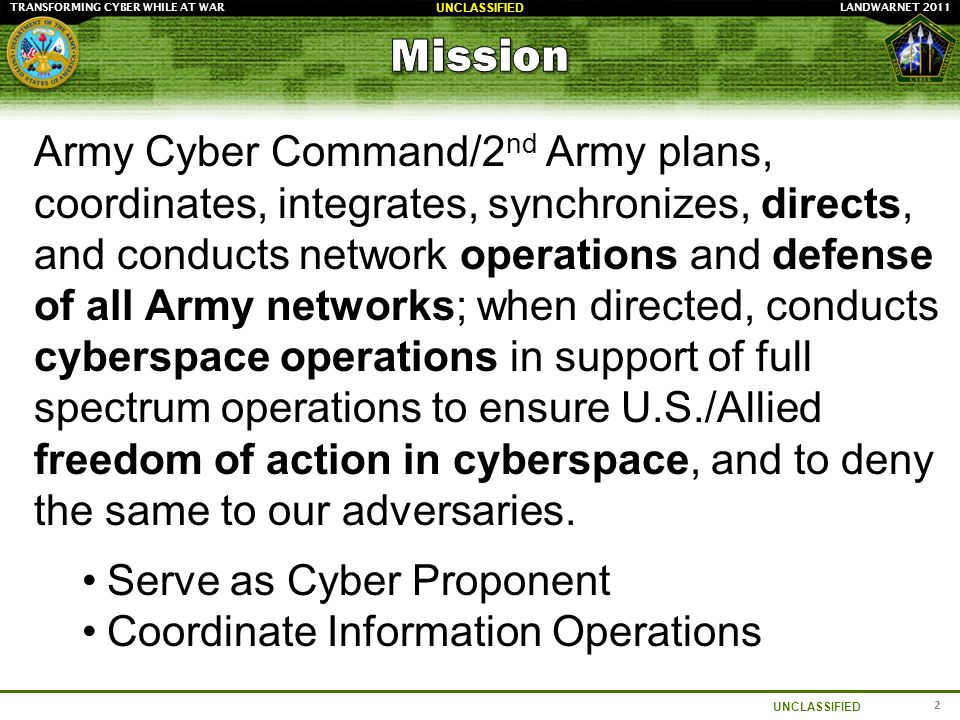
US and other coutries including U.K., China, Russia, Israel and others are setting up Unified cyber commands for more effective and coordinated efforts for conducting cyberspace operations, both offensive and defensive. The offensive operations are seen as deterrent to adversaries.
US has elevated Cyber Command to the 10th combatant command and the first new combatant command since Africa Command came online in 2007. “Today we start writing the opening chapter for U.S. Cyber Command as our nation’s newest unified combatant command,” he said. Gen. Paul Nakasone assumed the directorship of the National Security Agency and Cyber Command, now officially a unified combatant command, from Adm. Michael Rogers in a ceremony May 4, 2018. “From defensive operations protecting our networks to offensive operations against ISIS and other adversaries, CYBERCOM has matured rapidly.” According to the New York Times, the more proactive approach has led to “nearly daily raids on foreign networks”, as US Cyber Command’s staff seek to disable “cyber weapons” before they can be deployed.
Sergei Shoigu Russia’s defense minister in Feb 2017 made first official acknowledgement of the existence of Russian cyber army when he said that his nation also has built up its muscle by forming a new branch of the military — information warfare troops. Retired Gen. Vladimir Shamanov, the head of defense affairs committee in the lower house of parliament, said that information warfare troops’ task is to “protect the national defense interests and engage in information warfare,” according to the Interfax news agency. He added that part of their mission is to fend off enemy cyberattacks. Viktor Ozerov, the head of the upper house’s defense and security committee, also told Interfax that the information troops will protect Russia’s data systems from enemy attacks, not wage any hacking attacks abroad.
British government is to massively expand its cyber warfare infrastructure with the creation of a 2,000-strong unit that could absorb some 250 million pounds of annual funding and even more. It said that officials from the Government Communications Headquarters (GCHQ) will be staffed to the plan by the British Ministry of Defense which is aimed at countering the increasing cyber threats from countries like Russia. “By adopting offensive cyber techniques in the UK we are leveling the playing field and providing new means of both deterring and punishing states that wish to do us harm,” said General Sir Richard Barrons, a former commander of Joint Forces Command. Some sources said that the annual budget earmarked for the new project will even exceed 250 million pounds.
India plans to set up Defence Cyber Agency (DCA) will initially directly employ about 1,000 people drawn from the Indian Air Force, the Army and the Navy, besid-es from the Integrated Defence Staff (IDS) and will be a precursor to the setting up of a cyber command in the near future. The new body will engage in defending military assets and resources and also use its offensive capabilities in proxy cyber warfare like those being indulged in by non-state actors and terrorists.