
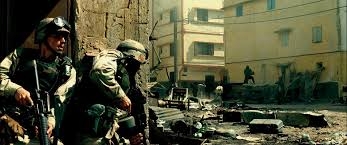

Cities have become the new battleground and Hybrid or Urban Warfare the greatest threat being waged by ISIS to Boko Haram to Hamas to Ukraine rebels. Boko Haram is carrying out its urban terror campaign against the Nigerian Army and its allies. In the Paris attacks, two teams of lightly armed jihadists using armed assault, police executions, hostage taking, and barricade standoffs terrorized Parisians for 72-hours. “I would place [the Paris attack] into the ‘urban warfare’ model of attacks,” said Daveed Gartenstein-Ross, a senior fellow at the Foundation for Defense of Democracies.
A U.N. report released last July, in fact, found that the Taliban had shifted their tactics from improvised explosive devices to gun battles in heavily populated areas. This is one major reason for the recent increase in civilian casualties in Afghanistan. Security agencies of Europe and the United States are concerned foreign fighters radicalized by the Islamic State will return home to conduct terrorist attacks. Urban conflicts arising from transnational criminal activity account for 88% of the lethal violence that countries are experiencing today.
The terrorists and other groups resort to Asymmetric Warfare that tries to counter technological superiority by exploiting the limitations and vulnerabilities of high-tech weapon and platforms, with relatively simple, low-cost countermeasures, tactics and solutions like dispersion and concealment tactics.
Now militaries are realizing much of the fighting in future conflicts will take place in cities. Whether Russia in the Caucasus, Israel in Gaza and southern Lebanon, or the United States and its allies in Iraq, many sophisticated armies have experienced urban warfare over the past two decades.
General Mark Carleton-Smith, the head of the Army, spoke about “darkening geopolitical picture” and said warfare was moving into areas such as cyberwarfare, artificial intelligence and autonomous technology. “We need a more proactive, threat-based approach to our capability planning, including placing big bets on those technologies that we judge may offer exponential advantage because, given the pace of the race, to fall behind today is to cede an almost unquantifiable advantage from which it might be impossible to recover,” he said
Building Resilience Against Terrorism has four mutually reinforcing elements: prevent individuals from engaging in terrorism; detect the activities of individuals and organizations who may pose a terrorist threat; deny terrorists the means and opportunity to carry out their activities; and respond proportionately, rapidly and in an organized manner to terrorist activities and mitigate their effects.
Technology can help understand the causes of radicalization, protect the national infrastructure, reduce the vulnerability of crowded places, protect against cyber terrorism, improve analytical tools, identify, detect and counter novel and improvised explosives and understand and counter chemical, biological, radiological, nuclear and explosive threats (CBRNE).