
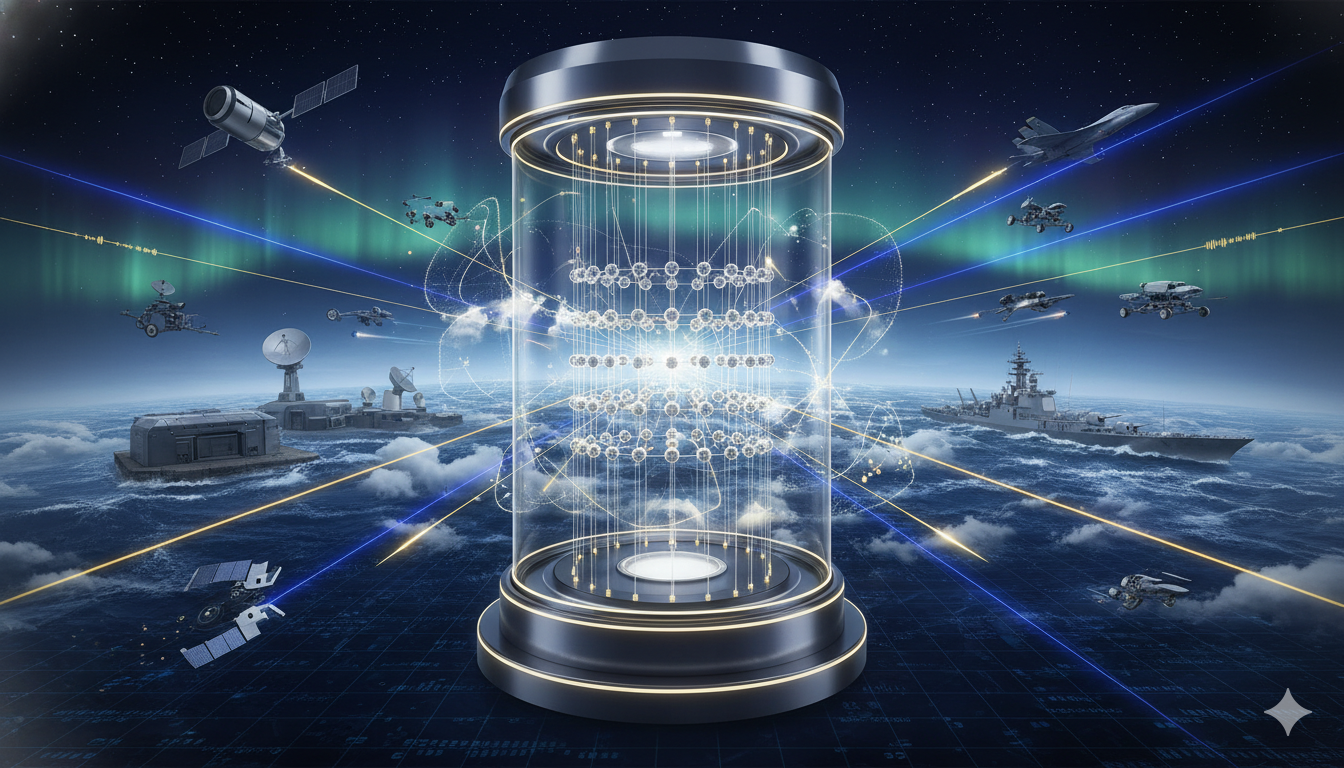

Introduction: Time as the Strategic Backbone of the Modern World
Timekeeping is no longer a passive scientific discipline—it has become an invisible but decisive layer of global power. From synchronizing financial markets and telecommunications networks to enabling precision navigation, missile guidance, and electronic warfare, the ability to measure and distribute time with extreme accuracy underpins the functioning of modern civilization. What was once a gradual evolution—from sundials and pendulums to quartz oscillators—has now entered a phase of rapid technological acceleration driven by quantum science.
This transition marks a fundamental shift. Classical systems measured time through mechanical or electronic regularity; quantum systems define time through the immutable behavior of atoms and photons. The emergence of atomic clocks, and now quantum-enhanced optical and entangled clocks, is not merely improving precision—it is redefining the limits of measurement itself. In practical terms, this means moving from nanosecond-level synchronization to regimes where even relativistic effects, gravitational differences, and quantum noise become operational considerations.
The implications extend far beyond laboratories. As reliance on satellite-based timing systems like GPS grows—and as those systems become increasingly vulnerable to jamming, spoofing, cyber intrusion, and anti-satellite threats—the need for resilient, sovereign, and self-contained timing infrastructure has become urgent. Quantum clocks and sensors are now at the center of this transition, offering the possibility of navigation and synchronization systems that are not only more precise, but fundamentally harder to disrupt.
What is emerging is a new technological foundation: a quantum-enabled timing architecture that will underpin next-generation communications, autonomous systems, financial networks, and military operations. In this context, the evolution of timekeeping is no longer about measuring seconds—it is about controlling the tempo of systems, decisions, and ultimately, power itself.
The Evolution of Timekeeping: From Classical to Quantum
Timekeeping has undergone a remarkable transformation over the centuries, evolving from primitive methods that relied on the Earth’s rotation and celestial movements to the precision offered by pendulum clocks, quartz oscillators, and ultimately atomic clocks. Early methods offered only coarse measurement, but each successive innovation—from water clocks and sundials to the mechanical precision of pendulum clocks and the stable resonance of quartz crystals—enabled the subdivision of time into ever smaller intervals. Quartz clocks, for instance, use an electric current to excite a crystal’s natural vibration, providing accuracy sufficient for early electronics but ultimately limited by environmental sensitivity.
Today, quantum technologies are taking this evolution to an entirely new level. By harnessing the principles of quantum mechanics—such as superposition, entanglement, and the manipulation of atoms at near-absolute-zero temperatures—modern scientists and defense agencies are developing quantum sensors and atomic clocks with unprecedented precision. These breakthroughs are not only redefining timekeeping but are also finding critical applications in military communications, navigation, and electronic warfare (EW). Precise timing is essential for synchronizing communication networks, enabling robust positioning systems like GPS, and ensuring that EW systems can intercept and counter enemy signals with razor-sharp accuracy. As quantum technologies mature, their integration into military systems promises to deliver a new era of operational precision, resilience, and innovation.
The Advent of Atomic Clocks
Atomic clocks represent a revolutionary leap in precision timekeeping. Unlike earlier devices that depend on mechanical or crystal vibrations, atomic clocks measure time based on the natural resonance frequency of atoms. The international standard has long been the cesium-133 atom, whose electrons emit microwaves at exactly 9,192,631,770 cycles per second when transitioning between energy states. This process, facilitated by lasers that excite and then cool the atoms, enables atomic clocks to achieve extraordinary accuracy. Because atomic vibrations are natural and universal, these clocks provide a stable and reliable standard.
Different types of atomic clocks are available today, each designed to meet specific needs. Cesium atomic clocks serve as the international standard for defining the second and are commonly used in GPS satellites and other applications where timing accuracy is paramount. Rubidium atomic clocks, while slightly less precise, offer advantages in size, cost, and power consumption, making them well-suited for portable and commercial applications. The emergence of chip-scale atomic clocks (CSACs) has marked a significant breakthrough, as these ultra-compact devices provide high performance with very low power usage, ideal for mobile and unmanned systems.
Atomic clocks underpin the synchronization of many critical systems, including mobile communications, financial transactions, the internet, power grids, and the Global Positioning System (GPS). For example, the atomic clocks aboard GPS satellites must maintain time to within nanoseconds; even a 10-nanosecond error per day can lead to significant positional inaccuracies if not regularly resynchronized. This challenge of maintaining precise timing over vast distances—and the growing vulnerability of satellite-based timing to jamming, spoofing, and physical attack—has driven the search for even more accurate and resilient timekeeping technologies.
Advancements Through Quantum Effects: Optical Clocks and Beyond
To further enhance precision, scientists have turned to quantum effects to develop optical atomic clocks. These clocks use atoms or ions that oscillate at optical frequencies—approximately 100,000 times higher than microwave frequencies. Because optical clocks “tick” much faster, they can provide time-stamping accuracy that is 100 to 1,000 times greater than their microwave counterparts. In these devices, an ultra-stable laser is locked to a narrow electronic transition—known as the “clock transition”—in the optical spectrum, ensuring exceptional stability.
Optical Lattice Clocks
Among the most significant developments is the optical lattice clock, pioneered by researchers such as Jun Ye’s group at JILA (a joint institute of the National Institute of Standards and Technology and the University of Colorado Boulder). This clock uses strontium atoms trapped in a three-dimensional optical lattice formed by intersecting laser beams. The breakthrough lies in confining up to 10 trillion atoms per cubic centimeter, each isolated in its own discrete site, thereby minimizing interatomic interference. By cooling the strontium atoms to near absolute zero (−273°C) and using an ultra-stable laser that maintains optical coherence for over 10 seconds, the clock achieves a stability of 2 × 10⁻¹⁶ at one second. This level of precision translates into staggering long-term accuracy: the clock would lose or gain less than one second over the entire age of the universe. Such optical lattice clocks are paving the way for a future redefinition of the second, moving from microwave to optical standards.
Quantum Entanglement and Ion Clocks
While optical lattice clocks achieve remarkable stability through atom isolation, quantum entanglement offers a complementary path to even greater precision by actively suppressing noise. Researchers at the National Institute of Standards and Technology (NIST) have demonstrated this potential with a quantum-logic clock based on entangled ions. In this design, a positive aluminum-27 ion serves as the timekeeper, while a magnesium-25 ion cools it via Coulomb interactions. The two ions are entangled, allowing the system to measure the aluminum ion’s clock transition—excited by ultraviolet laser light at 267 nm—with extraordinary precision. Innovations in trap symmetry and pulsed Raman sideband cooling have reduced systematic uncertainty to 9.4 × 10⁻¹⁹, establishing it as one of the world’s most accurate timekeepers. By exploiting entanglement to mitigate errors from thermal motion and other perturbations, this quantum-enhanced clock surpasses traditional atomic clocks in fundamental accuracy.
Research is also advancing toward entangling neutral atoms within optical lattices. Teams led by Jun Ye and others are exploring methods to generate entanglement among strontium atoms trapped in lattice arrays, aiming to further suppress quantum noise and push stability beyond current limits. These efforts highlight how entanglement—once a purely experimental curiosity—is becoming an engineering tool for next-generation timekeeping.
Compact Cold-Atom Sources for Portable Quantum Devices
A critical enabler for field-deployable quantum clocks is the miniaturization of cold-atom sources. Traditional laser-cooling systems require complex arrays of mirrors and vacuum chambers, limiting their use to laboratory environments. Researchers at Oxford University—S. Ravenhall, B. Yuen, and Christopher Foot—have addressed this challenge with a novel, compact cold-atom source published in Optics Express.
Their design employs just four mirrors arranged in a pyramid configuration, polished from metal and coated with a dielectric layer. These mirrors slide past each other like flower petals, creating an adjustable aperture at the pyramid’s apex. This aperture emits a high flux of laser-cooled rubidium atoms—up to 10 trillion atoms per cubic centimeter—significantly enhancing the signal-to-noise ratio and measurement accuracy critical for quantum applications. The system is simpler, more cost-effective, and scalable for commercial production compared to conventional designs.
Such compact cold-atom sources are foundational for portable quantum devices. They enable atomic clocks small enough to deploy on ships, aircraft, and ground vehicles, as well as quantum sensors for gravity mapping and inertial navigation in GPS-denied environments. This miniaturization represents a crucial step in transitioning quantum timing technologies from laboratory benches to operational theaters.
The UK’s Quantum Clock and the New Era of Resilient Navigation
In a landmark development, the United Kingdom’s Ministry of Defence (MoD) has publicly unveiled a sovereign quantum clock designed to operate independently of GNSS. Developed by the Defence Science and Technology Laboratory (Dstl), this portable atomic clock has been successfully trialed outside a laboratory setting for the first time. Using laser-cooled atoms as its timing reference, the device provides an ultra-stable, secure timing signal immune to jamming or spoofing. With over £28 million invested in quantum R&D, the UK aims to deploy this technology within five years.
The strategic implications are far-reaching. By providing a sovereign-controlled timing source, the UK can ensure resilient navigation for military vehicles, ships, and aircraft even when satellite signals are denied. The precision directly enhances advanced weapon systems, enabling more accurate trajectory calculations and coordinated multi-platform strikes. It also strengthens encrypted communications, making them more resistant to cyber threats. The trial, part of the MoD’s ‘Demonstration of Advanced Timing Apparatus’ (DATA) series, involves key industry and academic partners including Infleqtion, Aquark Technologies, and Imperial College London.
This initiative places the UK at the forefront of a global race to operationalize quantum technologies for strategic advantage. It aligns with broader government goals to create high-skill jobs and establish leadership in a transformative industrial sector. Moreover, it follows a trilateral agreement between the UK MoD, the US Defense Advanced Research Projects Agency (DARPA), and the Canadian Department of National Defence to collaborate on advanced AI and cybersecurity—signaling deepening allied cooperation in next-generation defense technologies. By pioneering portable quantum clocks, the UK is not merely building a new tool but laying the foundation for a more resilient and secure operational framework across the future battlespace.
Military Impacts: The Strategic Imperative of Precision Timing
The military’s reliance on precise timing is foundational. Global Navigation Satellite Systems (GNSS) such as GPS, secure communications networks, financial systems, and coordinated weapons platforms all depend on synchronization to within nanoseconds. A timing error of even a few nanoseconds can translate into positional inaccuracies of meters—a critical margin in targeting or navigation. Yet satellite-based timing is increasingly vulnerable to jamming, spoofing, and potential destruction by adversaries. Quantum atomic clocks offer a solution: high-precision, resilient timing that can operate independently of external signals.
Quantum-enhanced clocks address this vulnerability in two ways. First, their superior stability reduces the frequency with which they require resynchronization, making them more resilient against disruptions. Second, ongoing miniaturization efforts are producing portable clocks that can be deployed on ships, aircraft, and ground vehicles, providing local, sovereign-controlled timing even in contested environments. These capabilities are essential for electronic warfare, where denial of GNSS is a core adversary tactic, and for precision-guided munitions that demand exacting timing for trajectory calculations and coordinated multi-platform attacks.
Alongside atomic clocks, quantum sensors—such as magnetometers and inertial measurement units—are being explored for navigation in GPS-denied scenarios. These sensors exploit quantum effects to detect minute changes in magnetic fields or motion, offering inherently jam-resistant alternatives to conventional navigation systems. When combined with portable quantum clocks, they form the foundation of a resilient, multi-layered positioning, navigation, and timing (PNT) architecture that can operate independently of satellites.
Impact on Military Communications
Accurate timing is the lifeblood of modern military communications. For example, compact atomic clocks based on quantum technologies are being developed for use in space, ensuring that satellite communication systems remain resilient even if centralized network time references are disrupted. Enhanced atomic clocks ensure that communication satellites, ground stations, and mobile networks remain perfectly synchronized, which is essential for maximizing bandwidth and minimizing signal interference. Improved synchronization reduces latency in data transmission, enabling real-time communication that is vital during critical operations. Such capabilities are pivotal for maintaining the reliability of systems that require synchronized operations across distributed networks.
Enhanced timing precision also plays a critical role in ensuring robust and reliable communications across military networks, especially for satellite-based systems. Precise clock synchronization among satellites increases the effective bandwidth and efficiency of data processing and transmission, which is essential for real-time command and control, secure communications, and coordinated maneuvers in contested environments. As quantum communication technology continues to mature over the next few decades, the integration of advanced atomic clocks and quantum sensors will be key to maintaining a strategic edge in defense, ensuring that critical systems remain both secure and highly efficient.
Advancements in Electronic Warfare
Beyond communications, quantum-enhanced timing has profound implications for electronic warfare. EW systems rely on the precise measurement and timing of electromagnetic signals to intercept, jam, or decrypt enemy transmissions. Quantum technologies allow for faster, more accurate detection of transient signals across a broad frequency spectrum, improving the ability to counter sophisticated threats.
For instance, in electronic warfare scenarios, where intercepting and decoding enemy signals is crucial, even minor improvements in time precision can translate into more effective signal detection and processing. With quantum-enhanced clocks, military communication systems can achieve robust performance, even in contested or GPS-denied environments.
The U.S. Air Force Scientific Advisory Board has underscored the importance of further investment in quantum clocks and quantum sensors, emphasizing that enhanced timing precision is crucial for optimizing complex military operations. This precision is not just about accurate timekeeping; it is integral to the effectiveness of operations such as Signals Intelligence (SIGINT), countering deceptive radar techniques (counter-DRFM), and electronic warfare (EW). In these domains, even a nanosecond discrepancy can lead to significant performance degradation, potentially compromising mission success and strategic advantage.
Additionally, by integrating quantum sensors with advanced atomic clocks, EW platforms can operate with greater resilience against jamming and spoofing, thereby securing critical military operations. Enhanced timing precision also enables better coordination among multiple EW assets, creating a more cohesive and responsive defense network.
As noted by researchers like Christopher Foot from Oxford University, quantum clocks can significantly improve the synchronization of electronic communications and navigation systems, which is vital for modern military operations. Such advancements also extend to quantum sensors used in navigation and EW, where the precise timing of signal detection can be the difference between intercepting a threat and missing it entirely
Future Implications and Additional Developments
The potential applications of portable cold-atom sources extend far beyond timekeeping. In defense, these technologies can provide critical support for electronic warfare by enhancing the precision of quantum sensors and navigation systems. For instance, quantum magnetometers and inertial sensors, which are not susceptible to jamming, could be integrated with portable atomic clocks to maintain accurate positioning and secure communications even under adverse conditions. Furthermore, recent advancements in quantum-logic clocks—such as the entangled aluminium-ion clocks developed at NIST—demonstrate how quantum entanglement can push the limits of accuracy even further, offering prospects for redefining the second.
As research continues to mature, the convergence of these quantum technologies promises to usher in a new era of resilient, high-performance defense and communication systems. With ongoing investments in quantum research by governments worldwide, the evolution of portable cold-atom sources and other quantum sensors will play a pivotal role in creating systems that are not only more precise but also more adaptable to the complex demands of modern military operations and civilian applications alike
Intelligence / Strategic Assessment: Quantum Timing and the Weaponization of Precision
The transition from classical to quantum timekeeping represents a structural shift in the global balance of technological power, with timing precision emerging as a contested strategic domain. Unlike previous generations of clocks that primarily enhanced accuracy, quantum timing systems fundamentally alter the resilience and autonomy of critical infrastructures. This shift is occurring at a moment when reliance on Global Navigation Satellite Systems (GNSS) has become both ubiquitous and dangerously brittle. Persistent jamming in Eastern Europe, spoofing incidents in the Middle East, and increasing concerns over anti-satellite capabilities have exposed a systemic vulnerability: modern economies and militaries depend on timing signals that can be disrupted at scale.
Quantum clocks directly target this weakness by enabling sovereign, platform-level timing independence. Their ability to maintain ultra-precise synchronization over extended periods without external reference transforms navigation, communications, and electronic warfare from network-dependent capabilities into internally sustained ones. This has profound military implications. In contested environments, forces equipped with quantum timing can maintain coordinated operations, execute precision strikes, and sustain encrypted communications even when satellite infrastructure is degraded or denied. The result is not just improved performance, but a shift in survivability and operational continuity.
At the strategic level, timing is increasingly intertwined with escalation dynamics. Precision in time enables precision in action—whether in coordinating distributed drone swarms, synchronizing multi-domain strikes, or executing complex electronic warfare operations. As quantum clocks reduce timing uncertainty to near-zero, they compress decision cycles and reduce the margin for error. This creates both advantages and risks. On one hand, actors with superior timing infrastructure gain a decisive edge in speed, coordination, and reliability. On the other, reduced temporal ambiguity can increase the pace of conflict, leaving less room for de-escalation or corrective action.
The geopolitical dimension is equally significant. The United States, China, the United Kingdom, and the European Union are all investing heavily in quantum timing as part of broader efforts to secure technological sovereignty. These investments are not isolated; they are embedded within larger ecosystems encompassing quantum communication, sensing, and computing. Control over timing standards and infrastructure will influence global technology architectures, from 6G networks to autonomous transportation systems. Much like GPS in the late 20th century, quantum timing could become both a tool of influence and a point of dependency for allied and partner nations.
A critical dynamic over the coming decade will be the convergence of quantum clocks with other quantum and non-quantum systems. Integrated with inertial sensors, magnetometers, and AI-driven navigation algorithms, quantum timing will form the backbone of resilient Positioning, Navigation, and Timing (PNT) architectures. These systems will operate independently of satellites, enabling true autonomy for platforms ranging from submarines and aircraft to unmanned systems and space assets. This convergence effectively shifts navigation from an external service to an internal capability—one that is far harder to deny or manipulate.
At the same time, the dual-use nature of quantum timing technologies introduces strategic ambiguity. While they enhance civilian resilience—supporting financial systems, power grids, and telecommunications—they also enable more effective military operations, including precision targeting and advanced electronic warfare. This raises questions about export controls, technology diffusion, and the potential militarization of civilian infrastructure. As quantum timing becomes more widespread, the distinction between civilian and military advantage will blur, complicating regulatory and policy responses.
Looking ahead, the most consequential impact of quantum timekeeping may not be in any single application, but in its role as an enabling layer across multiple domains. Just as electricity and computation became foundational to industrial and digital revolutions, quantum timing is poised to become a foundational layer of the emerging “precision economy.” Nations that lead in this domain will not only field more capable military systems but will also shape the standards, protocols, and architectures that define future global networks.
In this sense, the race for quantum clocks is not simply about keeping better time. It is about controlling synchronization itself—who sets it, who maintains it, and who can operate when it breaks. In an era of contested infrastructure and compressed decision-making, that control translates directly into strategic advantage
Conclusion: Toward a Quantum-Enabled Timing Infrastructure
The integration of quantum effects into atomic clocks represents a profound leap forward in both precision measurement and military technology. The convergence of optical lattice clocks, compact cold-atom sources, entanglement-enhanced timekeeping, and portable quantum sensors marks a turning point in the history of timekeeping. What was once confined to laboratory demonstrations—clocks that would lose less than a second over the age of the universe—is now transitioning into deployable systems capable of operating in space, at sea, and in the most contested environments. These advances are not merely incremental improvements; they fundamentally redefine what is possible in synchronization, navigation, and situational awareness.
The strategic value of quantum atomic clocks lies not only in their extraordinary accuracy but in their resilience. By providing secure, sovereign-controlled timing that operates independently of vulnerable satellite infrastructure, they directly address a critical vulnerability in modern military and civilian systems. Global Navigation Satellite Systems (GNSS) such as GPS have long been the backbone of positioning, navigation, and timing (PNT), but their susceptibility to jamming, spoofing, and physical attack has become a pressing concern. Quantum clocks, combined with emerging quantum sensors for inertial navigation and magnetic field detection, offer a path toward a multi-layered PNT architecture that can function reliably even when satellite signals are denied.
As nations including the United States, China, and the United Kingdom accelerate investments in quantum timing, the technology is poised to become a foundational layer of both civilian infrastructure and military capability. The United Kingdom’s recent deployment of a portable quantum clock, developed by its Defence Science and Technology Laboratory (Dstl) with over £28 million in investment, exemplifies how these technologies are moving from research programs into operational prototyping. Such initiatives signal a broader recognition that quantum timing is not a distant future capability but an emerging present-day imperative.
The coming decade will determine whether quantum clocks remain specialized assets for select military platforms or become as ubiquitous and essential as GPS is today. What is clear is that the race for quantum timekeeping is, at its core, a race to secure the very heartbeat of modern technology and defense. These advancements not only improve the accuracy and stability of timekeeping but also enhance military communications, electronic warfare capabilities, and the effectiveness of precision-guided munitions. With continued investment in quantum research, the future of defense technology promises even greater precision and resilience, ensuring that military networks remain synchronized, secure, and capable of operating effectively under the most challenging conditions. In this new era, the ability to measure time with quantum precision will be nothing less than a strategic advantage—one that will reshape how modern warfare is conducted and how critical infrastructure is protected.