

Water is the most precious resource for sustaining life and survival of living world, but we are losing fresh water at an astonishing rate: Climate change is resulting in disappearing of glaciers and severe droughts, groundwater being pumped out faster than natural processes can replace it. Much of the world faces a hotter and drier future under climate change, according to scientists. Rainfall – including the monsoons that fortify agriculture in south Asia – will become more unpredictable. Storm surges could contaminate freshwater reservoirs.
The Overall global water demand is projected to increase by 55 percent on the way to 2050 led by countries like Brazil, Russia, India, Indonesia and China (BRIICS) to satisfy the needs of ever-growing population —a staggering 9.6 billion people by 2050. In countries like China, the largest growth rate in water use will be in the industrial and domestic sectors according to the Water Resources Group. And new fault lines are emerging with energy production. America’s oil and gas rush is putting growing demands on a water supply already under pressure from drought and growing populations.
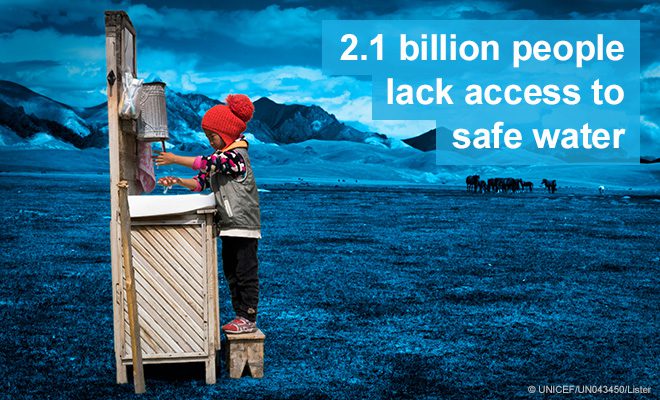
Water scarcity is considered the current biggest threat to global prosperity, as over 1 billion people today have no access to water and nearly half of the World population is feared to be influenced by water stress by 2050. By 2025, up to 2.4 billion people worldwide may be living in areas subject to periods of intense water scarcity, according to UN estimates. The African countries, India and China and most parts of Central Asia will be under severe water scarcity, while USA and South America will suffer from extreme water stress.
Agriculture is the leading use of water and globally irrigated farming takes more than 60 percent of the available fresh water. The water shortages shall cause food production to decline reduced electrical power generation and the Economic output will suffer, due to contraction in manufacturing and resource extraction. Water shortages will deliver a “severe hit” to the economies of the Middle East, central Asia, and Africa by the middle of the century, it could strip off 14% of GDP in the Middle East and nearly 12% of GDP in the Sahel – without a radical shift in management, according to the World bank’s projections. Central Asia could lose close to 11% of GDP and east Asia about 7% under business-as-usual water management policies, according to a new report. Taking into account all regions, the mid-range toll of water shortages on GDP was about 6%.
Water scarcity made worse by climate change is a growing issue worldwide, and no place knows that better than South Africa’s Cape Town, for example, that could become the world’s first major city to run out of water. Much of the city’s water flows from neighbouring Lesotho, and the next water crisis could be looming there. South Africa has been plagued by a prolonged drought for three years.
The city’s tools for reducing water consumption, though, could be used around the world to preserve limited resources, he said. Cape Town residents have learned to shower in 90 seconds or less, and hotels in the popular tourist destination are working on building their own desalinization plants to ensure clean water supplies off the grid. Thanks to lower residential water consumption and a slower rate of decline in dam levels, Cape Town officials on Feb. 20 pushed out the estimated date on which it may have to turn off water supplies to residents by more than a month to July 9, 2018. Bloomberg reports. We view the water crisis as not just isolated to Cape Town, it’s a global phenomenon. World class cities, such as Los Angeles, Beijing, Sao Paulo, are going through the same thing and a lot of them have had to put in water restrictions.
India too is staring at a water crisis. Just three decades from now, India could be importing the water as availability per person will dwindle down to 22 percent of the present scenario. In some places in India, disaster has already arrived. The four reservoirs that supply Chennai, India’s sixth-largest city, are nearly dry. Taps have long run dry in cities like Bangalore and Hyderabad, meaning millions of people must rely on emergency government tanks for water. Tanker mafias have even emerged, ruling who gets water and for what price.
India’s population is outgrowing its water supply. India is set to overtake China as the world’s most populous country in less than a decade — and by 2050 it will have added 416 million urban residents, according to the UN. Years of rapid urbanization with little infrastructure planning means most cities are ill equipped to handle the additional population stress. Demand for water will reach twice the available supply by 2030, the UN report said — placing hundreds of millions of lives in danger.
Urban lakes and inlets have been lost to encroachment and environmental degradation, meaning cities generally don’t have places to store usable rainwater. They also have limited water conservation infrastructure — rainwater harvesting systems, water reuse and recycling, and waste water treatment.