

The rising road accidents which cause serious injuries, and even fatalities has lead industry to look for solution that can enhance safety both in terms of the vehicle and the operation of the vehicle. One of the technology is the the Intelligent Driver Information System is also known simply as IDIS.
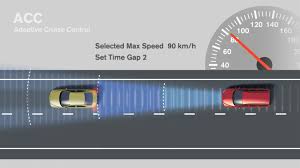
The system was introduced to the world by car manufacturing giant Volvo in 2003, and it became the first generation of a management system based on interaction between the vehicle and the driver. It was designed to serve numerous purposes like assisting driver and improving safety. However, due to technological advancements, IDIS now provides various other features like collision warning with auto brake. The system is designed to identify a possible collision and alert the driver so that the collision can be avoided or the severity of it reduced. This is a very important feature pertaining to the risk of road accidents. Another remarkable feature of IDIS is adaptive cruise control (ACC), which adapts the vehicle’s speed with respect to the vehicle’s speed in front which assists with the smooth-flow of traffic.
Intelligent driver information system (IDIS) is expected to witness the fastest growth from 2019 to 2025. This will improve road safety by reducing the risk of collisions. Such remarkable features are expected to significantly boost ITMS market demand.
The basic function of this system is to provide continuous monitoring of the demands in relation to the driving situation at the time. The Intelligent Driving system collects data on speed, location, topography, traffic light patterns, congestion, and more. This data is then funneled from the cloud into a propulsion controller that actively adjusts vehicle speed, energy balance and performance to help the vehicle make smarter, energy-saving decisions. It also schedules a variety of messages to keep the driver informed, which includes information relating to incoming text message or calls.
When applied to hybrid electric vehicles, Intelligent Driving technology has the potential to improve efficiency even further as new driver assistance technologies emerge, across all propulsion systems, including internal combustion, hybrid or full electric.