
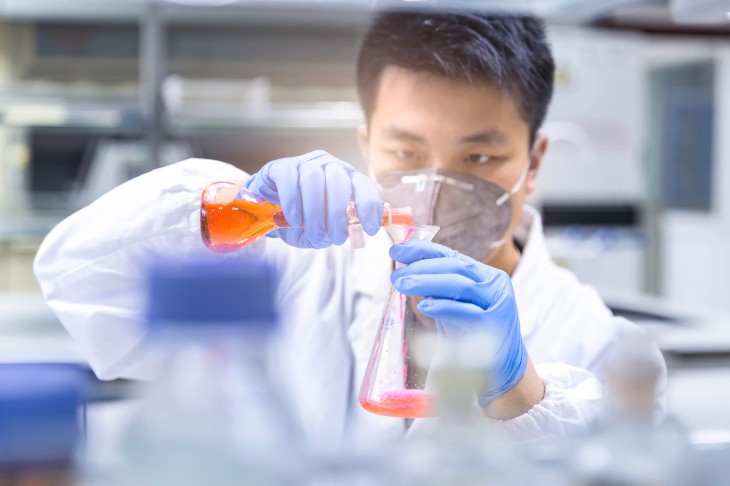

In general, biotechnology is the utilization of biological procedures for industrial and other purposes, specifically, the genetic management and the manipulation of microorganisms for the production of antibiotic drugs, hormones, and medical devices.
The life sciences and healthcare industry as the name suggests is an amalgamation of industries like hospital management, Pharmaceuticals, Health insurance companies, Donors, Manufacturer of Medical equipments etc. This industry is supported with great professionals like the doctors, therapists, psychologists, biotechnologist, nurses, midwives etc. The main purpose of this industry is to provide the best possible treatment, curing of the patients, health related benefits like death claim, life insurance policies.
The industry is on the path of rapid global expan rapid global expansion sion. As per Persistence Market Research, the global life science products market was estimated to be valued at more than US$ 2,500 Mn in 2015 and is projected to grow to approximately US$ 4,200 Mn by 2024 end. This represents a CAGR of 4.3% over the forecast period. The global market for life science products represents absolute $ opportunity of nearly US$ 120 Mn in 2017 over 2016 and incremental opportunity of approximately US$ 1,500 Mn between 2016 and 2024.
There has been a shift in investments in R&D and technology, especially in the life sciences domain, from North America and Europe to Asia Pacific. Developing economies such as India have ample skilled labor and qualified manpower at affordable costs thereby increasing the scope for attracting outsourcing of biotech projects. Additionally, several governments in the Asia Pacific region have started taking initiatives to support growth of the domestic biotechnology industry by offering tax exemptions on R&D initiatives; increasing budgets and funding, creating public and private conglomerates; and attracting foreign direct investments.
Health life sciences” refers to the application of biology and technology to improve health care, and includes biopharmaceuticals, medical technology, genomics, diagnostics and digital health. The sector generates a wide range of products including drugs, medical technology, diagnostics and digital tools. Average life expectancy in OECD countries has increased by 5.5 years from 75 in 1990 to 80.5 years in 2015.
The biotech industry continues to churn out life-saving drugs while investors shower them with billions of dollars. The global biotech market is estimated to be worth $414.5 billion by the end of 2017. It’s not only about improving the health of people but meeting the rising demand in food in some of the populous nations like India and China that biotech has helped to achieve.
The industry is also facing new challenges: Populations are aging, Chronic illnesses are increasing, New disease strains are emerging at an alarming rate. Add to this mix, the soaring number of patients in a greater spread of geographies. As per the 2011 national census , in India 68.86% people residing in rural areas still don’t have access to quality healthcare. This population pool is devoid of sufficient ambulatory, clinical, and hospital care facilities.
The Life Sciences industry is undergoing a major transformation. A large part of this is fuelled by the integration of digital and ICT technologies. This transition has opened up new opportunities for development, but also comes with its own challenges. Technology is playing a massive role in enabling the industry, be it analytics in personalized medicine, cloud computing in collaboration, or wearable devices in remote and self-health monitoring. Report predicted that in 2030, technology companies will be key players and provide crucial input by leveraging new technologies such as AI, cloud-based platforms, machine learning, cognitive technology and wearables.
To keep pace with a rapidly changing technology landscape, organization,would need to develop a deeper integration, collaboration, and synchronization of activities across all channels.