
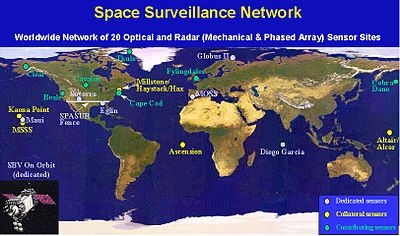

As the space is getting weaponized, countries are evolving new space strategies, space command and forces and space situational awareness and space weapons. There is also ongoing Space security cooperation between Canada, U.S., U.K. and Australia to counter the threats. In 2014, Defence departments of the Canada, U.S., the U.K. and Australia signed an agreement regarding share space-related resources and information.
“Our biggest concern is the behavior of Russia and of China,” Gen. Sir Chris Deverell, commander of Joint Forces Command, said Nov. 6 at the 2018 Global MilSatcom conference. The Joint Forces Command, under UK Ministry of Defence, oversees space, intelligence, information systems and cyber operations. The U.K. — thanks in large part to Airbus and Surrey Satellite — builds a quarter of the world’s large communications satellites and 40 percent of the world’s small satellites, he said. This has a huge impact on the economy and also creates opportunities for the MoD to apply commercial technologies to space security. Threats to space systems not only are a concern to the military but to the larger economy that relies on satellites for essential services.
He slammed both nations for not practicing what they preach on the militarization of space. “They continue to promote international agreements on non-weaponization of space but are developing offensive space capabilities under a screen of propaganda and misinformation,” said Deverell. Russia and China are developing directed energy weapons, cyber techniques to disrupt satellite services and antisatellite missiles, he added.
The U.K. government designated space as critical national infrastructure in 2015 and most recently declared it the fifth warfighting domain along with air, sea, ground and cyber. U.K. space activities have to be pursued and made “resilient to challenges, be it jamming, cyber, direct attack, space weather, debris, Brexit or anything else.” Meanwhile, the U.K. military continues to deepen its participation in U.S. military space activities.
During Air Force Space Command’s recently concluded Schriever Wargame 2018 at Maxwell Air Force Base, Alabama, the U.K. was put in charge of the so-called Special Capabilities Integration Cell. This cell is where commanders simulated how the U.S., U.K., Australia and Canada would combine their space capabilities to fend off attacks in a potential conflict.
“In this game, we had the first ever high-level coalition cell,” Air Force Brig. Gen. DeAnna Burt, director of operations and communications at U.S. Air Force Space Command, said last week in Washington. “Partners brought future capabilities they’d like to build at the SAP [special access program] level,” she said. “Britain ran the cell.” Burt said this was a sign that “we really have arrived as a coalition.”
US recently lunched ( 2018 ) space strategy also backs cooperation with international partners, the strategy features four “essential pillars” that constitute “a whole-of-government approach to United States leadership in space, in close partnership with the private sector and our allies,” according to the document. Three of those pillars are related to national security activities in space, including a shift to more resilient space architectures, strengthening deterrence and warfighting options in space, and improving “foundational capabilities, structures, and processes” that include space situational awareness, intelligence and acquisition issues.