

Humans view the intensity of light as the various colors of the spectrum. Characteristics of light include amplitude (intensity), frequency (color), polarization, and coherence. The human eye has cone cells, that correspond reflected light from objects into colors which range from wavelengths of approximately 400-700nm. Polarization, the direction in which light vibrates, is invisible to the human eye (but visible to some species of shrimp and insects). But it provides a great deal of information about the objects with which it interacts. Insects have special photoreceptors that distinguish the electric field orientation which characterizes the polarization effect used by bees and ants to navigate.
The most common use of polarization in everyday use are polarized sunglasses. This technology eliminates glare from vectors of polarization that are reflected from roads or water. Most glare comes from horizontal surfaces such as highways and water. A pair of sunglasses designed to eliminate glare might be vertically polarized to eliminate the horizontal glare and only allow vertically polarized light through the glasses.
Displaying 3D movies and images is possible because of polarization. 3D imaging uses two images overlaid on the same screen with the use special polarized glasses creating a 3D image. With a different polarized filter on each lens, the human eye sees two images that create the 3D image.
Satellites and radar utilize polarization in the optical and non-optical fields. Communication and radar imagery use polarization to transfer information in military and commercial products. Synthetic Aperture Radar (SAR) onboard TerraSAR-X and airborne assets such as AIRSAR utilize different polarization signatures when imaging (Lou).
The power of polarization is a property of light that offers more information than the traditional intensity sensing. By measuring one or more parameters of polarization, details can be extracted from a scene that is not readily apparent when using conventional thermal or visible imagers. The polarization signature of man-made objects and certain natural substances are different than the surrounding background, thus providing additional contrast in polarization imagery when compared to standard thermal or visible imagery. For this reason, objects which blend into the background when using standard thermal or visible cameras often stand out in polarization.
For military the Polarization-based imaging systems provide daylight detail in the dark as well as visibility in low contrast conditions. These systems have provided vast improvements in mission-critical target detection and surveillance for the military warfighter. Commercial applications for these systems include, but are not limited to, autonomous vehicle navigation, facial recognition, and oil on water detection.
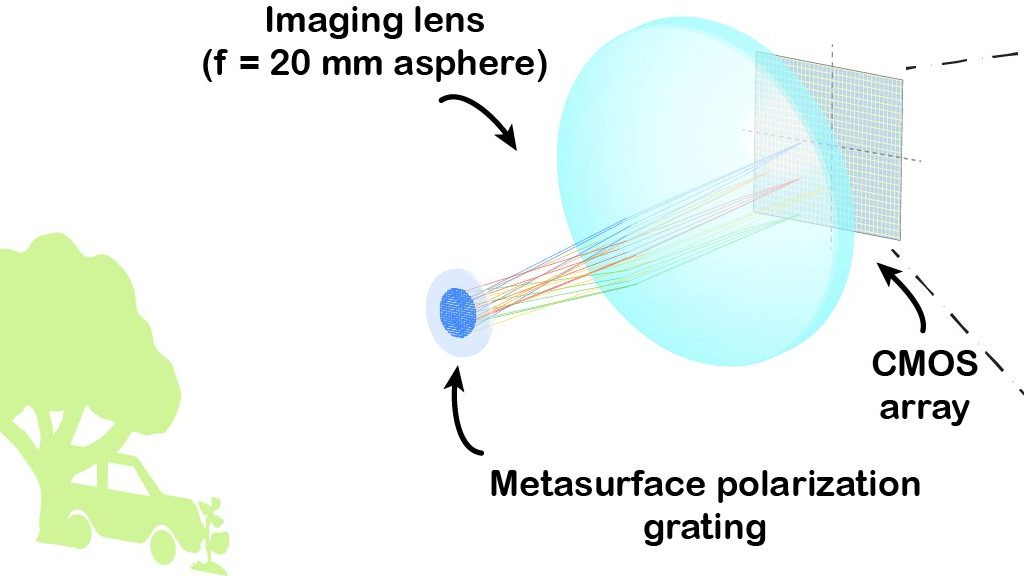
Cameras that see polarized light are currently used to detect material stress, enhance contrast for object detection, and analyze surface quality for dents or scratches. However, like the early color cameras, current-generation polarization-sensitive cameras are bulky. Moreover, they often rely on moving parts and are costly, severely limiting the scope of their potential application.