

“Electronics have dramatically changed the way we live, conduct business, communicate, and educate. Visions of the future foretell of ubiquitous computing and sensing. However, the environments in which electronics can reliably operate are limited. In consumer applications, typical operating temperatures range from -40° to 85°C. The “wider” military temperature range is only -55° to 125°C,” writes R. WAYNE JOHNSON, Ph.D., professor, at Auburn University.
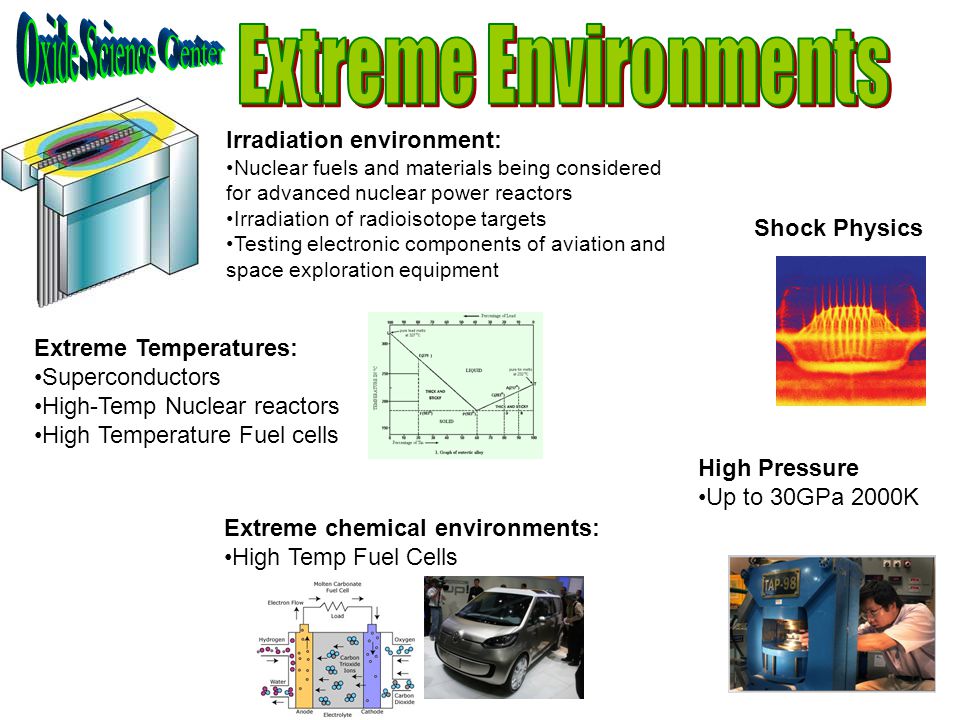
However there are extreme environments include extreme temperatures, ion concentrations, humidities, stresses, transport rates, and radiation fields. Such environments exist during Hypersonic flights, re-entry, and propulsion vehicles, deep oil wells, nuclear reactors, and under extremes of load and pressure. Using electronics in corrosive chemical or high vibration environments places severe constraints on system complexity and reduces overall reliability. Extreme environments require development of new electronics and new materials that can function in such environments.
Deep-space and long-duration missions, where both crew members and spacecraft no longer benefit from the protection of Earth’s magnetic fields, are considered high risk for adverse radiation impacts. Long term exposure of astronauts to radiation is problematic and the effect that space radiation has on spacecraft electronics and software is equally challenging.
For example, single-event effects (SEE) caused by cosmic rays, which can produce either hard or soft errors, have been observed both on the Earth’s surface at levels that can measurably impact commercial microelectronics technologies, and in avionics at levels that would jeopardize the reliability of these systems if mitigation strategies are not employed.
Department of Defense platforms, weapons and their components also operate in harsh environments for which materials with superior strength, density and resiliency properties are required. Recent scientific advances have opened up new possibilities for material design in the ultrahigh pressure regime (up to three million times higher than atmospheric pressure), says DARPA.
Members of the Stanford XLab are creating nano-devices that can withstand the acid rains on Venus, radiation in space and the heat of car engines, improving research in these extreme environments.
Los Alamos is currently leading with NETL and the DOE Fossil Energy program, the development of a multi-lab initiative to further advance the development of materials in extreme environments. ExtremeMat would be a multi-lab consortium focused on developing cross-cutting “tool sets” to accelerate the discovery and scale-up of new, or enhanced materials that can tolerate extreme environments and be scaled up for manufacturing in a cost-effective manner.