

It was in the oceans that life first evolved and where complex animals have thrived for over 600 million years. Marine animals survive in environments as diverse as tropical coral reefs, polar ice-capped oceans, and the lightless abyssal depths, says Frank E. Fish from West Chester University and Donna M. Kocak from HARRIS CapRock Communications. Millions of years of evolution have endowed biological systems with morphological, neurophysiological, and behavioral features that enable them to survive and thrive in their environments.
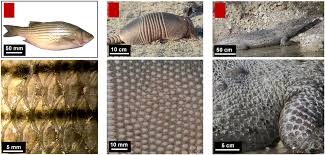
“To deal with the rigors of the marine environment, animals have developed specialized sensory systems (e.g., echolocation, electroreception), mechanisms to deal with pressure (e.g., buoyancy control), strategies to economize on energy (e.g., fusiform body design, schooling, burst-and-glide swimming), armor (e.g., bony scales, mollusk shells), stability mechanisms (e.g., paired and median fins), maneuverability (e.g., flexible bodies, vectored thrust), speed (e.g., high-aspect-ratio oscillatory propulsors, jet propulsion), stealth (e.g., camouflage, low acoustic signature), and use of compliant materials (e.g., collagen, protein rubbers, mucous),” they further write.
Biologically inspired engineering is a new scientific discipline that applies biological principles to develop new engineering solutions for medicine, industry, environment and the military. The emergence of this new discipline unifies the life sciences with engineering and the physical sciences. Biologically inspired engineering involves exploration into the way that living cells, tissues, and organisms build, control, manufacture, recycle, and adapt to their environment. Bioinspired engineers leverage this knowledge to develop new technologies and translate them into products that meet real world challenges.
Nature is a rich source of inspiration for robot development. Bio-inspired robotics is about studying biological systems, and look for the mechanisms that may solve a problem in the engineering field for example biosensors (e.g. eye), bioactuators (e.g. muscle), or biomaterials (e.g. spider silk).
Navies are also interested in biomimetic systems for developing more efficient propulsion systems, stealthy submarines, UUV (unmanned undersea vehicle) and improved military armor. Many countries including the US, Japan, India and China are involved in research of bio-inspired systems.