
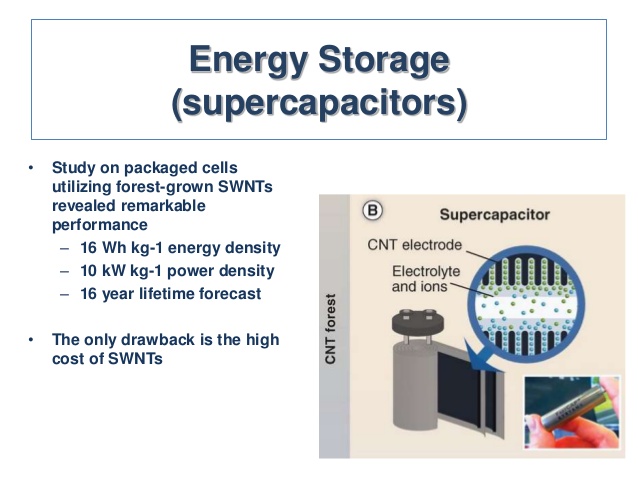

The rapid increase in global energy consumption and the environmental impact of traditional energy resources pose serious challenges to human health, energy security, and the environment; and reveal a growing need to develop new types of clean and sustainable energy solutions such as electric vehicles with low exhaust emissions. However the main factors discouraging motorists in Germany from switching to electric vehicles are the high investments cost, their short driving ranges and the lack of charging stations. Another major obstacle en route to the mass acceptance of electric cars is the charging time involved. The minutes involved in refueling conventional cars are so many folds shorter that it makes the situation almost incomparable.
Conventional electrochemical energy storage systems, including lithium-ion batteries (LIBs), have a high voltage range and energy density, but are subject to safety issues raised by flammable organic electrolytes, which are used to ensure the beneficial properties. Additionally, they suffer from slow electrochemical reaction rates, which lead to a poor charging rate and low power density with a capacity that fades quickly, resulting in a short cycle life.
However, the charging durations could be dramatically shortened with the inclusion of supercapacitors, also known as ultracapacitor or double-layer capacitor. Supercapcitors differs from a regular capacitor in that it has very high capacitance. Supercapacitors combine the high energy-storage-capability of conventional batteries with the high power-delivery-capability of conventional capacitors.
A capacitor stores energy by means of a static charge as opposed to an electrochemical reaction. It has two electrodes dipped in an electrolyte and separated by a thin insulator. Charging is done by applying a voltage differential on the positive and negative plates of the capacitor. When the electrodes are charged, an electric field is created between them, which allows energy to be stored. This is similar to the buildup of electrical charge when walking on a carpet. Touching an object releases the energy through the finger.
There are three types of capacitors and the most basic is the electrostatic capacitor with a dry separator. This classic capacitor has very low capacitance and is mainly used to tune radio frequencies and filtering. The size ranges from a few pico-farads (pf) to low microfarad (μF). The electrolytic capacitor provides higher capacitance than the electrostatic capacitor and is rated in microfarads (μF), which is a million times larger than a pico-farad. These capacitors deploy a moist separator and are used for filtering, buffering and signal coupling. Similar to a battery, the electrostatic capacity has a positive and negative that must be observed.
The third type is the supercapacitor, rated in farads, which is thousands of times higher than the electrolytic capacitor. The supercapacitor is used for energy storage undergoing frequent charge and discharge cycles at high current and short duration. Supercapacitors have many advantages over the LI-ion battery, they charge extremely fast ( 1-10 secs) compared to 10-60 min of LI Ion. They have high specific power, stroing 10,000 watts per kg compared to 1000-3000 by LI ion and have millions of charge cycles compared to 500 of battery.
Supercapacitors are useful for releasing large bursts of energy quickly, in a camera flashlight, for example, or in dynamic brakes in cars, trains and elevators. They not only get charged quickly, but also last longer and are less toxic than batteries. These alternative energy storage devices are fast charging and can therefore better support the use of economical energy in electric cars.

Yet, despite their potential, supercapacitors, at present, have certain drawbacks that are preventing their widespread use. One major issue is that they have low energy density; that is, they store insufficient energy per unit area of their space. Their specific energy is very small 5 Wh/ Kg compared to 100-200 of battery. Another growing issue in supercapacitor production—mainly for smartphone and electric car technologies—is sustainability.
Supercapacitors are devices that could one day replace batteries used in electric cars, cell phones or laptops, because they charge very quickly, and work at almost 100 percent efficiency. But they are usually bulky and can only store limited amounts of energy. Reducing their size without losing efficiency has proved challenging.
To improve the performance of state-of-the-art supercapacitors to meet the stringent requirements for the applications like hybrid electric vehicles (HEVs) to industrial electric utilities, portable, transparent and wearable electronics, new electrode materials with superior properties over those of current activated carbon electrodes are needed and new device structures are highly desirable. Fabricating them using existing methods is also costly and complicated.