
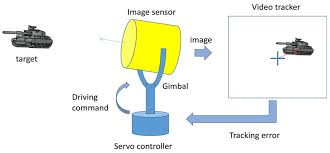

Ai/ATR is a generic term to describe automated processing functions carried out on imaging sensor data in order to perform operations ranging from simple cuing of a human observer to complex, fully autonomous object acquisition and identification.
ATR can range from fully autonomous, such as, in a missile seeker to aided target recognition (AiTR) processing that presents image annotations to the human observer to make the final decision as to the importance and veracity of the information generated and the action to be taken.
Advancements in EOIR sensor technology have enabled integration of cameras with higher resolutions, improved sensitivity, and multi-spectral imaging onto ground vehicle platforms. These sensors play a critical role in movement, situational awareness and target acquisition in combat environments day and night and have become an integral part of the warfighter’s capabilities.
Current imaging sensors however largely rely on soldier’s continued attention on the image/video display. An abundance of sensors and the complexity of tasks in complex environments has made this a daunting task for the Soldier.
Recent advances in image exploitation, artificial intelligence and machine learning coupled with a surge in demand for increased autonomy of ground platforms have reinvigorated the interest in automatic target detection, recognition, identification and tracking technologies.
US Army plans to use AiTD and AiTR on manned platforms to help reduce Soldier workload, improve situational awareness, and reduce response times. On unmanned ground platforms, AiTD and AiTR become a fundamental enabling technology for autonomous operation and mission execution.
Traditional AiTD and AiTR algorithm development has focused on Moving Target Indication (MTI) and Static Target Indication (STI) of military targets in relatively unpopulated low clutter rural environments.
While this is still an important function, in the future, manned and unmanned ground vehicle platforms will be operated in increasingly complex environments, to include high clutter rural environments such as vehicles or ATGM teams in defilade; as well as urban areas where the enemies may blend in with natural patterns of life. Future AiTD and AiTR approaches will be required to perform basic detection and recognition functionalities in this environment, but will also need to provide more advanced automated behaviors to discriminate and prioritize potential threats.
Significant technological challenges exist to successfully utilizing traditional computer vision and emerging machine learning technologies in operational combat environments. Some of these challenges include robustness and reliability of algorithms, SWAP-C of computational hardware, and limited data communication and computational bandwidth. However, arguably a bigger challenge to successfully deliver of AiTR/AiTD capabilities to the warfighter has been the mismatch between the operational requirement/expectation of the soldier and the capabilities and readiness of the AiTR/AiTD technology, says US Army