
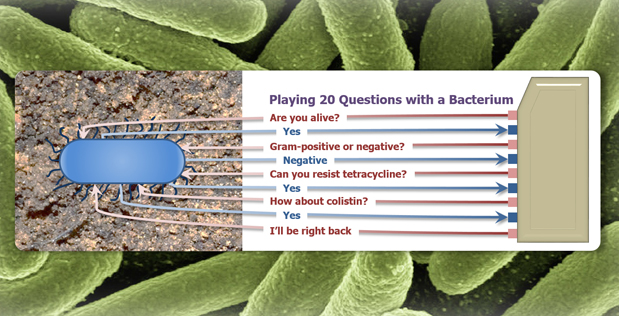

Bacteria underpin much of our world, acting behind the scenes to affect the health and behavior of animals and plants. They help produce food, provide oxygen, and even reshape the environment through a vast array of biological processes. They come in a phenomenal number of strains—many still unknown—and thrive in different ecological and environmental niches all over the world.
But while their diverse behaviors make them essential to life, bacteria can also be deadly. This threat only grows as greater global travel brings people into contact with new places, foods, and animals, dramatically increasing the chances of exposure to dangerous microbial species known as pathogens. New pathogens, both naturally occurring and adversary-engineered, are increasingly likely to emerge due to changes in the environment, rising global population, and the wide availability of genetic engineering tools to both state and non-state actors.
These factors, coupled with faster potential dispersal due to increasing global travel and population density, have significantly increased the danger posed by bacterial pathogens. A teaspoon of soil can contain as many as 1 billion bacteria, but most of them are completely harmless, or even beneficial. That also means that if someone with nefarious intentions adds dangerous bacteria to the soil, it can be difficult to sort out the good from the bad.
How can the Department of Defense—whose forces, deployed around the world, constantly come into contact with new bacteria—discriminate between harmless and virulent strains to prevent a disease outbreak that threatens military readiness?
In an age where bioterrorism is a very real concern, DARPA is working on new ways to detect potential human-introduced pathogens in the environment—before people become ill. In Feb 2018 DARPA’s Biological Technologies Office launched Friend or Foe, a new program that proposes to develop a platform technology that rapidly screens unfamiliar bacteria to establish their pathogenicity and even discover unknown pathogenic traits, necessary first steps for designing effective biosurveillance and countermeasures.
“Trends such as rising global population, changes in the environment, and the growing accessibility of tools for genetic engineering mean that our armed forces are increasingly likely to face new bacterial pathogens, whether they occur naturally or are engineered by adversaries,” said Paul Sheehan, the program manager for Friend or Foe. “Our existing biosurveillance strategies don’t work on previously undiscovered bacteria or on bacteria that have been specifically designed to evade detection by current tests. We need new screening tools that can quickly characterize the threat to enable a rapid response.”