

A metal foam is a cellular structure consisting of a solid metal (frequently aluminium) with gas-filled pores comprising a large portion of the volume. The pores can be sealed (closed-cell foam) or interconnected (open-cell foam). The defining characteristic of metal foams is a high porosity: typically only 5–25% of the volume is the base metal, making these ultralight materials. The strength of the material is due to the square-cube law
Composite metal foam (CMF) is formed from hollow beads of one metal within a solid matrix of another, such as steel within aluminium, show 5 to 6 times greater strength to density ratio and more than 7 times greater energy absorption than previous metal foams.
Composite metal foam (CMF) is a novel light weight material created at North Carolina State University. The material is made of metallic hollow spheres closely packed together and the empty spaces in between them filled with a metallic matrix through either casting (of a molten metal) or sintering (of a powdered metal).
The hollow spheres are filled with air and provide light-weight and porosities, while the surrounding matrix works to strengthen the bonding between spheres and blunt any potential cracks in the material under load.
Under large amount of compression loading, the spheres collapse and expend the impact energy protecting whatever is behind it. CMF’s strength is further improved under higher speed of impact due to the resistance of air inside its spheres (similar to a bubble wrap performance under pressure, but in a much larger scale). Such extra-ordinary energy absorption capabilities of CMFs inspired their application in ballistic and blast armor systems along with many others.
The product will look like a heavy-duty bubble wrap to protect against larger impacts of train or car crash, blast wave and fragmentation, ballistic and more. The material contains about 30-40% metal and 70-60% air trapped inside its porosities.
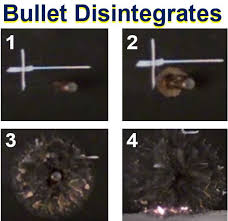
Previous work from Rabiei’s group has shown that CMFs, in addition to being lightweight: can reduce armor-piercing bullet penetration; are very effective at shielding X-rays, gamma rays and neutron radiation; and can handle fire and heat twice as well as the plain metals they are made of. A 100% Steel composite foam shows almost 275% more effectiveness in shielding X-rays compared to Aluminum.
CMF can replace rolled steel armor with the same protection for one-third the weight. It can block fragments and the shock waves that are responsible for brain injuries. Other potential applications include nuclear waste (shielding X-rays, gamma rays and neutron radiation) transfer and thermal insulation for space vehicle atmospheric re-entry, with twice the resistance to fire and heat as the plain metals.