

More than thirty countries produce mines, and twenty countries export them. Iran has reportedly laid several thousand naval mines, North Korea’s 50,000, China 100,000 or so, and Russia estimated quarter-million. Since World War II, sea mines have damaged or sunk four times more U.S. Navy ships than all other means of attack combined, according to a Navy report on mine warfare.
Sea mines range from cheap, simple explosive devices which many fear may fall in the hands of terrorists, to sophisticated computerized systems equipped with sensors and designed to wait hidden on the sea bed for years until the right target presents itself. They are fitted with acoustic, magnetic, seismic, and pressure sensors, which can pinpoint the size and shape of a ship moving in water and detect ship’s approach. They have become stealthier by minimizing their sonar profiles, smarter in distinguishing targets from decoys and evolved into lethal systems that can fire torpedoes. There are also rumors of nuclear armed mines in the inventories of China and North Korea. They have potential to become surprise weapon in any future war. Indeed, sea mines are key to regional navies’ anti-access/area-denial (A2/AD) and sea-control strategies and operations.
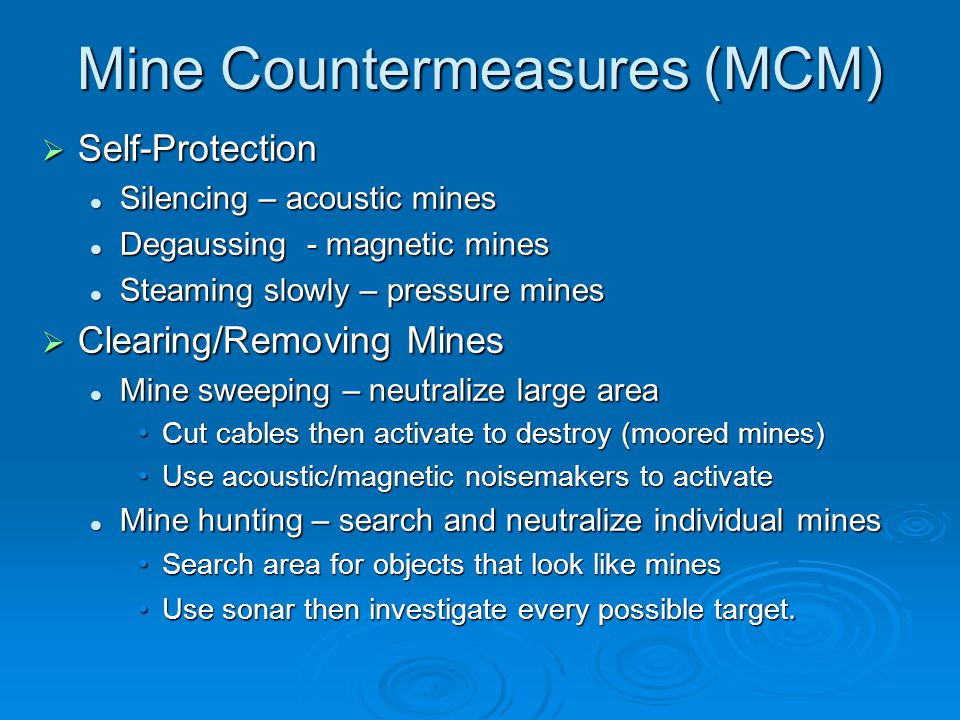
The capability to detect, locate, classify and neutralise these weapons remains a key requirement for navies around the world.