

3D printing or additive manufacturing is ongoing revolution in manufacturing with its potential to fabricate any complex object and is being utilized from aerospace components to human organs, textiles, metals, buildings and even food. Additive manufacturing is defined by ASTM International as the process of joining materials together, layer by layer, based on three-dimensional model data.
Additive manufacturing is known to be a good prototyping method. It is allowing the manufacturers to make many iterations at a lower cost and quite quickly. Moreover, as you have to work on a CAD software to create your parts, you only have to make modifications on your 3D file if you need to change something. It is really allowing to work way faster than with other processes. The 3D printing technology is getting further boost in aerospace and aeronautics as many 3D printers which can print heat resistant materials are now entering the market.
For the last several years, aerospace companies have been examining ways to use additive manufacturing, or 3D printing, to aid the production of rocket engines. These industries are using this technology both for prototyping and production from motors to complete rockets. At their core, rockets consist of four main systems: payloads, guidance, propulsion, and structures. The payload is whatever the rocket is carrying. The guidance consists of sensors that keep the craft on target, and propulsion is made up of the fuel and engine that make it go. The structures are the rest of the frame, cone, and fins of the rocket—parts that are typically fabricated using ultra-precise CNC milling machines and hand welding.
One company that has been at the forefront of these developments is rocket-building firm Relativity Space, which after its founding in 2015 grew rapidly to raise $45.1 million in three years. In 2017, the firm announced it was working on a new Stargate 3D printer which would allow it to go, “from raw material to flight in less than 60 days”, and in the long-term 3D print the first rocket on Mars. A year later, the company signed a contract with the U.S. Air Force to operate its own launch facility on one of their sites and test its 3D printed rockets at Cape Canaveral. Most recently, Relativity Space was called upon by aerospace and defense contractor Lockheed Martin to 3D print projectiles for an upcoming experimental NASA mission.
Other companies operating in this space include Spanish aerospace firm Zero 2 Infinity which is using 3D printing as part of its Blooster balloon-assisted rocket. UK-based aerospace company Orbex hopes its 3D-printed rockets, made with the latest metal 3D printer from German manufacturer EOS, will blast off from Scotland by the end of the year. And in the U.S., young rocket engine maker Ursa Major is taking orders now for its new Arroway propulsion engine designed to displace the now-unavailable Russian-made propulsion sources. It’s also 3D printed using available metal 3D printers. U.S. start-up Rocket Crafters has concluded testing of its Comet Series hybrid 3D printed rocket engine.
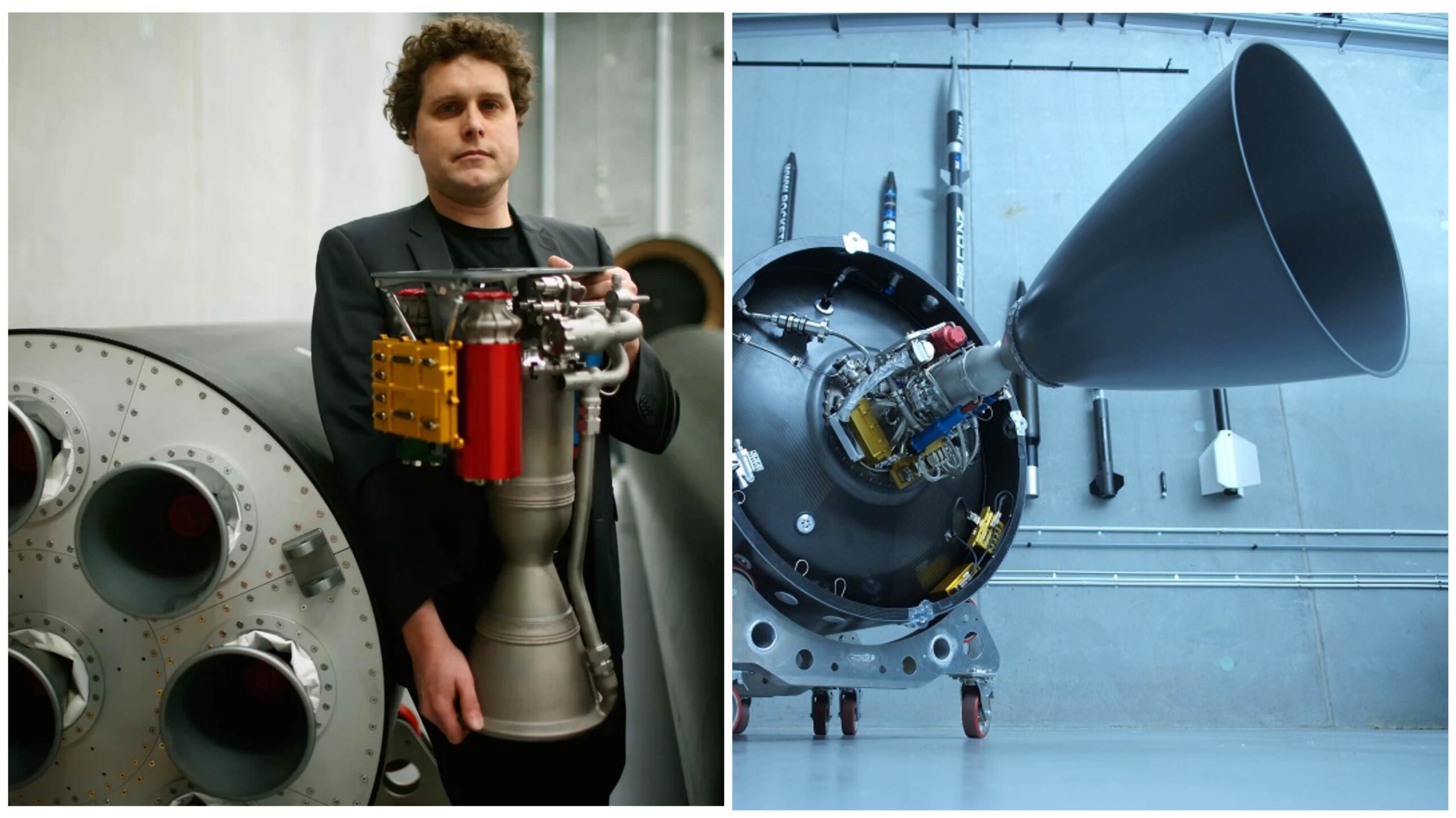
“The Owl Spreads Its Wings” is Rocket Lab’s seventh Electron launch this year with a 100% mission success rate for 2022. Sep 2022, it completed 30th Electron launch and delivering 150th satellite to orbit, the mission also marked the 300th Rutherford engine flown to space on Electron. Designed and built by Rocket Lab, Rutherford is the world’s first 3D-printed, electric pump-fed orbital rocket engine. Rocket Lab, one of only a few small satellite launchers that fly commercial flights, has relied on additive manufacturing to create engines, valves, manifolds, and a number of other complex components; its CEO, Peter Beck, says, “There’s no way that we can produce the volume and the performance of the engines that we’re producing now without 3D-printing technology.”
In Sep 2022 Rocket Lab successfully test-fired a reused Rutherford first-stage engine for the first time. This is a significant technical achievement as Rocket Lab develops Electron into the world’s first reusable orbital small rocket.
British aerospace company Orbex, which announced that its 3D printed rockets will be the first to launch from the UK’s new spaceport in early 2022.
The RS25 engine developed by Space Launch System has a 3D printed component called pogo accumulator, a shock absorber placed inside of the rocket engine. Aerojet Rocketdyne, has been working on printing components of its venerable RL10 engine. In early June, the company announced that a printed copper thrust chamber successfully completed a series of hotfire tests. The company isn’t alone in exploring new ways to apply additive manufacturing to propulsion and related systems.
Printer manufacturers are also developing large-scale 3D printers. Instead of components, it will be possible to print larger parts more easily. Relativity Space, for example, is working to 3D-print entire rockets, including their engines, and has raised tens of millions of dollars to support its work. Kieatiwong, though, is hopeful that his company can achieve a breakthrough with its new approach to engine design.
SpaceX has built a rocket engine using 3D printing, it is called SuperDraco. This process has been used on different levels. First, for testing, 3D printing has been used instead of the traditional casting method. 3D printing has also been an advantage for the manufacturing process, and it really reduced the lead-time. The 3D printed parts were even more resistant than traditional ones.
NASA engineers, created a rocket engine prototype using two different metals: copper alloy and Inconel. They used a process called brazing, in order to join 2 different types of metal, creating a brand new component. This advanced process is offering promising possibilities for the future 3D printed metal parts.