
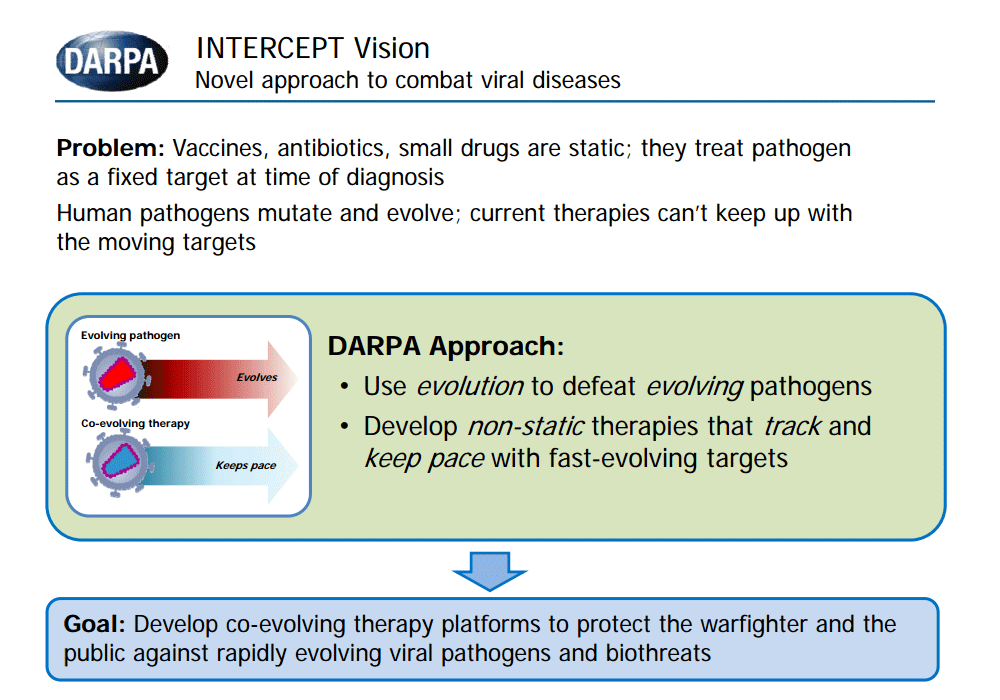

The viral diseases like Zika. Ebola. Dengue. Influenza. Chikungunya pose serious health threats to U.S. troops, as well as to civilian populations in the United States and around the world, says DARPA. Vaccines exist for but a few of these infectious diseases. And since these viruses have an uncanny ability to mutate and morph as they reproduce inside their hosts, those few vaccines that do exist are quickly outdated, providing little protection against the latest viral strains. That’s why flu vaccine manufacturers, for example, must produce new versions annually, at enormous expense and with variable year-to-year efficacy. The goal of the INTERCEPT program is to develop viral therapies that are effective against a broad spectrum of viral strains, and that can co-evolve and outpace new strains.
Besides vaccination strategies, this threat is handled by the use of antivirals which inhibit virus replication and spread. However, protection against IAV is compromised by rapid resistance development, and by vaccines that need to be reformulated on an annual basis and do not protect against pandemic strains.
Current preventive and therapeutic approaches, including vaccines and anti-viral drugs, are designed to target the virus in its original state at the time of discovery or diagnosis. This paradigm of “static” therapeutics and preventives requires repeated and time-consuming development, manufacturing, and testing, resulting in major health response gaps, economic burden, and limited capability to address newly emerging biothreats.
INTERCEPT uses viral evolution as the basis for its protective effect. Because TIPs are harmless, virus-derived particles with defective genomes that can only replicate in the presence of virus, they interfere with viral infection by competing for essential viral components. And, just like their parent virus, TIPs are susceptible to mutation over time and co-evolve with the mutating virus, thus diminishing the virus’ ability to evade the therapeutic.