
Weapons and munitions translate military intent into physical effect. In modern warfare, precision, range, volume, and sustainment matter as much as raw destructive power. Conflicts increasingly reveal that stockpiles, production rates, and targeting networks are decisive factors.
This sub-magazine examines how strike systems shape deterrence, escalation, and battlefield outcomes.
IDST Intelligence Briefings
Our briefings analyze missile systems, guided munitions, and strike architectures—explaining how weapons integrate with sensors, targeting loops, and command authorities.
Why This Magazine Exists
Weapons are often assessed in isolation, yet their effectiveness depends on availability, targeting quality, and integration into operational plans.
This sub-magazine exists to explain how strike capability is generated, sustained, and constrained in real conflicts.
What We Track
- Missiles, rockets, and precision-guided munitions
- Hypersonic weapons and countermeasures
- Air-, land-, and sea-based strike integration
- Production capacity and stockpile resilience
- Targeting, ISR, and kill-chain dynamics
- Escalation control and deterrence signaling
Latest Analysis & Intelligence
-

The New Energetics Revolution: How Advanced Propellants, Smart Manufacturing, and Industrial Innovation Are Reshaping Military Power
Introduction: The Strategic Importance of Energetics in Great Power Competition Behind every missile launch, artillery strike, hypersonic weapon, rocket motor, and precision-guided munition lies a critical but often overlooked technology domain—energetics. Explosives, propellants, pyrotechnics, and advanced energetic materials determine not only the range, speed, and lethality of modern weapons but also the ability of nations…
-
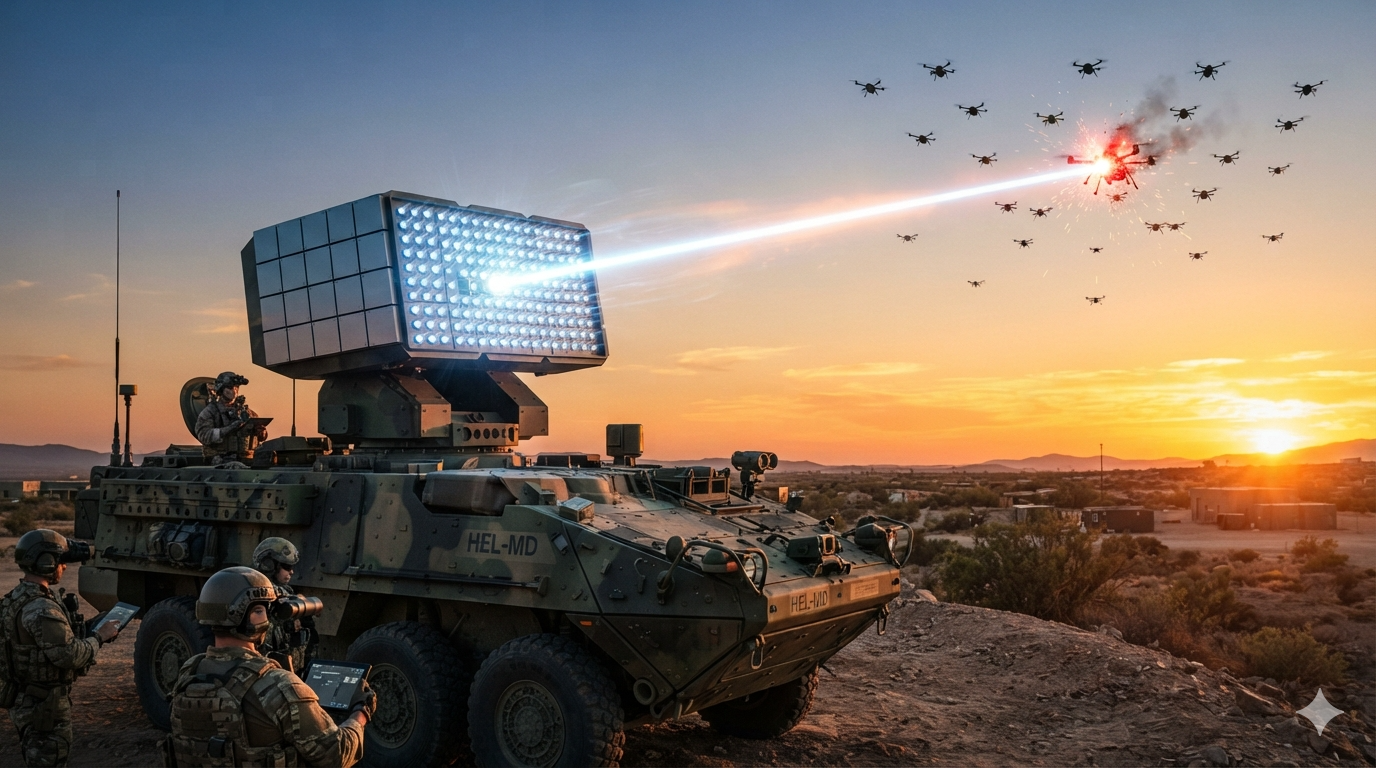
DARPA’s MELT Program: Scaling High-Energy Laser Weapons for the Drone Swarm Era
Introduction: Directed Energy Becomes a Strategic Imperative The character of modern warfare is being reshaped by the rapid proliferation of inexpensive drones, autonomous swarms, loitering munitions, and cruise missiles. From Ukraine and the Red Sea to the Middle East and Indo-Pacific, military forces are confronting an increasingly unfavorable cost equation where intercepting a $5,000 drone…
-

China’s Non-Nuclear Hydrogen Bomb: How Magnesium Hydride Weapons Could Transform Future Precision Warfare
Introduction: Hydrogen Energy Meets the Future Battlefield The convergence of advanced materials science, clean-energy research, and military innovation is reshaping the future of conventional weapons. As major powers seek alternatives that deliver greater battlefield effects without crossing the nuclear threshold, high-energy chemical materials are emerging as a new class of strategic technologies. Among the most…
-
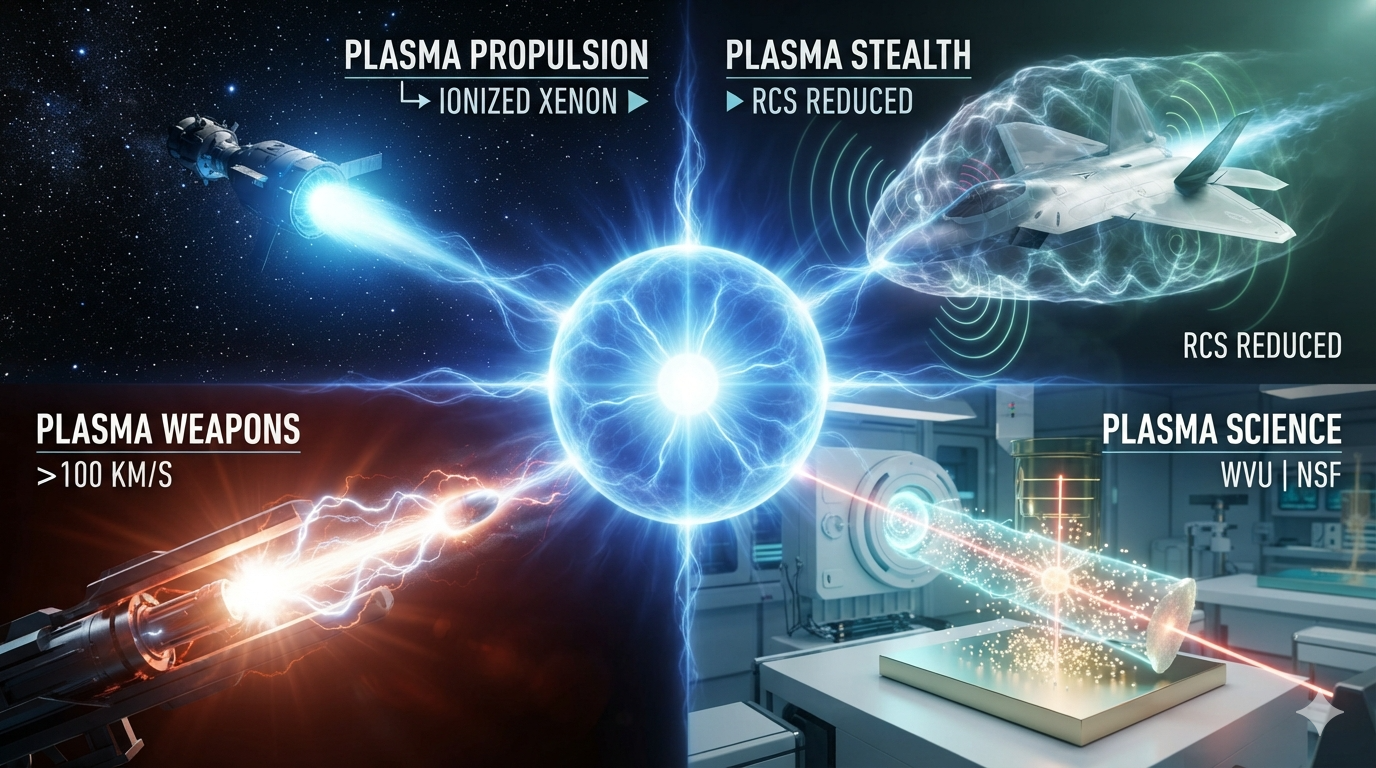
Seeing the Invisible: How Advanced Plasma Diagnostics Are Transforming Semiconductor Manufacturing, Fusion Energy, and Defense Technologies
Strategic Context: The Invisible Battlefield Driving the Next Industrial and Defense Revolution Plasma—the ionized fourth state of matter—has quietly become one of the most strategically important technologies of the twenty-first century. While largely invisible to the public, controlled plasmas underpin the production of nearly every advanced semiconductor, enable electric propulsion systems aboard modern satellites, support…
-

Resilient Space Power: DARPA’s Rapid Reconstitution Strategy and the Future of Military Space Operations
Introduction: From Space Superiority to Space Resilience For decades, military space strategy was built around a relatively simple assumption: protect a limited number of highly capable satellites that provided global communications, intelligence, missile warning, positioning, navigation, timing (PNT), and strategic command and control. These exquisite systems represented enormous technological achievements but also created a dangerous…
-
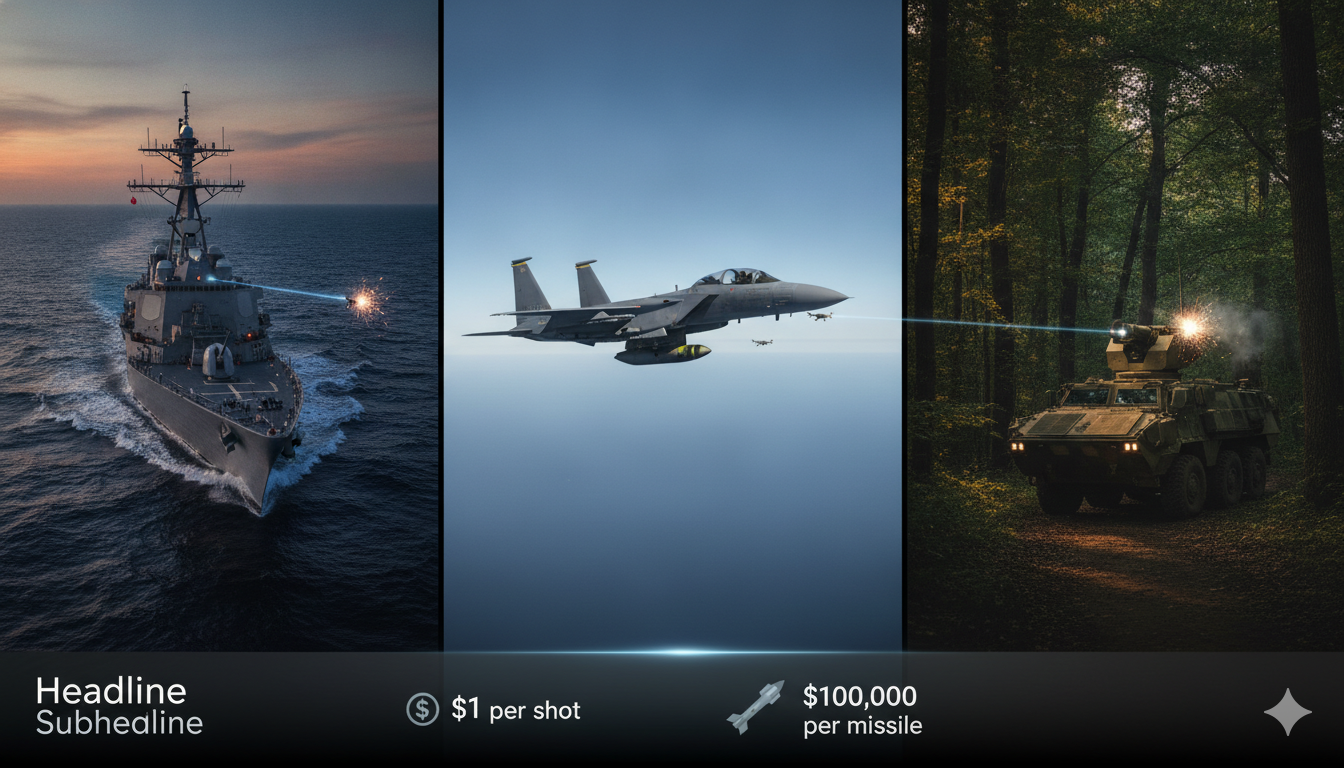
From Science Fiction to Battlefield Reality: The Rise of Military Laser Weapons and the Global Directed Energy Race
Introduction: Directed Energy Weapons Enter the Era of Strategic Competition For decades, laser weapons occupied an unusual place in military planning. They were simultaneously among the most promising and the most disappointing technologies in defense research. Popular culture imagined aircraft firing beams of light capable of destroying enemy missiles instantaneously, while defense laboratories struggled with…
-
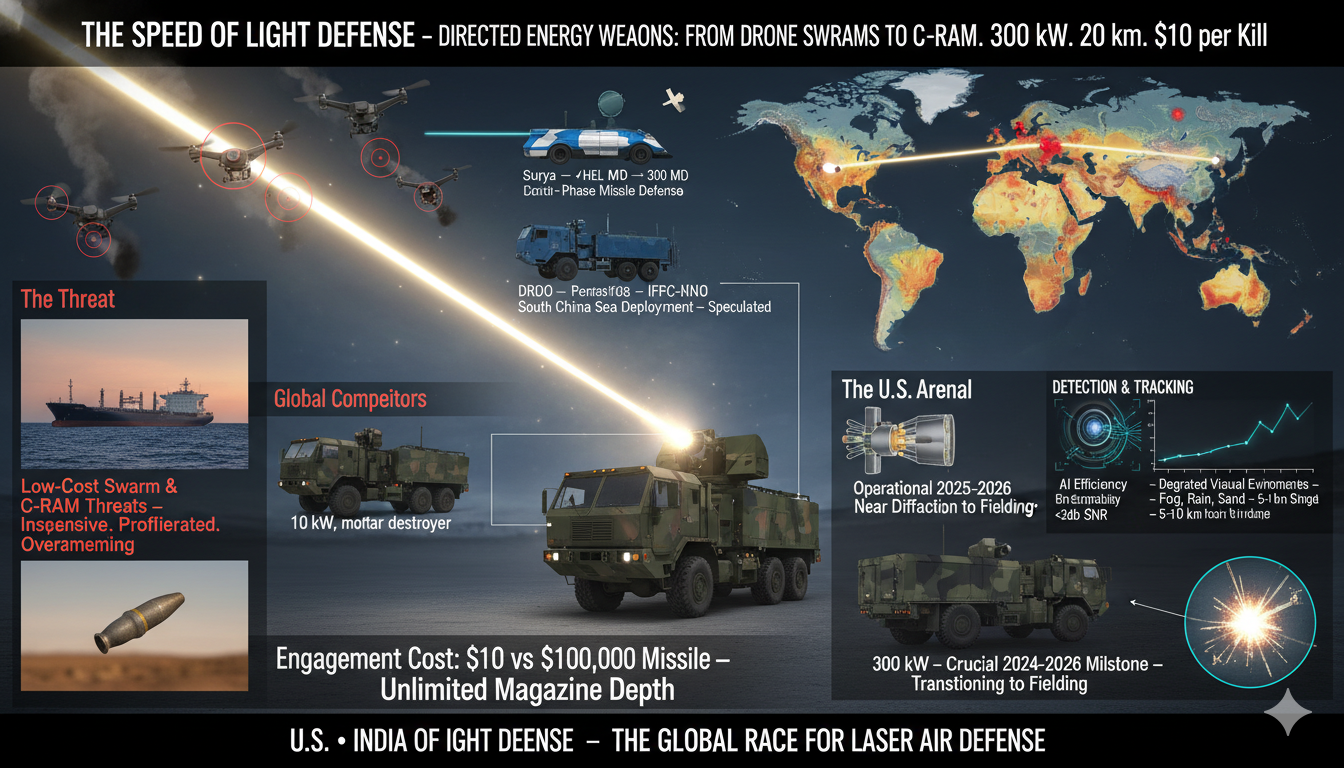
Silent Killers: How Directed Energy Weapons Are Revolutionizing Air Defense Against Drone Swarms and C-RAM
Introduction: The Economics of Air Defense Have Collapsed Modern warfare has exposed a brutal asymmetry in air defense economics. Across Ukraine, the Red Sea, Gaza, Syria, and the Indo-Pacific, militaries are increasingly confronted by mass drone attacks, loitering munitions, low-cost cruise missiles, and rocket artillery that can overwhelm even advanced integrated air-defense systems. A $1,000…
Related Domains & Cross-Cutting Themes
Defense systems do not operate in isolation. Readers may also explore how military technologies intersect with geopolitics, industrial capacity, emerging technologies, and future warfare concepts across the IDST intelligence network.
Space and ISR support to naval operations
Missile and hypersonic threats
Chokepoints, sea lines of communication, and geography
Alliance interoperability and coalition navies
Explore the Critical & Emerging Technologies Magazine →
Explore the Industry, Markets & Supply Chains Magazine →
Explore the Space Technology, Defense & Exploration Magazine →