
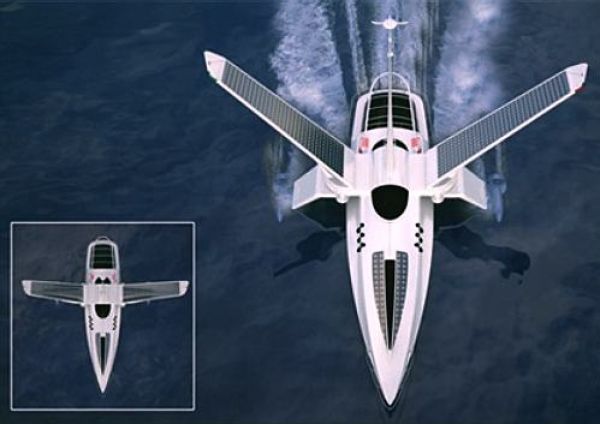

Researchers at Penn State Applied Research Laboratory are developing a new system using a technique called supercavitation. Supercavitation is the use of cavitation effects to create a bubble of gas inside a liquid large enough to encompass an object travelling through the liquid, greatly reducing the skin friction drag on the object and enabling achievement of very high speeds.
‘Basically supercavitation is used to significantly reduce drag and increase the speed of bodies in water,’ said Grant M. Skidmore, recent Penn State Ph.D. recipient in aerospace engineering. ‘However, sometimes these bodies can get locked into a pulsating mode.’ ‘Shrinking and expanding is not good,’ said Timothy A. Brungart, senior research associate at ARL and associate professor of acoustics. ‘We looked at the problem on paper first and then experimentally.’ The researchers report the results of their analytic analysis and experimentation online in the International journal of Multiphase Flow. They found that once they had supercavitation with pulsation, they could moderate the air flow and, in some cases, stop pulsation. ‘Supercavitation technology might eventually allow high speed underwater supercavitation transportation,’ said Moeney.
IDST Pro Access Required
This analysis is part of IDST premium intelligence.
Subscribe to Continue ReadingAlready a member? Log in