
Modern military, security, and industrial capabilities do not fail because of individual components—they fail at interfaces, integration points, and architectural constraints. This sub-magazine analyzes complex systems as complete architectures rather than isolated parts.
IDST Intelligence Briefings
System-of-systems analysis, integration challenges, design trade-offs, lifecycle constraints, and resilience assessment
Why This Sub-Magazine Exists
Most analysis isolates individual components. Real-world performance, however, is shaped by interfaces, integration logic, and architectural constraints. This sub-magazine exists to expose those deeper structural realities.
What We Track
- System integration and interoperability
- Architectural bottlenecks and dependencies
- Modularity vs monolithic design choices
- Reliability, redundancy, and failure modes
Latest Analysis & Intelligence
-
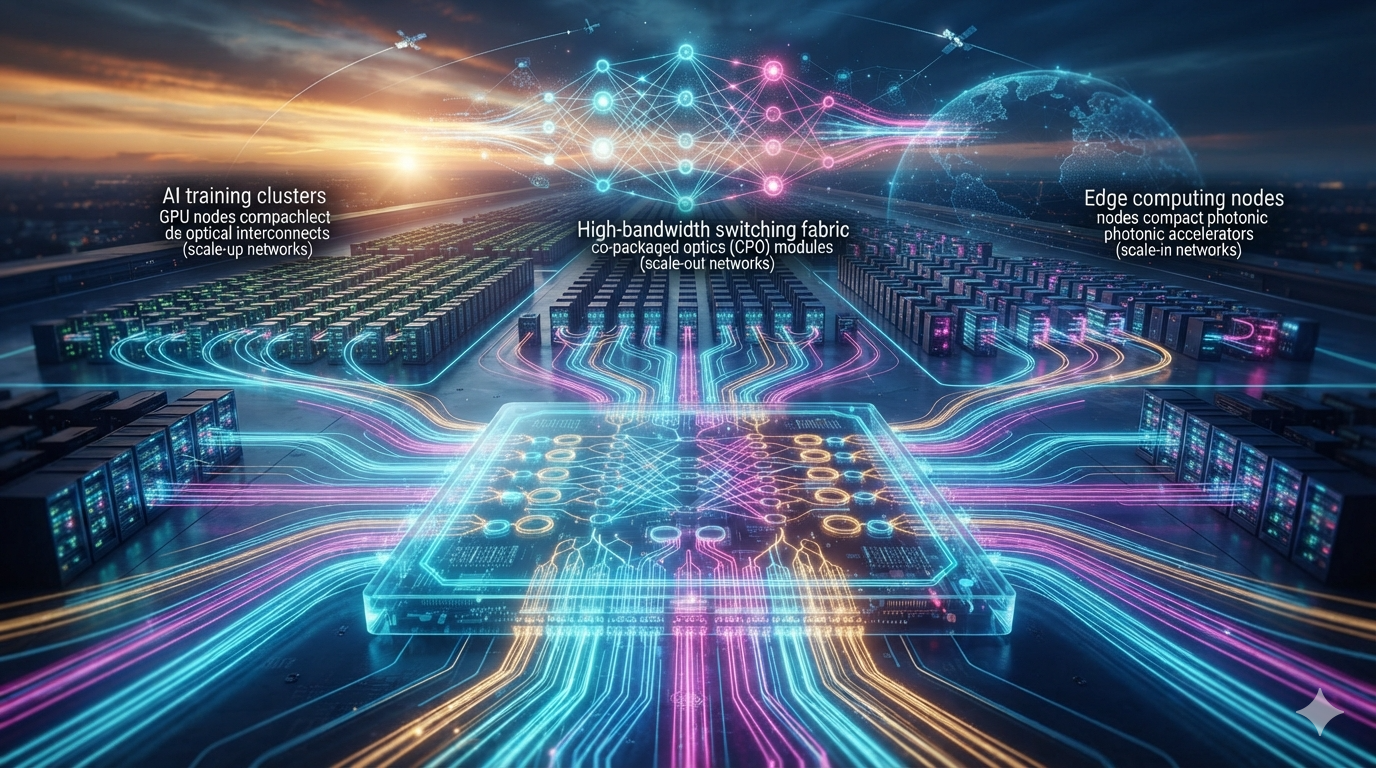
Silicon Photonics: The Optical Engine Driving the Next Generation of Artificial Intelligence
Introduction: AI’s Bandwidth Crisis and the Rise of Silicon Photonics Artificial intelligence has entered an era where computing performance is no longer determined solely by faster processors, but increasingly by the ability to move enormous volumes of data efficiently between chips, memory systems, and data centers. Modern foundation models containing trillions of parameters require unprecedented…
-
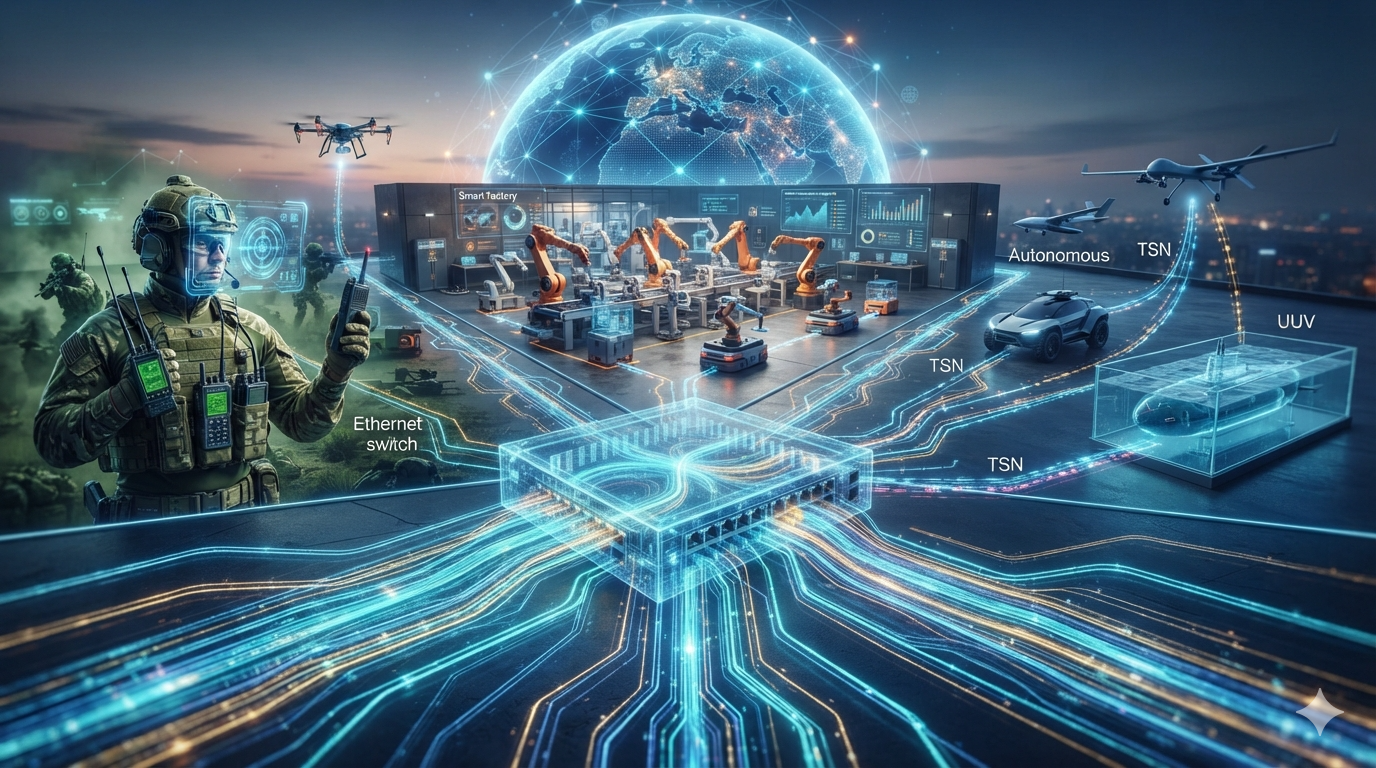
The Digital Backbone of Modern Warfare: How Next-Generation Ethernet is Transforming Defense, Industry, and Autonomous Systems
Strategic Context Control of information has become as decisive in modern conflict as control of territory. Across today’s multidomain battlespace, victory increasingly depends on the ability to collect, transport, process, and exploit enormous volumes of data with near-zero latency across land, sea, air, space, cyber, and electromagnetic domains. Whether coordinating autonomous drone swarms, integrating next-generation…
-
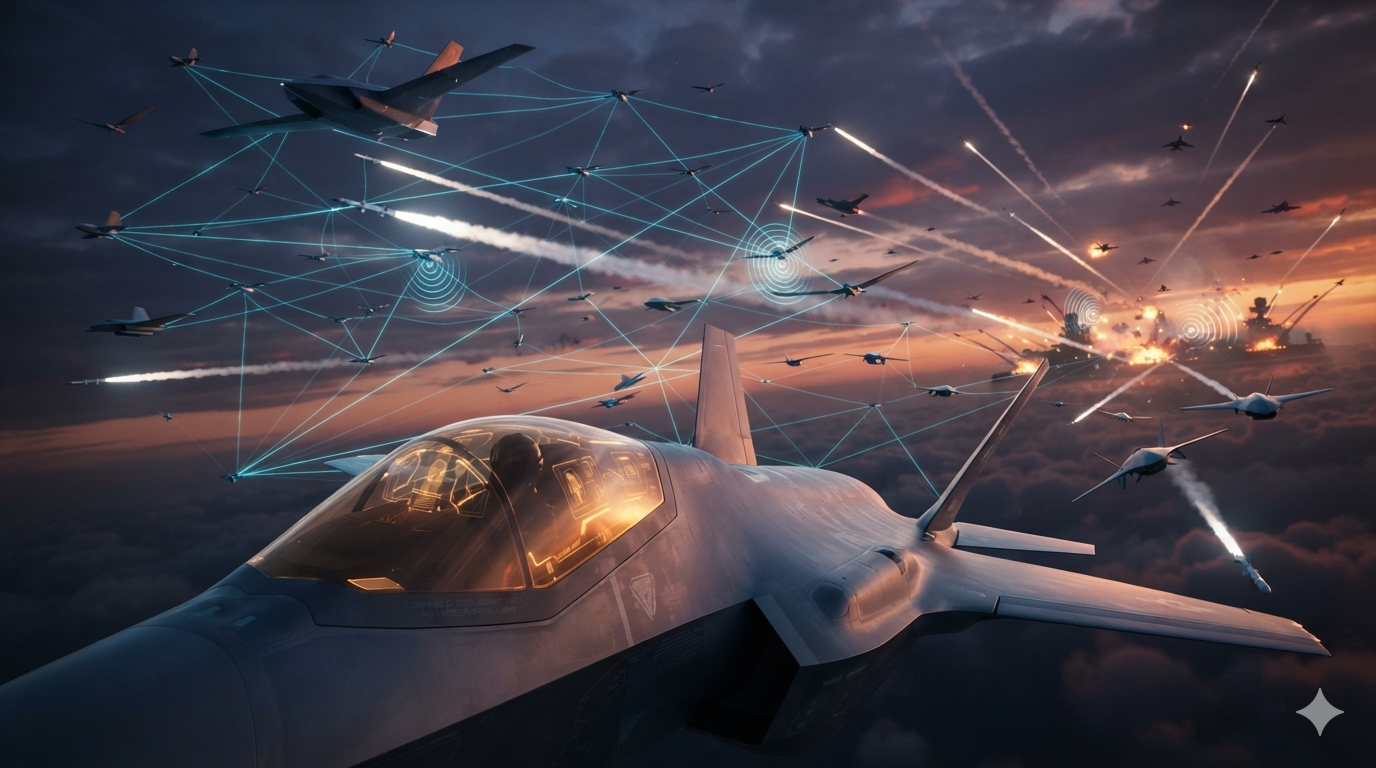
The Age of Autonomous Aircraft Swarms: How Collaborative Air Combat Is Reshaping Future Air Warfare
Strategic Context Air warfare is entering its most significant transformation since the introduction of stealth aircraft. The traditional model—where a handful of highly sophisticated fighters dominate the battlespace—is rapidly giving way to a distributed ecosystem of autonomous aircraft, collaborative drones, intelligent munitions, and AI-enabled command networks. Rather than relying solely on the capabilities of a…
-
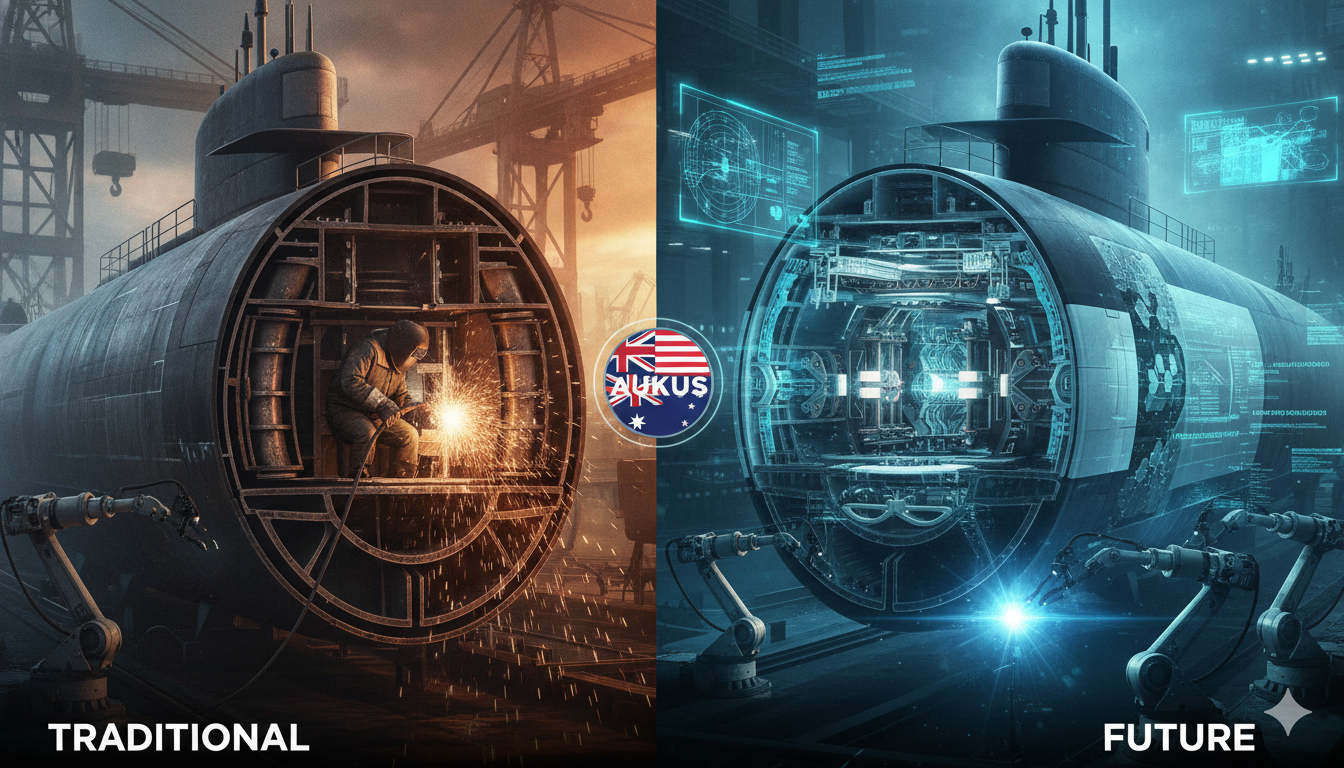
Advanced Materials and Technologies Transforming Submarine Hulls for Enhanced Warfighting Capabilities
Introduction: Materials Innovation Becomes a Strategic Undersea Competition The global undersea battlespace is entering one of its most significant periods of transformation since the Cold War. Intensifying geopolitical competition across the Indo-Pacific, Arctic, North Atlantic, and other contested maritime regions has elevated submarines from traditional naval assets to strategic instruments for deterrence, intelligence collection, long-range…
-

Innovation Beneath the Waves: Biomimetic Propulsion Systems Transforming Naval and Underwater Operations
Introduction: Nature’s Blueprint for the Future Undersea Fleet The world’s oceans are rapidly becoming a critical arena for economic competition, scientific exploration, and military operations. From protecting undersea communication cables and offshore energy infrastructure to conducting intelligence, surveillance, reconnaissance, and anti-submarine warfare missions, nations increasingly depend on autonomous underwater vehicles (AUVs), unmanned underwater vehicles (UUVs),…
-

Topological Quantum Computing: Engineering Noise-Resilient Quantum Information for Utility-Scale Quantum Systems
Introduction: Why Topological Quantum Computing Matters Now The global race to build practical quantum computers has entered a new phase. While recent years have focused on increasing qubit counts, researchers are increasingly recognizing that scalability alone cannot deliver useful quantum computing. The central challenge remains reliability. Quantum information is extraordinarily fragile, with environmental noise, thermal…
-
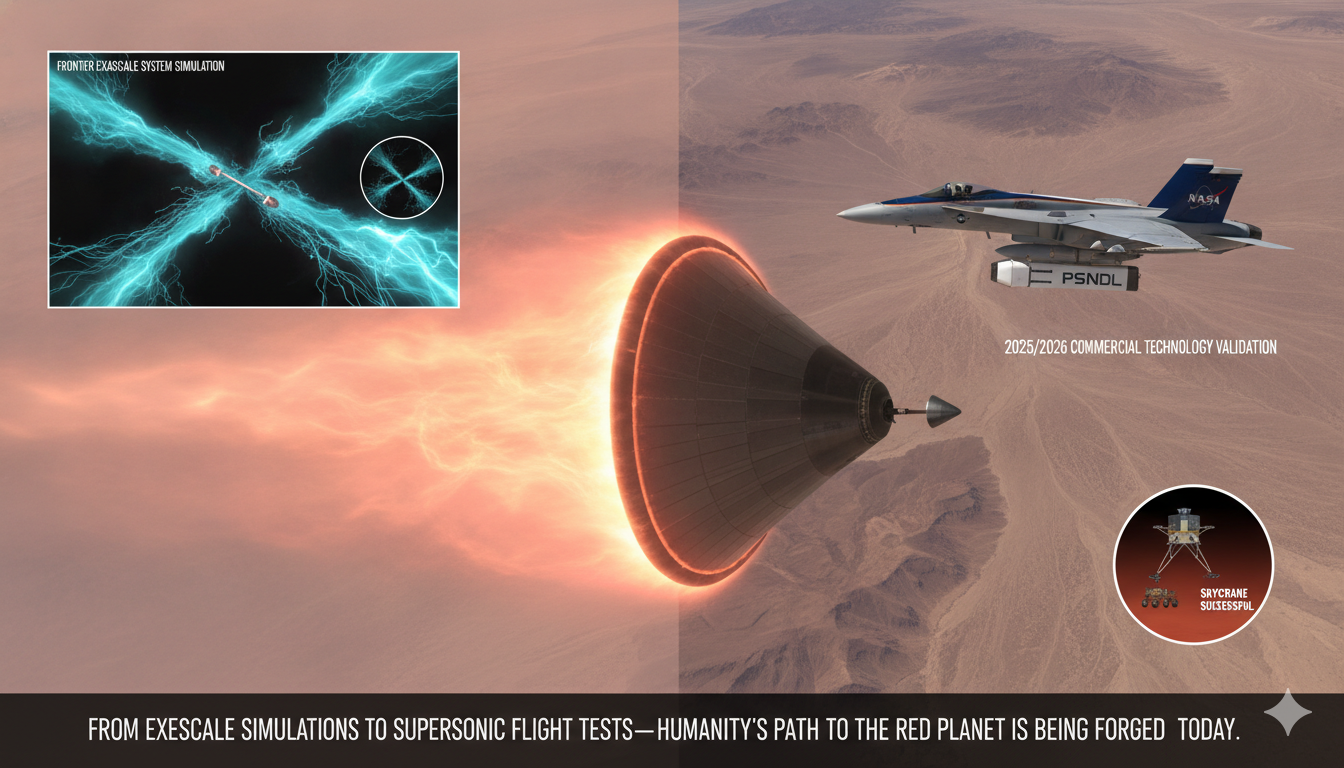
Entry, Descent, and Landing (EDL) Technologies: Enabling the Next Era of Mars Exploration and Planetary Operations
Introduction: Why EDL Matters Now Humanity is entering a new era of planetary exploration characterized by renewed competition among major space powers, expanding commercial activity beyond Earth orbit, and growing ambitions for sustained human presence on the Moon and Mars. Governments, private companies, and defense organizations increasingly view space as a strategic domain whose future…
Related Domains & Cross-Cutting Themes
Defense & Military Systems • Critical & Emerging Technologies • Industry & Manufacturing • Autonomous & Infrastructure Systems
Explore the Space Technology, Defense & Exploration Magazine →