
Strategy, Policy & Governance examines how states, institutions, and power centers define objectives, design policies, and govern complex security and technology ecosystems. This magazine focuses on the strategic decision-making layer—where doctrine, policy, regulation, and long-term planning translate national intent into coordinated action across military, technological, economic, and societal domains.
IDST Intelligence Briefings
Why This Magazine Exists
Strategy, Policy & Governance examines how states, institutions, and power centers define objectives, design policies, and govern complex security and technology ecosystems. This magazine focuses on the strategic decision-making layer—where doctrine, policy, regulation, and long-term planning translate national intent into coordinated action across military, technological, economic, and societal domains.
What We Track
This magazine examines the strategic, policy, and governance dimensions that shape national security, defense modernization, technological competition, and institutional resilience. It analyzes how governments, militaries, industries, and international organizations formulate strategy, manage risk, govern emerging technologies, and adapt to an increasingly complex security environment.
Coverage spans defense policy and doctrine, strategic planning, civil–military relations, technology governance, regulatory frameworks, innovation ecosystems, resilience building, and long-term preparedness—providing the context needed to understand not only how security challenges emerge, but how nations organize to address them.
Latest Analysis & Intelligence
-
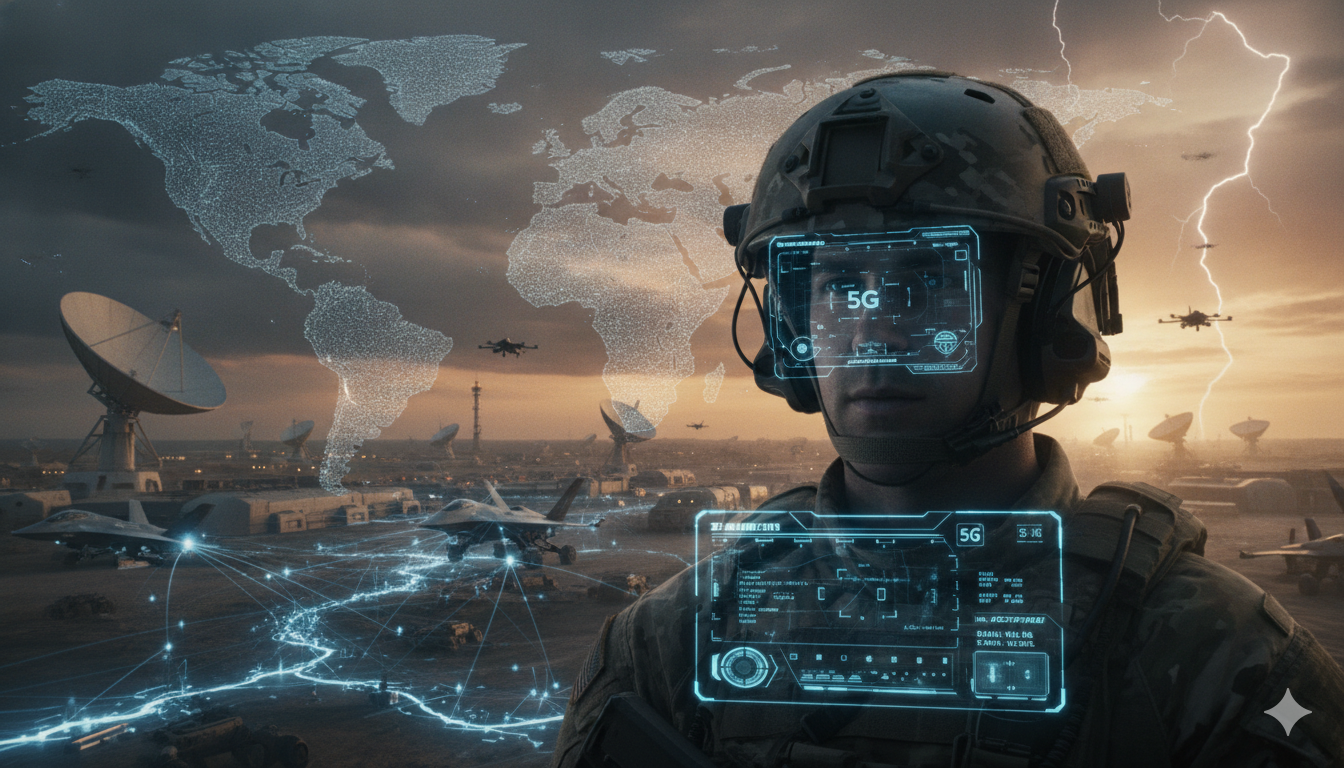
5G Dominance and the New Military Communications Arms Race: How 5G is Transforming Multi-Domain Warfare
Introduction: From Commercial Connectivity to Strategic Military Infrastructure The global race for 5G has evolved far beyond telecommunications competition and is increasingly viewed as a contest for military, economic, and technological advantage. Between 2024 and 2026, 5G transitioned from a commercial broadband technology into a foundational military capability supporting network-centric warfare, Joint All-Domain Command and…
-

Space Domain Awareness 2.0: AI, Counterspace Competition and the Race to Detect Hostile Behavior in Orbit
Introduction: From Space Traffic Monitoring to Space Security The space environment has entered a fundamentally different era. What was once primarily a domain focused on satellite operations, scientific missions, and debris tracking is increasingly becoming a contested operational environment shaped by military competition, commercial mega-constellations, and emerging counterspace capabilities. Between 2024 and 2026, global space…
-

India’s Defence Exports Soar: A Strategic Leap Toward Global Leadership
Introduction: From Importer to Exporter—India’s Defence Transformation The global defence industry is undergoing one of its most significant realignments since the end of the Cold War. Supply-chain disruptions, geopolitical fragmentation, the Russia-Ukraine conflict, growing Indo-Pacific tensions, and rising military modernization programs have compelled nations to diversify defence suppliers and reduce dependence on traditional arms exporters.…
-
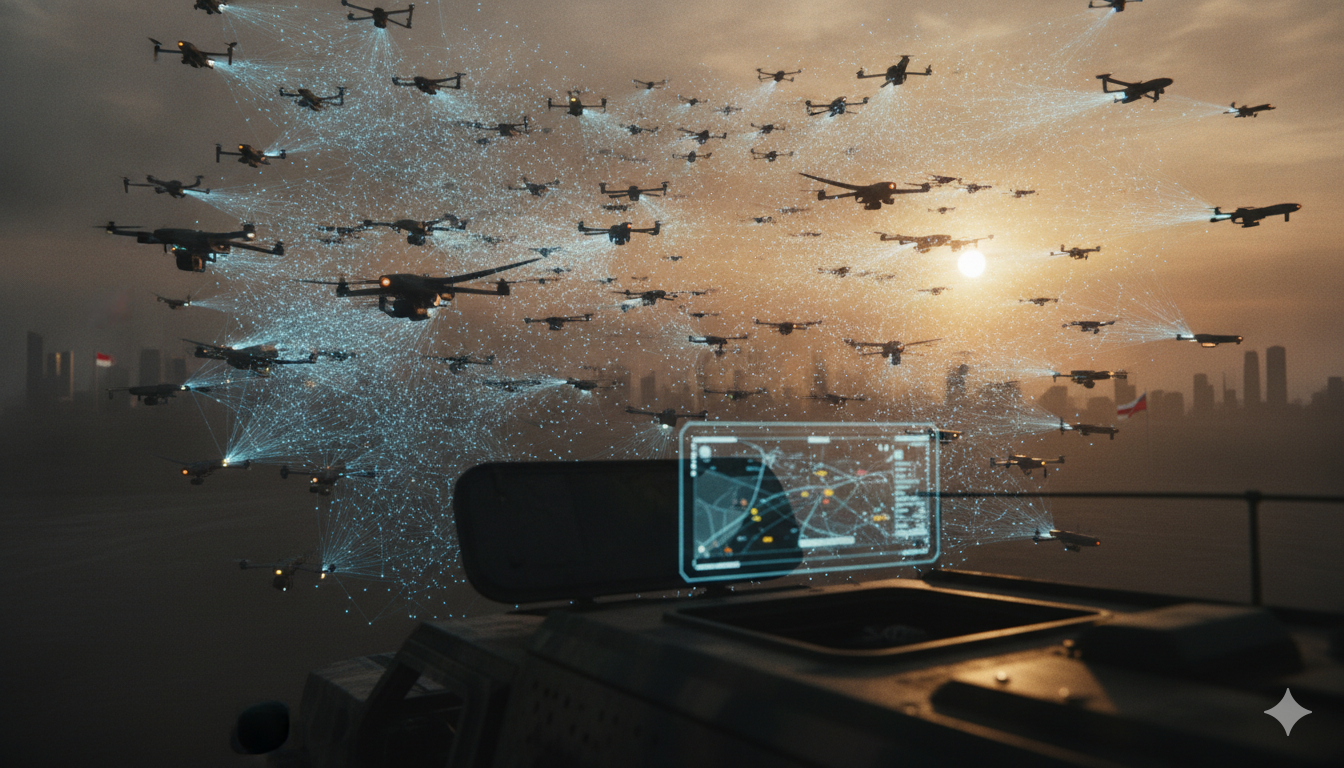
Drone Swarm Intelligence and Control: The AI Revolution Reshaping Autonomous Warfare and Multi-Agent Systems (2024–2026)
Introduction: From Individual Drones to Collective Intelligence The most important transformation in unmanned systems is no longer occurring at the platform level but at the level of collective intelligence. While advances in propulsion, sensors, communications, and miniaturization continue to improve individual drones, the decisive breakthrough of 2024–2026 has been the emergence of increasingly autonomous drone…
-

Navigating the Skies: How AI-Powered Drone Swarms Are Transforming Warfare, Security and Industry
Introduction: The Emergence of Mass Autonomy in Modern Warfare The character of warfare is undergoing one of its most profound transformations since the introduction of precision-guided weapons. While unmanned aerial vehicles have become a familiar feature of modern military operations, the next revolution is being driven not by individual drones but by intelligent swarms capable…
-

The Eye-Tracking Revolution: How AI, Deflectometry, and Spatial Computing Are Transforming Human-Machine Interaction
Introduction: Eye Tracking Becomes Strategic Infrastructure Eye tracking is rapidly evolving from a niche research tool into a foundational technology for the next generation of digital, industrial, healthcare, defense, and spatial computing ecosystems. Between 2024 and 2026, advances in artificial intelligence, computer vision, photonics, sensor miniaturization, and augmented reality have transformed gaze estimation from a…
-

Space Synthetic Biology: Engineering Life for the Human Expansion into the Solar System
Introduction: Biology Becomes Infrastructure for Deep Space Exploration The future of space exploration may depend as much on biology as on rockets. As nations and commercial companies pursue permanent lunar bases, Mars expeditions, and eventually self-sustaining extraterrestrial settlements, traditional engineering approaches face severe limitations. Every kilogram launched from Earth carries immense cost, while long-duration missions…
STRATEGIC SUB-MAGAZINES
The Strategy, Policy & Governance magazine connects multiple strategic sub-domains that examine power, risk, and coordination from different angles.
Geopolitics, Strategy & Technological Rivalries
Focuses on interstate competition, alliances, power balances, and long-term rivalry dynamics shaped by technology and economics.
Explore the Geopolitics, Strategy & Technological Rivalries Sub-Magazine →
Global Risks & Future Threats
Examines systemic risks, emerging threat vectors, gray-zone challenges, and future conflict drivers beyond conventional war.
Explore the Global Risks & Future Threats Sub-Magazine →
Technology & Systems Management
Analyzes how complex defense and security systems are governed, integrated, regulated, and sustained across institutions..
Explore the Technology & Systems Management Sub-Magazine →
Related Domains & Cross-Cutting Themes
Strategy, Policy & Governance does not operate in isolation. Coverage within this magazine frequently intersects with Defense & Military Systems, Critical & Emerging Technologies, Industry, Markets & Supply Chains, Space Technology, Defense & Exploration Readers interested in deeper technical, industrial, or geopolitical dimensions are encouraged to explore related magazines across the IDST intelligence network.
Explore the Defense and Military Systems Magazine →
Explore the Critical & Emerging Technologies Magazine →
Explore the Industry, Markets & Supply Chains Magazine →
Explore the Space Technology, Defense & Exploration Magazine →