Home / Critical & Emerging Technologies / AI & IT / Global Reach, Local Precision: How AI Is Revolutionizing Weather Forecasting Worldwide

Global Reach, Local Precision: How AI Is Revolutionizing Weather Forecasting Worldwide

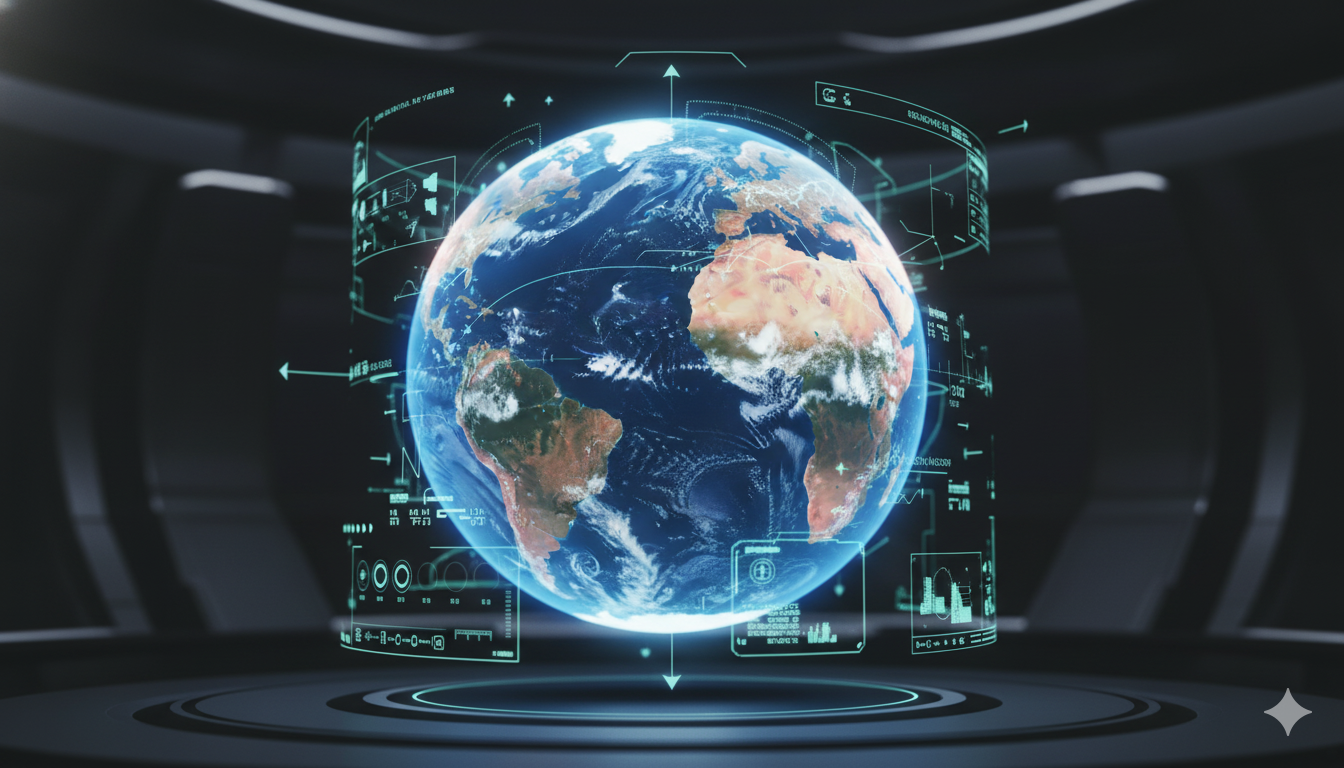
Artificial intelligence is transforming weather forecasting into a real-time intelligence system—reshaping disaster response, economic planning, and military operations by delivering faster, more precise, and strategically vital insight into Earth’s atmosphere.

Introduction: A Quiet Revolution in the Sky

For most of modern history, weather forecasting has been an exercise in approximation. Meteorologists relied on physics-based numerical models, vast supercomputers, and incomplete data to simulate the atmosphere—an inherently chaotic system. While these models steadily improved, they remained slow, computationally expensive, and often blind to local-scale phenomena that matter most to people on the ground.

That reality has changed rapidly. Artificial intelligence is now transforming meteorology from a physics-limited discipline into a data-driven intelligence system. AI models can generate global forecasts in seconds, resolve street-level weather effects, and continuously improve as new data flows in. What once took hours of supercomputing time can now be done almost instantly, with higher accuracy and finer detail. This is not simply faster forecasting—it is a fundamental redefinition of how humanity understands and anticipates the atmosphere.

From Equations to Intelligence: How AI Learns the Weather

Traditional numerical weather prediction relies on explicitly solving the laws of physics that govern fluid dynamics and thermodynamics. AI weather models take a radically different approach. They are trained on decades of historical weather data, satellite imagery, radar measurements, and reanalysis datasets, allowing them to learn atmospheric behavior directly from observation rather than calculation.

Modern AI architectures excel at capturing complex spatial and temporal relationships. Graph-based neural networks treat the atmosphere as a web of interconnected regions, allowing models to understand how conditions in one part of the world influence another thousands of kilometers away. Transformer-based systems analyze massive volumes of satellite imagery using attention mechanisms that focus on the most meteorologically relevant features. Fourier-based neural operators efficiently model large-scale atmospheric flows, while probabilistic and diffusion-based methods introduce something traditional AI once lacked: a meaningful understanding of uncertainty.

The result is a new class of weather models that are not constrained by computational bottlenecks. They can run faster, at higher resolution, and at a fraction of the energy cost—while often outperforming legacy systems.

Global Leaders in the AI Weather Race

The United States and Europe were among the first to demonstrate the operational power of AI weather forecasting. Google DeepMind’s GraphCast marked a turning point when it showed that a purely AI-based system could outperform the European Centre for Medium-Range Weather Forecasts’ flagship numerical model across most forecasting variables. By representing the Earth’s atmosphere as a graph rather than a grid, GraphCast captures long-range interactions with extraordinary efficiency, producing 10-day forecasts in under a minute.

NVIDIA’s FourCastNet pushed the frontier further by demonstrating that AI models could deliver tens of thousands of times faster performance than traditional systems while maintaining competitive accuracy for extreme weather. Rather than replacing existing infrastructure, FourCastNet enables massive ensemble forecasting—running many possible future scenarios to better understand risk.

Europe has taken a pragmatic hybrid approach. ECMWF’s AI Forecasting System operates alongside its physics-based models, feeding forecasters real-time AI insights that enhance rather than replace human expertise. Microsoft’s ClimaX has expanded the concept further by introducing foundation models for climate and weather, capable of adapting to multiple tasks without being retrained from scratch.

China, meanwhile, has moved aggressively. FengWu, developed by the Shanghai AI Laboratory, combines multiple AI models into an ensemble system that reduces forecast errors while extending reliable prediction windows. Huawei’s Pangu-Weather has shown exceptional skill in tracking typhoons, accurately predicting storm paths and intensification where traditional models often struggle. FuXi, from the Beijing Academy of Artificial Intelligence, focuses on probabilistic forecasting, helping decision-makers understand not just what may happen, but how confident the model is in each outcome.

Together, these systems signal a shift from national weather models to strategic AI forecasting capabilities, with implications that extend far beyond meteorology.

From Planetary Scale to Street Corners

Perhaps the most profound change AI has introduced is its ability to bridge global and local forecasting. Traditional models excel at continental-scale dynamics but often miss the microclimates that shape daily life. AI changes that balance.

In cities, AI-enhanced forecasts now capture urban heat islands, localized rainfall, and wind corridors shaped by buildings and terrain. Systems such as IBM’s AI-augmented global forecasting platform deliver kilometer-scale resolution worldwide, updated hourly, enabling municipal planners to anticipate heat stress, flash flooding, and air quality events with unprecedented clarity.

Commercial satellite constellations are accelerating this shift. Tomorrow.io’s weather-specific satellites provide high-frequency atmospheric observations designed explicitly for AI ingestion. This enables hyperlocal forecasts at resolutions approaching individual neighborhoods, updated minute by minute rather than hourly.

In disaster-prone regions, AI-powered localization has been transformative. Japan’s integration of AI forecasting with dense sensor networks allows authorities to predict flood risks and wind damage at neighborhood level, dramatically improving evacuation timing and emergency response.

Weather Intelligence Meets the Real Economy

The economic impact of AI weather forecasting is already substantial. In agriculture, AI-driven field-level forecasts guide planting schedules, irrigation timing, and harvest decisions. Farmers using these systems report significant yield gains, reduced water usage, and improved resilience to climate variability.

In the energy sector, AI weather intelligence stabilizes renewable-heavy grids. Accurate predictions of cloud cover, wind ramps, and temperature fluctuations allow operators to balance supply and demand more efficiently, reducing curtailment and preventing outages.

Aviation has quietly become one of the biggest beneficiaries. Airlines use AI forecasts to reroute flights around turbulence and storms, saving fuel, reducing delays, and cutting emissions. What once depended on conservative buffers now relies on precise, probabilistic weather intelligence.

Extreme Weather, Climate Risk, and National Security

AI’s greatest societal value may lie in extreme weather prediction. Rapidly intensifying hurricanes, flash floods, wildfires, and heatwaves have historically been the hardest events to forecast accurately. AI models have dramatically reduced these blind spots.

Hurricane intensity forecasts have improved markedly, particularly for rapid intensification events that pose the greatest risk to coastal populations. Flood forecasting systems now provide street-level warnings days in advance across dozens of countries. Wildfire risk models combine weather, vegetation, and terrain data to predict fire spread with actionable accuracy.

These capabilities have strategic implications. Weather intelligence influences military planning, satellite operations, naval logistics, and humanitarian response. Nations that can forecast extreme conditions more accurately gain operational advantages, making AI weather systems an emerging component of national power.

A New Era of Collaboration—and Competition

AI meteorology is advancing through unprecedented global collaboration. Open benchmarking platforms allow researchers worldwide to compare models on standardized datasets. Open-source releases have democratized access to state-of-the-art systems, enabling innovation far beyond elite research institutions.

At the same time, geopolitical tensions are emerging. Weather data, forecasting accuracy, and model transparency are increasingly viewed through a strategic lens. As AI weather systems become more powerful, questions of access, trust, and governance will only intensify.

Military and National Security Dimensions

Weather has always been a force multiplier in military operations, but AI forecasting elevates it to a new strategic level. Modern armed forces depend on precise environmental intelligence for air operations, naval maneuvering, missile guidance, satellite communications, and unmanned systems. AI-driven weather models provide faster updates, finer resolution, and greater resilience under contested conditions.

Energy-efficient AI forecasting systems are particularly valuable for forward-deployed forces, ships, aircraft, and space assets operating under strict power constraints. Enhanced prediction of atmospheric turbulence, ionospheric disturbances, and severe weather improves the survivability and effectiveness of military platforms. As autonomous systems proliferate, reliable onboard weather intelligence becomes critical for independent decision-making without continuous human oversight.

Geopolitically, weather data and forecasting capabilities are increasingly viewed as strategic resources. Control over high-quality meteorological intelligence influences disaster diplomacy, infrastructure planning, and military readiness. As AI models become more capable, tensions around data access, model transparency, and international cooperation are likely to intensify.

Why Physics Still Matters

Despite extraordinary progress, AI is not a silver bullet. Purely data-driven models struggle with long-term climate interactions, rare “black swan” events, and atmospheric regimes that have no historical precedent. Climate change itself poses a challenge, as models trained on past data must adapt to a rapidly changing planet.

The solution is convergence rather than replacement. Hybrid AI-physics models embed physical constraints into neural networks, ensuring consistency with known laws while retaining AI’s speed and adaptability. Initiatives such as Europe’s Digital Twin Earth aim to create continuously learning planetary models that evolve alongside the climate itself.

Looking Ahead: The Next Decade of Forecasting

The coming decade will mark a decisive shift in AI-powered weather forecasting—from predicting what is most likely to happen, to exploring what could happen under thousands of plausible future conditions. Generative AI is poised to transform forecasting into large-scale simulation, allowing governments, utilities, and infrastructure operators to stress-test cities, power grids, supply chains, and military assets against entire ensembles of possible weather futures rather than a single deterministic outlook. This scenario-driven approach will fundamentally reshape risk management, climate adaptation planning, and emergency preparedness.

At the same time, advances in computing hardware will dramatically reduce the cost and latency of weather intelligence. Neuromorphic processors, inspired by the structure of the human brain, promise to slash the energy requirements of weather prediction by orders of magnitude. These chips are particularly well suited for continuous, low-power inference, enabling persistent weather awareness on satellites, aircraft, unmanned systems, and remote sensor networks. In parallel, Earth-observing satellites are increasingly equipped with onboard AI capable of analyzing atmospheric conditions in real time, filtering critical signals from noise before data ever reaches the ground. This shift will compress the forecasting pipeline from hours to minutes—or even seconds—unlocking near-instantaneous global situational awareness.

Yet even as AI forecasting grows more powerful, its limitations are becoming clearer. Purely data-driven models struggle with rare extreme events, long-term climate interactions across the atmosphere, oceans, and cryosphere, and emerging weather regimes shaped by accelerating climate change. The response is not a retreat from AI, but a convergence. Hybrid forecasting systems are embedding physical laws directly into machine-learning architectures, ensuring consistency with fundamental dynamics while retaining AI’s speed, adaptability, and scalability. These hybrid models represent the most credible path to breaking long-standing barriers in subseasonal-to-seasonal prediction.

Beyond classical computing, entirely new technological frontiers are opening. Quantum computing is being explored for accelerating the most complex atmospheric simulations, particularly those involving chaotic, multi-scale interactions that overwhelm conventional systems. Meanwhile, neuromorphic and edge-based AI will allow weather intelligence to become distributed rather than centralized, operating autonomously across global sensor networks.

Ultimately, forecasting itself may become personalized. Weather intelligence will increasingly adapt to individual risk profiles—factoring in health conditions, travel plans, occupational exposure, and economic vulnerability. Instead of a generic forecast, individuals, cities, and organizations will receive tailored, decision-ready insights designed to minimize harm and maximize resilience.

The next decade will not simply deliver better forecasts. It will redefine weather prediction as a continuous, intelligent, and adaptive system—one that anticipates risk, simulates futures, and integrates seamlessly into the fabric of daily decision-making across civil, economic, and security domains.

Conclusion: From Forecasting Weather to Understanding the Planet

The fusion of artificial intelligence and meteorology represents one of the most consequential scientific and technological shifts of the twenty-first century. Weather forecasting is no longer a slow, centralized exercise in probabilistic approximation. It is becoming a fast, adaptive, and increasingly precise intelligence system—one capable of interpreting the atmosphere in near real time, from planetary-scale dynamics down to local microclimates.

What emerges from this transformation is not merely better forecasts, but a fundamentally new relationship between society and the atmosphere. As uncertainty shrinks and predictive horizons extend, preparedness replaces reaction, and resilience becomes proactive rather than crisis-driven. Global reach and local precision, once competing priorities, now coexist within the same forecasting frameworks. Through AI, they have become complementary rather than contradictory.

This shift carries implications far beyond daily weather reports. AI-driven forecasting is reshaping agriculture, energy systems, transportation, disaster response, and national security planning. At the geopolitical level, the global race to lead in weather intelligence has accelerated innovation at an unprecedented pace, while simultaneously raising critical questions about data access, transparency, governance, and equity. Weather, once a shared uncertainty, is increasingly a strategic asset.

As artificial intelligence continues to decode the complexity of Earth’s atmosphere, the ultimate impact may extend beyond prediction itself. The true legacy of this revolution may be a world better equipped to anticipate disruption, adapt to climate volatility, and make informed decisions in the face of uncertainty. Weather intelligence is becoming a cornerstone of societal resilience—globally connected, locally precise, and strategically consequential.

The forecasting revolution is no longer on the horizon. It is already here, reshaping how humanity understands the planet it inhabits—and how it prepares for the century ahead.

About Rajesh Uppal

Check Also

3D-Printed Weapons: The Next Frontier of Terrorism and Global Security Threats

Introduction Additive manufacturing, more commonly known as 3D printing, has evolved from a niche prototyping …

wpChatIcon
wpChatIcon