
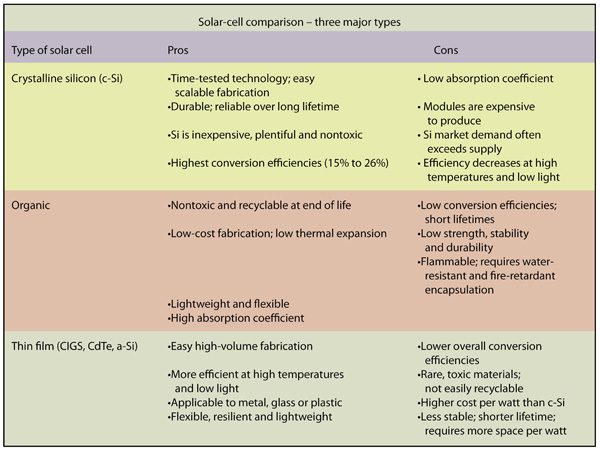

Worldwide growth of photovoltaics has been fitting an exponential curve for more than two decades. During this period of time, photovoltaics (PV), also known as solar PV, has evolved from a pure niche market of small scale applications towards becoming a mainstream electricity source. The Sun blankets the Earth with enough photons every hour to meet the entire world’s energy needs for a year. The question is how to efficiently convert them into electricity. Solar panels on the market today consist of cells made from a single semiconducting material, usually silicon. Since the material absorbs only a narrow band of the solar spectrum, much of sunlight’s energy is lost as heat: these panels typically convert less than 20 percent of that energy into electricity. Even under small-scale laboratory conditions, the world’s best single-junction solar cells—the kind found in most solar panels—still max out at capturing 29 percent of the sun’s energy.
IDST Pro Access Required
This analysis is part of IDST premium intelligence.
Subscribe to Continue ReadingAlready a member? Log in