
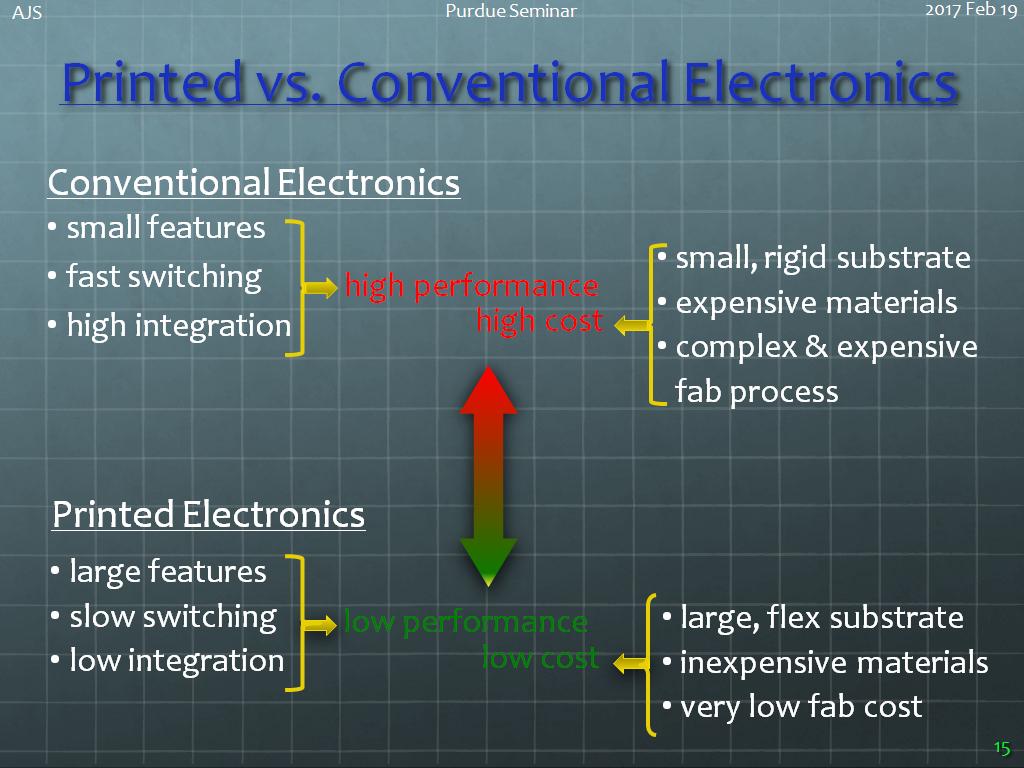

While the conventional electronics like computers and smartphones is built around silicon integrating billions of transistors and is manufactured using complex, costly and wasteful processes in multi-billion dollar foundries , The printed and flexible electronics aim to replace this by “organic” semiconductors which are long chains of thousands of repeating molecules (a plastic), made with materials based on carbon. Organic semiconductors can be made to be soluble, and can be turned into an ink. This means it’s possible to print electronic circuits, with the potential to manufacture components as fast as printing newspapers. A printer would do this by applying different inks onto the film. As the inks dried, they would turn into wires, transistors, capacitors, LEDs and all the other things needed to make displays and circuits.
IDST Pro Access Required
This analysis is part of IDST premium intelligence.
Subscribe to Continue ReadingAlready a member? Log in