
Materials determine what systems can achieve, how they perform, and where their operational limits lie. Advances in materials science are enabling lighter, stronger, smarter, stealthier, and more resilient platforms across defense, aerospace, energy, electronics, and strategic industries. From advanced composites, nanomaterials, metamaterials, and high-temperature alloys to smart materials, additive manufacturing, and quantum-engineered materials, breakthroughs in material technologies are driving the next generation of military capabilities, industrial innovation, and technological competitiveness.
IDST Intelligence Briefings
Composites, metamaterials, thermal protection, stealth coatings, and advanced manufacturing materials.
Why This Magazine Exists
Materials innovation is often measured in decades, yet it underpins many of the most transformative advances in defense, aerospace, energy, and manufacturing. This sub-magazine examines how breakthroughs in materials science transition from laboratories to operational systems, analyzing both emerging capabilities and the technical, industrial, and supply-chain challenges that determine their real-world impact.
What We Track
- Structural and composite materials
- Thermal and stealth materials
- Additive and advanced manufacturing
- Materials for extreme environments
- Supply-chain dependencies and critical inputs
Latest Analysis & Intelligence
-

Breaking the Ice: How DARPA’s ICE Program Is Bioengineering the Future of Arctic Warfare and Cold-Weather Operations
Introduction: Biology Enters the Arctic Battlespace The Arctic is rapidly transforming from a remote, ice-bound frontier into one of the world’s most strategically contested theaters. Climate change has accelerated the retreat of sea ice, opening new maritime trade routes, exposing vast reserves of critical minerals and hydrocarbons, and increasing military activity across the High North.…
-
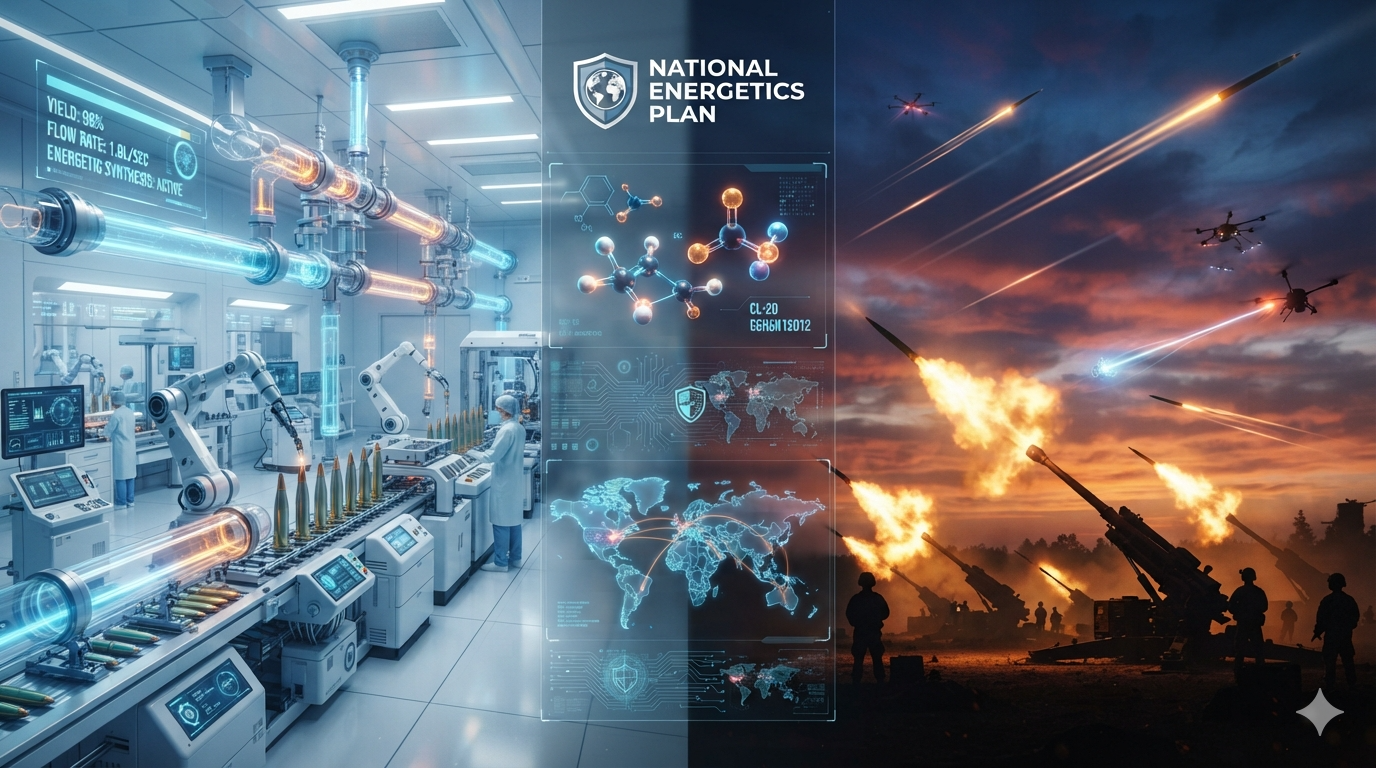
The New Energetics Revolution: How Advanced Propellants, Smart Manufacturing, and Industrial Innovation Are Reshaping Military Power
Introduction: The Strategic Importance of Energetics in Great Power Competition Behind every missile launch, artillery strike, hypersonic weapon, rocket motor, and precision-guided munition lies a critical but often overlooked technology domain—energetics. Explosives, propellants, pyrotechnics, and advanced energetic materials determine not only the range, speed, and lethality of modern weapons but also the ability of nations…
-

Smart Materials & Multifunctional Composites: Engineering Intelligent Systems for the AI, Aerospace, Robotics and Defense Revolution
Introduction: Intelligent Materials Become Strategic Technologies Materials are no longer passive building blocks—they are becoming intelligent systems capable of sensing, adapting, communicating, storing energy, repairing damage, and interacting with their environment. As artificial intelligence, autonomous platforms, electric mobility, advanced robotics, and next-generation defense systems rapidly evolve, smart materials are emerging as one of the most…
-
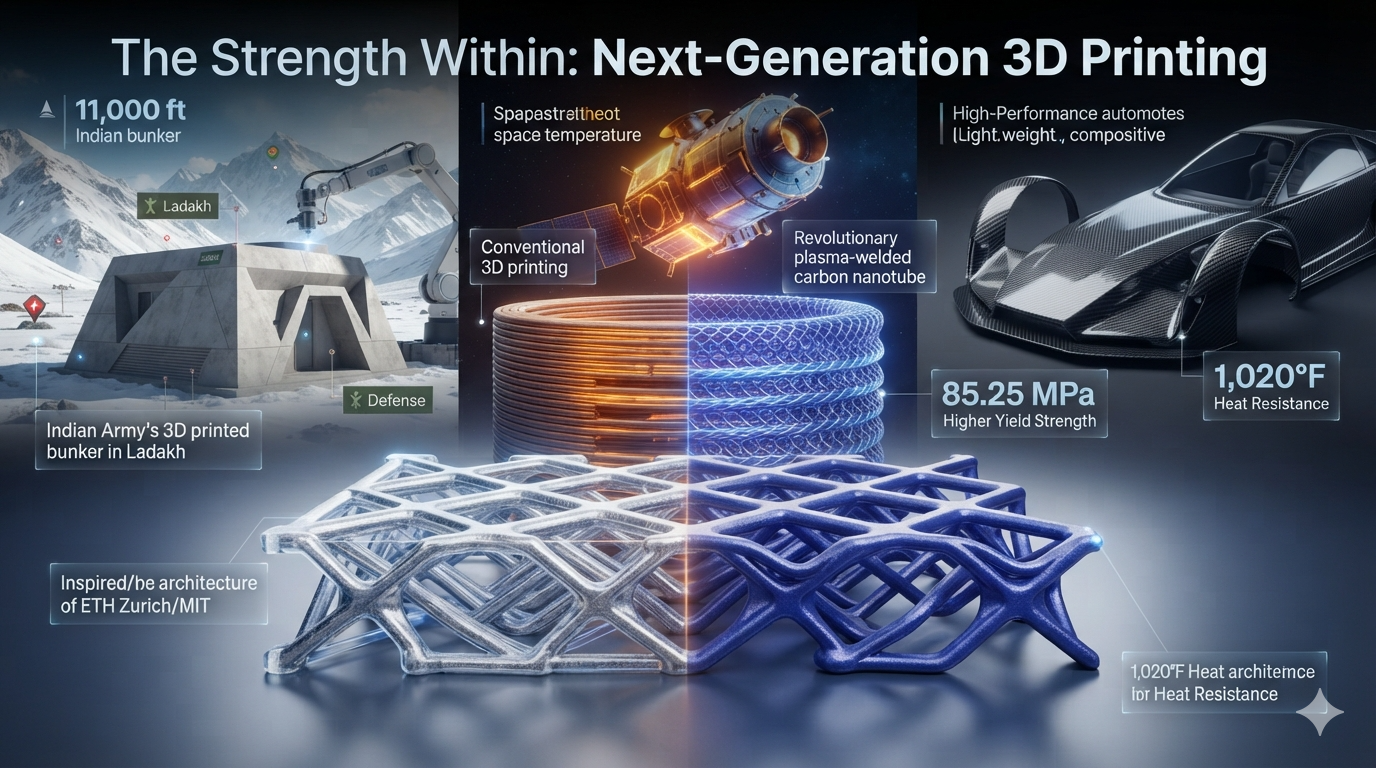
Advanced Materials Revolution in Additive Manufacturing: Engineering High-Performance 3D Printed Components for Defense, Aerospace and Industry
The Materials Race Reshaping Advanced Manufacturing The global additive manufacturing revolution has entered a decisive new phase. While the first generation of 3D printing transformed product development through rapid prototyping and design flexibility, the next generation is being driven by an even more important factor—the emergence of advanced printable materials capable of delivering mechanical, thermal,…
-

China’s Non-Nuclear Hydrogen Bomb: How Magnesium Hydride Weapons Could Transform Future Precision Warfare
Introduction: Hydrogen Energy Meets the Future Battlefield The convergence of advanced materials science, clean-energy research, and military innovation is reshaping the future of conventional weapons. As major powers seek alternatives that deliver greater battlefield effects without crossing the nuclear threshold, high-energy chemical materials are emerging as a new class of strategic technologies. Among the most…
-

Breaking the Memory Wall: How In-Memory Computing is Reshaping AI, Military Superiority, and the Global Semiconductor Race
Strategic Context: Why In-Memory Computing Has Become a National Priority Artificial intelligence is fundamentally transforming military operations, industrial competitiveness, scientific research, and the global digital economy. Yet the greatest obstacle to AI advancement is no longer processor performance—it is memory. Modern AI systems spend far more time and energy moving enormous volumes of data between…
-

Spintronic Materials: The Quantum Foundation of AI Computing, Defense Electronics, and the Post-CMOS Semiconductor Revolution
Strategic Context: Why Spintronic Materials Have Become a New Arena of Great Power Competition The global semiconductor industry is approaching one of the most significant technological transitions since the invention of the transistor. For more than half a century, advances in computing have relied on shrinking CMOS transistors in accordance with Moore’s Law. Today, however,…
Related Domains & Cross-Cutting Themes
Aerospace systems, naval platforms, hypersonics, industrial resilience, and manufacturing ecosystems.
Ethics, governance, and technology control
Industrial scaling and supply-chain constraints
Human–machine teaming and trust
Interoperability across platforms and institutions
Export controls and technological rivalry
Explore the Critical & Emerging Technologies Magazine →
Explore the Industry, Markets & Supply Chains Magazine →
Explore the Space Technology, Defense & Exploration Magazine →