
Manufacturing transforms scientific breakthroughs and engineering designs into deployable products, operational systems, and strategic capabilities. Beyond innovation itself, industrial competitiveness depends on production capacity, advanced tooling, skilled workforces, quality assurance, and resilient supply chains. In an era of geopolitical competition and technological disruption, manufacturing capability has re-emerged as a critical determinant of economic strength, military readiness, and national resilience.
IDST Intelligence Briefings.
Factories, production lines, surge capacity, industrial modernization, and manufacturing failures
Why This Magazine Exists
Innovation matters only when it can be produced at scale, at cost, and on time. This sub-magazine examines how advanced products and systems are designed, manufactured, tested, and delivered across strategic industries. It analyzes emerging manufacturing technologies, industrial automation, additive manufacturing, smart factories, supply-chain resilience, workforce development, production economics, and industrial bottlenecks to understand how nations and industries convert technological potential into real-world capability under both normal conditions and strategic stress.
What We Track
- Production rates and bottlenecks
- Workforce and skills pipelines
- Tooling and industrial modernization
- Quality control and yield issues
- Supply-tier dependencies
Latest Analysis & Intelligence
-
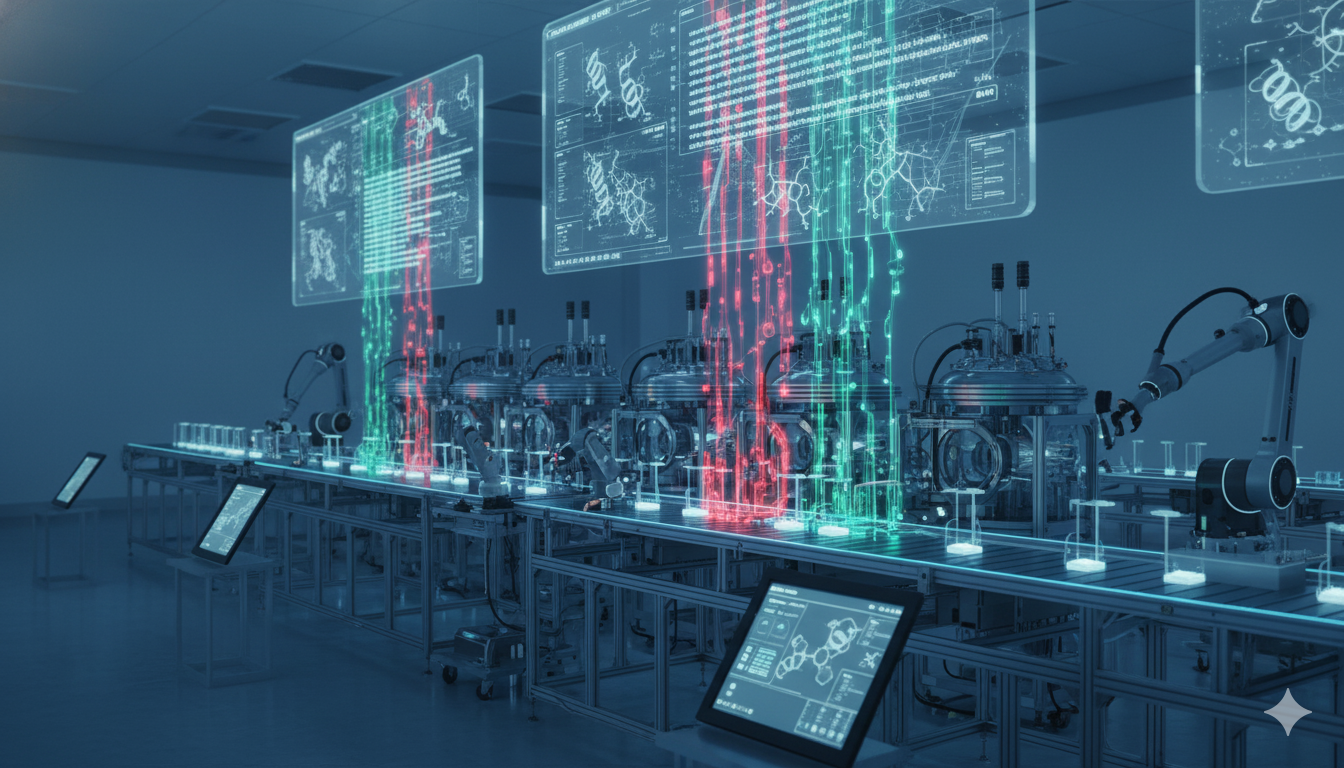
Revolutionizing Protein Manufacturing: Cell-Free Protein Synthesis in the Era of AI, RNA Origami, and Biosecurity
Introduction: From Living Factories to Programmable Biomanufacturing For more than half a century, the biotechnology industry has relied on a simple principle: if a protein is needed, engineer a living cell to produce it. Whether using Escherichia coli, yeast, insect cells, or mammalian Chinese Hamster Ovary (CHO) cells, proteins have traditionally been manufactured inside biological…
-

Beyond Moore’s Law: How 3D Heterogeneous Integration Is Powering the AI, Defense and Digital Revolution
Introduction For more than half a century, the semiconductor industry advanced according to a remarkably consistent principle: smaller transistors meant faster, cheaper, and more powerful computing. Moore’s Law became the foundation of the digital economy, enabling the emergence of personal computers, smartphones, cloud computing, precision weapons, autonomous systems, and artificial intelligence. Today, however, the industry…
-

The Invisible Engine of the AI Age: How EUV and Deep Ultraviolet Technologies Are Reshaping Semiconductor Power, Military Superiority, and Global Geopolitics (2026 Edition)
Introduction: The World’s Most Valuable Technology Isn’t Artificial Intelligence—It’s the Light That Creates It Artificial Intelligence may dominate headlines, but AI itself depends on a far less visible technology: the ability to manufacture increasingly complex semiconductor chips. Every frontier innovation—from generative AI and autonomous weapons to quantum computing, hypersonic systems, space platforms, and advanced medical…
-
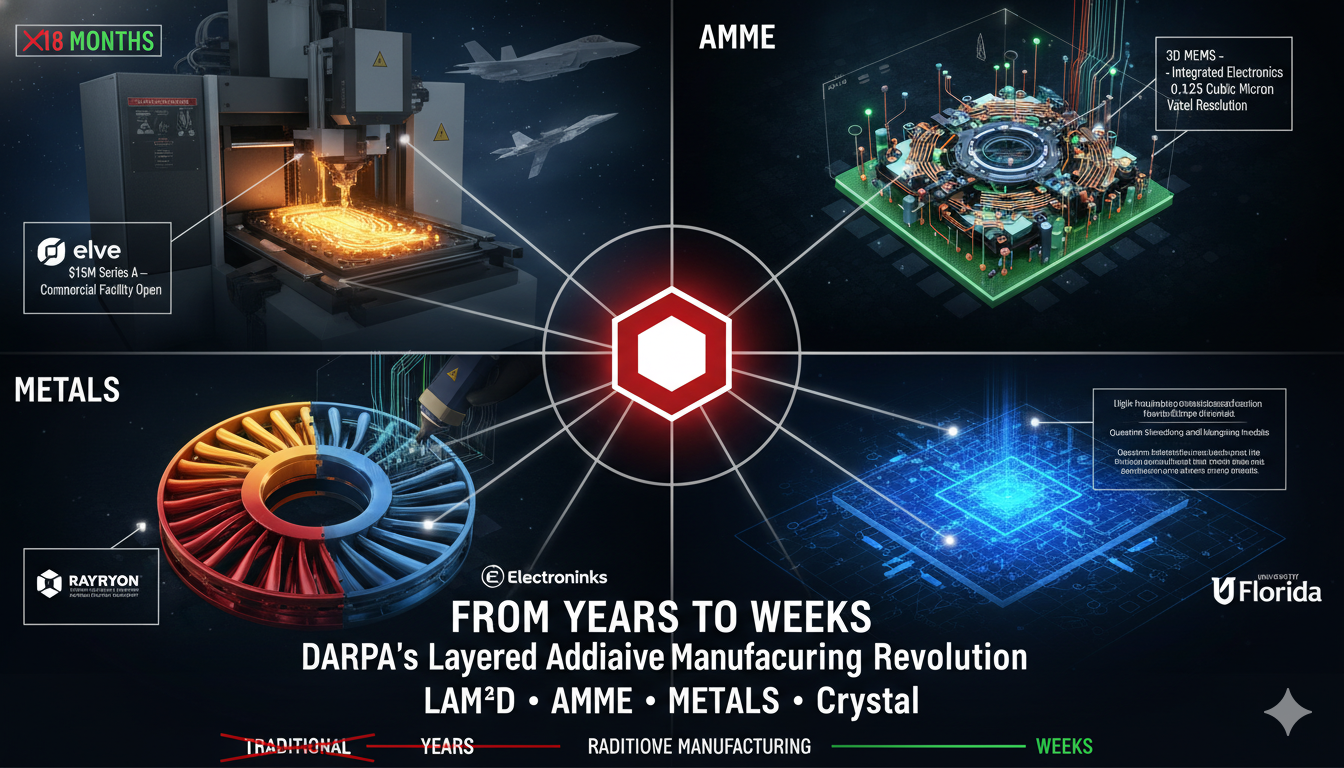
Revolutionizing Critical Component Manufacturing: DARPA’s LAM³D and the Future of Traveling-Wave Tube Production (2026 Update)
Introduction: The Manufacturing Crisis Behind Modern Electronic Warfare As global military competition intensifies across the electromagnetic spectrum, advanced radio frequency (RF) systems have become central to modern warfare, satellite communications, missile defense, electronic warfare, and next-generation sensing architectures. From electronic warfare and missile defense to deep-space communications and next-generation satellite broadband, the ability to generate…
-
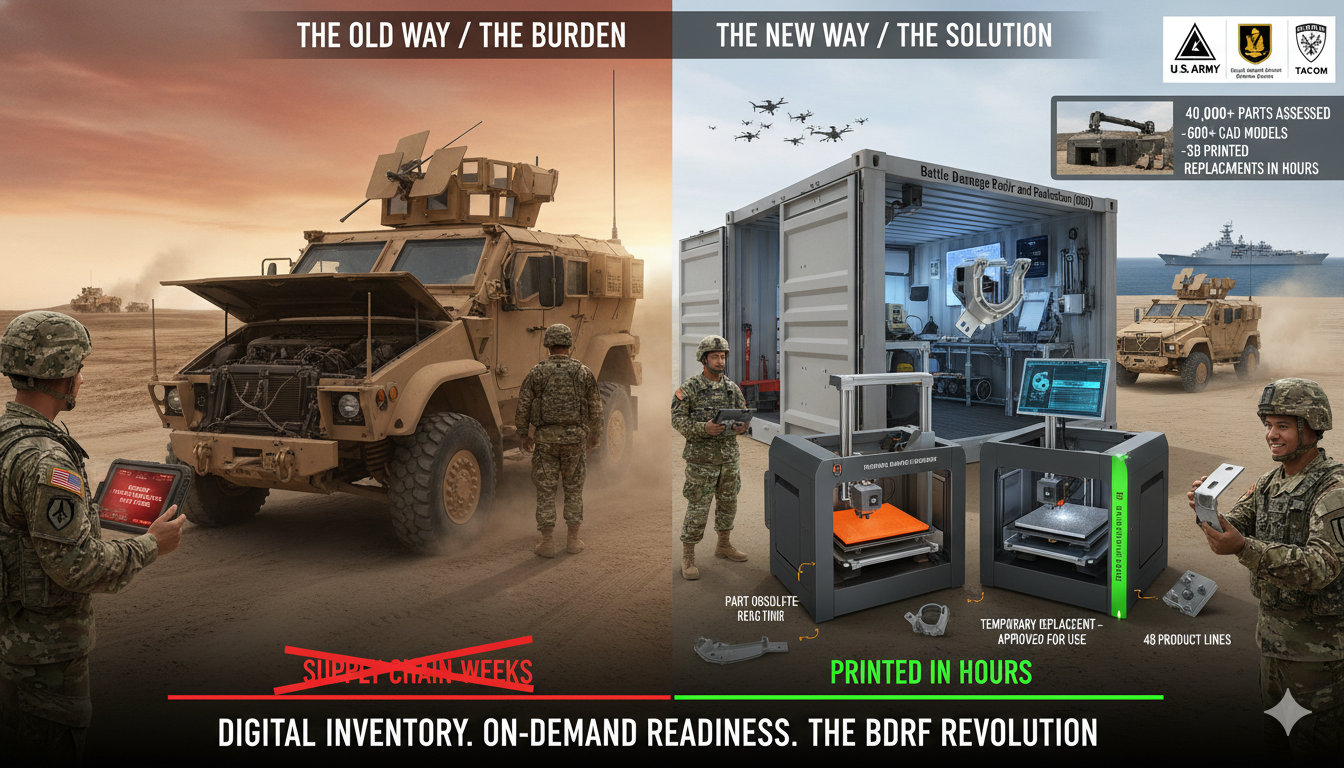
Revolutionizing the Battlefield: 3D Printing’s On-Demand Arsenal for the Modern Military
From Battlefield Repair to Distributed Warfare Manufacturing Additive manufacturing has moved far beyond the laboratory. Between 2024 and 2026, military 3D printing evolved from a niche sustainment capability into a rapidly expanding operational technology reshaping logistics, maintenance, drone warfare, expeditionary construction, and distributed combat operations. From the trenches of Ukraine to U.S. Navy warships operating…
-
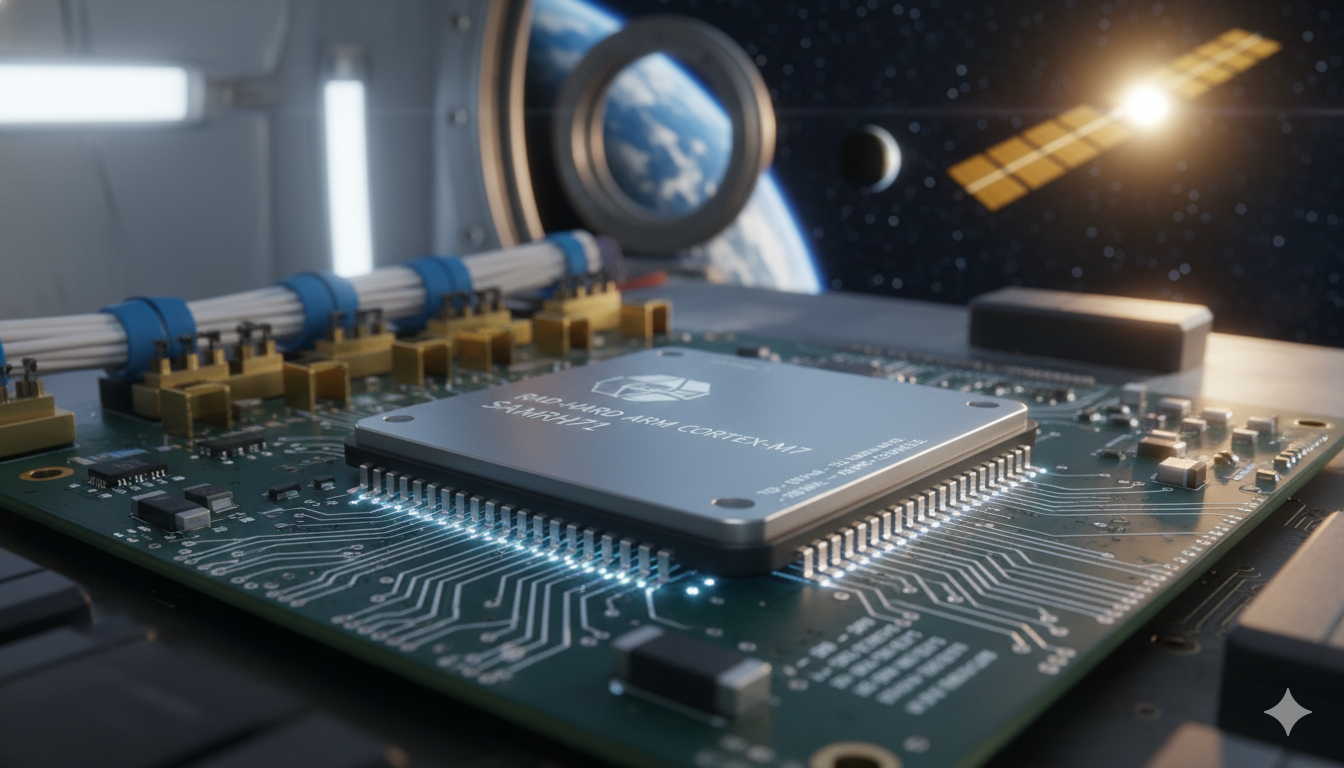
Next-Generation Spaceflight Computing: Radiation-Hardened Processors and the New Space Power Competition
Introduction: Space Computing Becomes a Strategic Weapon System The defining space competition of the late 2020s is no longer centered solely on launch vehicles, satellite numbers, or orbital access. It increasingly revolves around computational superiority in orbit. As military forces, intelligence agencies, and commercial operators deploy vast constellations of satellites, autonomous spacecraft, lunar systems, and…
-
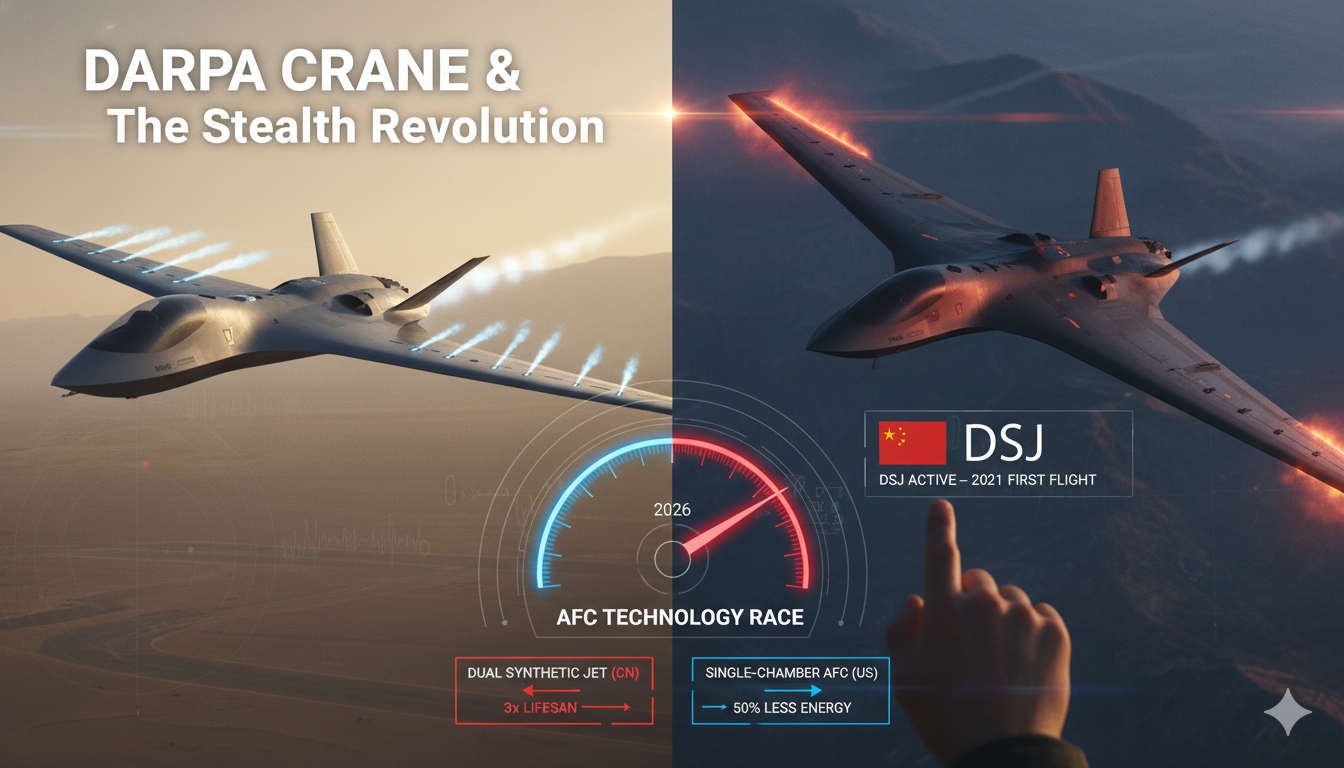
DARPA CRANE: Active Flow Control, X-Planes, and the Emerging Race for Sixth-Generation Air Dominance
Introduction: The Next Revolution in Airpower Is Not a New Engine—It Is a New Way to Fly The race for air dominance is entering a transformative phase in which stealth, artificial intelligence, advanced materials, autonomous systems, and aerodynamics are converging to redefine military aviation. While sixth-generation fighter programs such as the U.S. Air Force’s Next…
Related Domains & Cross-Cutting Themes
Materials, test & measurement, logistics, and industrial policy..
Industrial capacity and supply chains
Cyber-physical security
Climate, geography, and environmental stress
Human-machine coordination
System survivability under disruption
Explore the Critical & Emerging Technologies Magazine →
Explore the Industry, Markets & Supply Chains Magazine →
Explore the Space Technology, Defense & Exploration Magazine →