
Manufacturing transforms scientific breakthroughs and engineering designs into deployable products, operational systems, and strategic capabilities. Beyond innovation itself, industrial competitiveness depends on production capacity, advanced tooling, skilled workforces, quality assurance, and resilient supply chains. In an era of geopolitical competition and technological disruption, manufacturing capability has re-emerged as a critical determinant of economic strength, military readiness, and national resilience.
IDST Intelligence Briefings.
Factories, production lines, surge capacity, industrial modernization, and manufacturing failures
Why This Magazine Exists
Innovation matters only when it can be produced at scale, at cost, and on time. This sub-magazine examines how advanced products and systems are designed, manufactured, tested, and delivered across strategic industries. It analyzes emerging manufacturing technologies, industrial automation, additive manufacturing, smart factories, supply-chain resilience, workforce development, production economics, and industrial bottlenecks to understand how nations and industries convert technological potential into real-world capability under both normal conditions and strategic stress.
What We Track
- Production rates and bottlenecks
- Workforce and skills pipelines
- Tooling and industrial modernization
- Quality control and yield issues
- Supply-tier dependencies
Latest Analysis & Intelligence
-

The Race for the Best Qubit Technology: Paving the Way for Quantum Computers and Sensors: 2026 Update
The State of Quantum Computing in 2026: Crossing the Threshold In the quest for quantum supremacy, the race to develop the best quantum bit (qubit) technology is heating up. Quantum computers, which leverage the principles of quantum mechanics, promise to solve problems that are currently intractable for classical computers. However, achieving practical quantum computing and…
-

Beyond Layers: How Holographic Volumetric 3D Printing Just Got 25x More Efficient (2026 Update)
From Layer-by-Layer Manufacturing to Light-Field Fabrication Introduction: Additive Manufacturing Enters a New Phase For more than three decades, additive manufacturing has been dominated by a familiar paradigm: objects built layer by layer through extrusion, sintering, curing, or deposition. This approach transformed prototyping, enabled distributed manufacturing, and accelerated product development across aerospace, healthcare, automotive, and consumer…
-
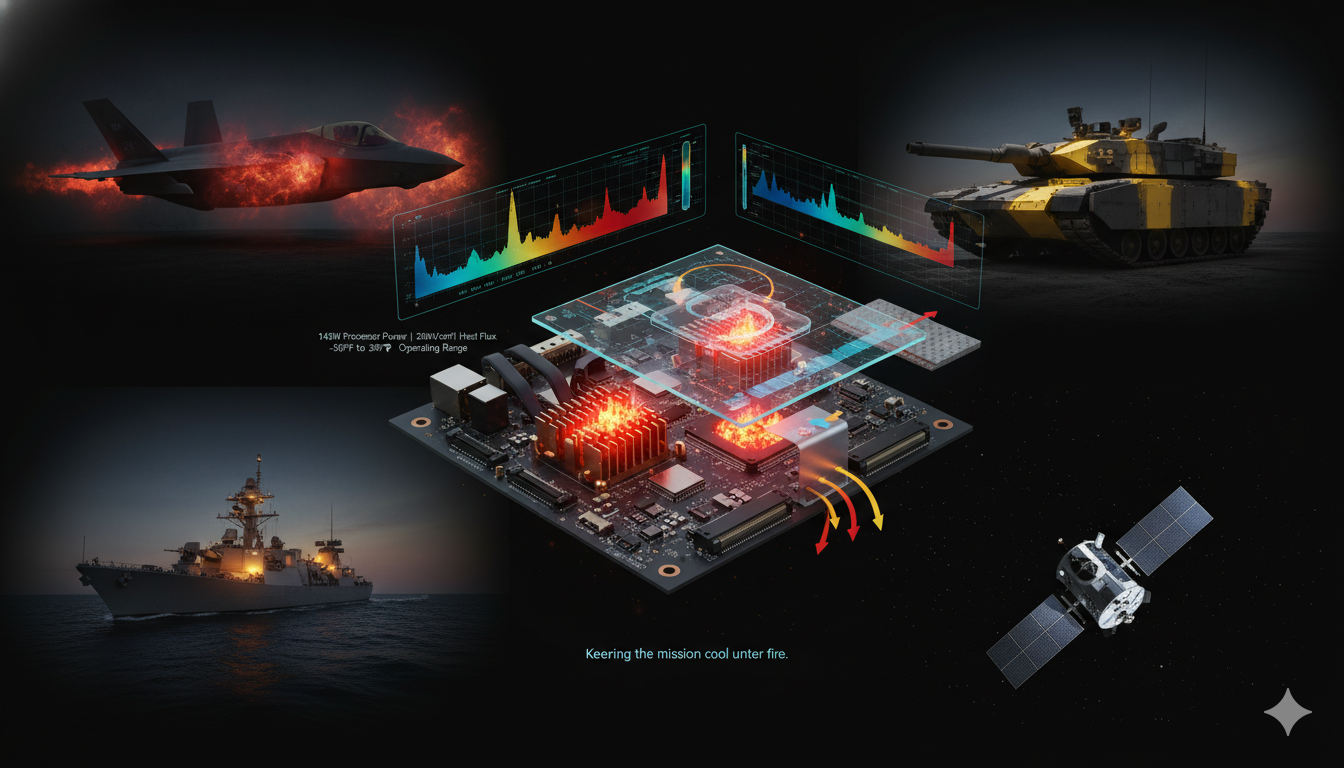
Beating the Heat: How Advanced Thermal Management Is Enabling Mission-Critical Systems Across Land, Sea, Air, and Space
Thermal management has quietly become one of the most decisive enablers of modern military power. As defense systems transition toward high-density electronics, artificial intelligence workloads, and high-energy weapons, heat is no longer a secondary engineering concern—it is a primary constraint on performance, survivability, and mission endurance. In platforms ranging from hypersonic glide vehicles and fifth-generation…
-

Rewriting the Code of Life: How Genomically Recoded Organisms Are Ushering in a New Era of Biotherapeutics
For more than three billion years, nearly every organism on Earth has used essentially the same genetic operating system. DNA stores information in four chemical letters, ribosomes read that information three bases at a time, and proteins are assembled from a standard alphabet of twenty natural amino acids. Modern biotechnology has become highly skilled at…
-
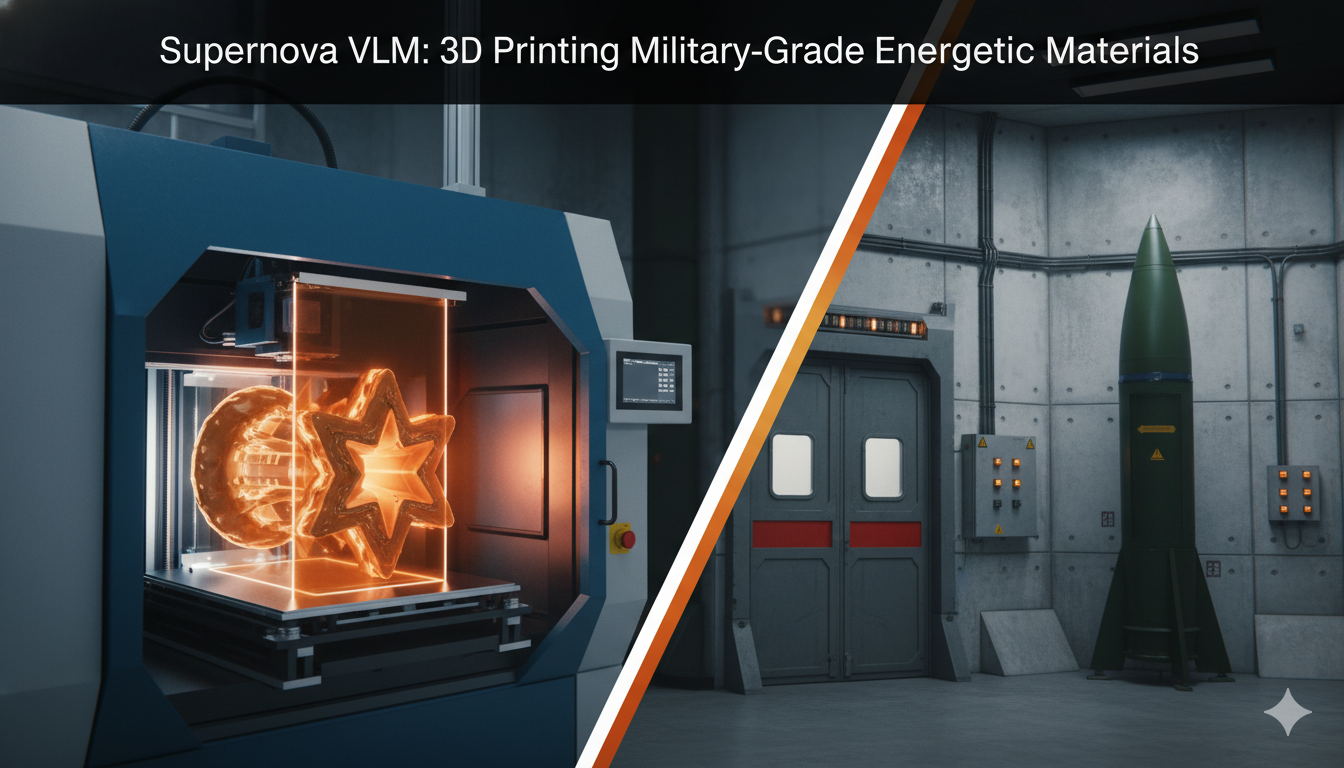
The Explosive Frontier: Additive Manufacturing and the Strategic Transformation of Energetic Materials
Reframing Energetics in the Era of Digital Manufacturing For decades, the production of propellants, explosives, and pyrotechnics has remained one of the least digitized segments of advanced manufacturing—constrained by legacy processes such as casting, pressing, and extrusion that date back to the mid-20th century. These methods impose severe geometric limitations, long production cycles, and significant…
-
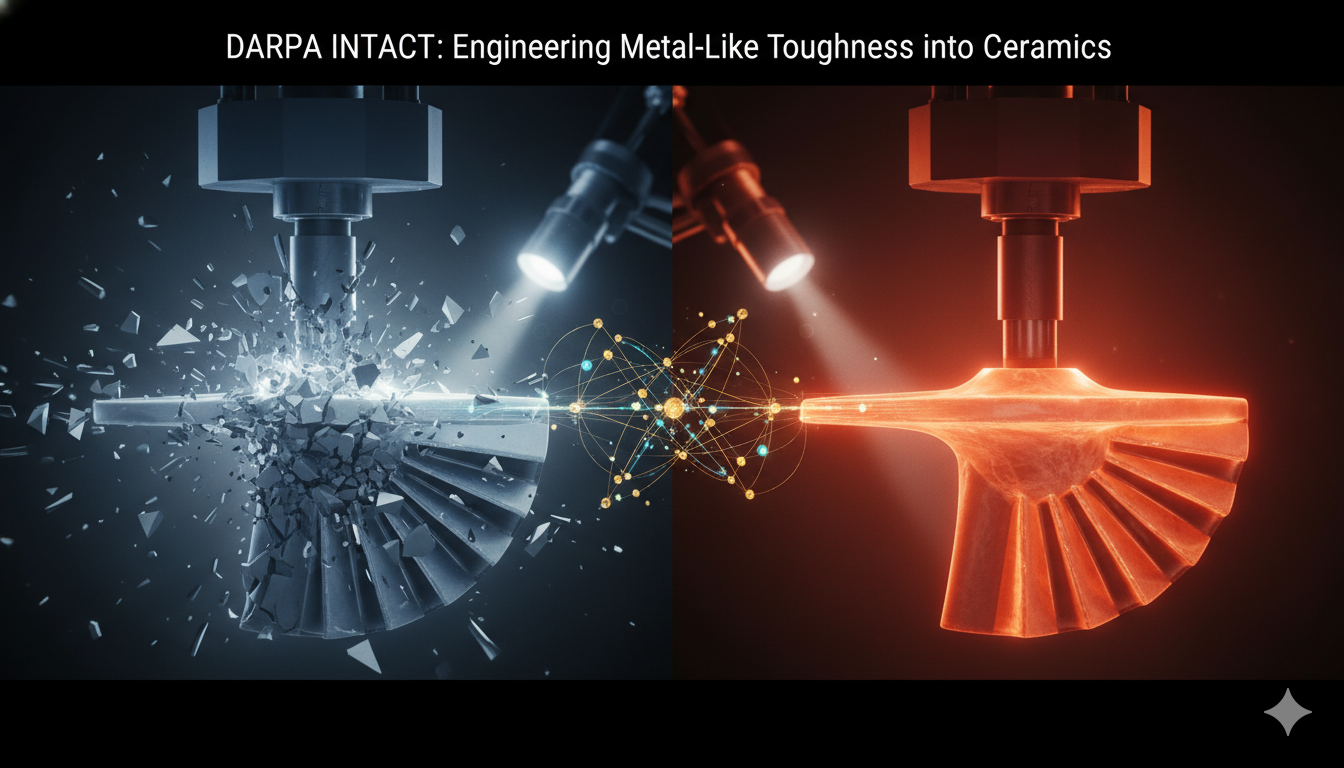
Breaking the Brittle Barrier: DARPA’s INTACT Program and the Strategic Race for Damage-Tolerant Ceramics
Reframing the Materials Challenge For more than half a century, advanced engineering has been constrained by a fundamental trade-off: metals deform but melt, ceramics endure heat but fracture. This dichotomy has shaped everything from turbine design to hypersonic vehicle architecture. While nickel-based superalloys and titanium composites have steadily improved, they are approaching thermodynamic and microstructural…
-
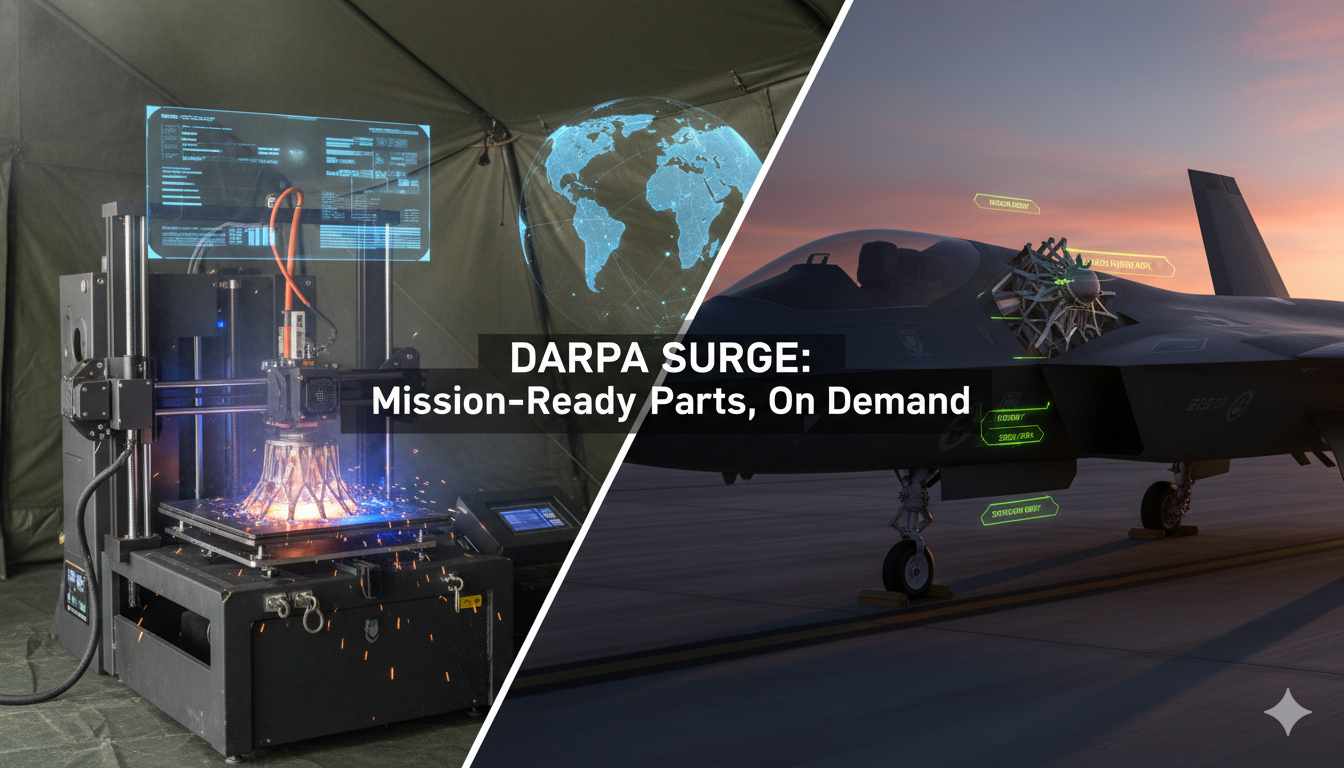
Mission-Ready on Demand: How DARPA’s SURGE Program Is Rewriting the Rules of 3D Printing Qualification
Additive manufacturing (AM), often referred to as 3D printing, has already transformed modern production by enabling the creation of complex, high-performance parts on demand. Yet despite major advances by organizations such as DARPA and NASA, the technology has remained constrained by a critical limitation: the inability to rapidly certify mission-critical components. While printers today can…
Related Domains & Cross-Cutting Themes
Materials, test & measurement, logistics, and industrial policy..
Industrial capacity and supply chains
Cyber-physical security
Climate, geography, and environmental stress
Human-machine coordination
System survivability under disruption
Explore the Critical & Emerging Technologies Magazine →
Explore the Industry, Markets & Supply Chains Magazine →
Explore the Space Technology, Defense & Exploration Magazine →