
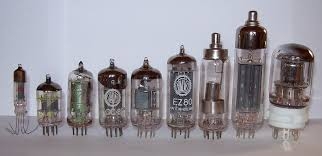

We now live in a Silicon Age; Solid-state electronics has replaced vacuum tubes in radios, computers and other electronic and radio frequency gadgetry. Still vacuum electronic devices, have not become extinct, the magnetron that made radar possible in the first half of the 20th century is still employed in microwave ovens to heats the food. According to DARPA, vacuum electron devices (VEDs) are critical components for defense and civilian systems that require high power, wide bandwidth, and high efficiency, and there are over 200,000 VEDs currently in service.
Researchers have made tremendous improvements in performance and reliability of VEDs in common use today like traveling wave tubes (TWTs), klystrons, crossed-field amplifiers, magnetrons, gyrotrons, and others. Space-qualified TWTs that are used for nearly all satellite communications are demonstrating in orbit mean time to failure (MTTF) of over ten million hours with power efficiencies greater than 70 percent. VED amplifiers also can exhibit wide operating bandwidths of over three octaves, and high output power levels up to thousands of watts from a single device. These characteristics make vacuum electronics the technology of choice for numerous military, civilian, and commercial radio frequency (RF) and microwave systems.
IDST Pro Access Required
This analysis is part of IDST premium intelligence.
Subscribe to Continue ReadingAlready a member? Log in