
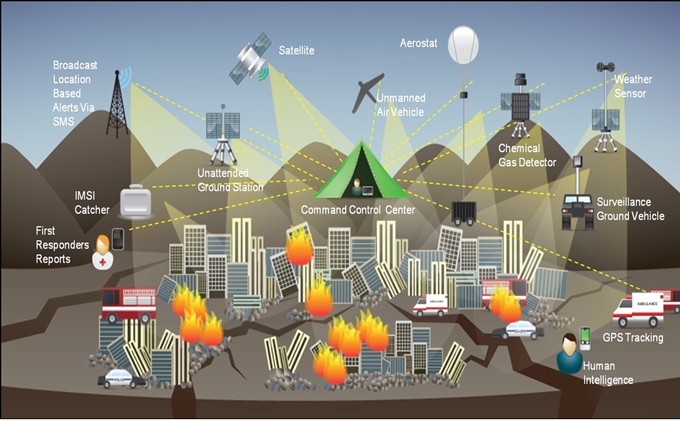

Today U.S. soldiers are being killed because the Defense Department cannot deploy all the sensors it would like to. DoD could deploy sensors every few yards to detect buried improvised explosive device (IED). As it is, every sensor deployed today has to be battery powered, so even if vast sensor nets were deployed it would put more soldiers in jeopardy by forcing them to expose themselves to ambush attacks while changing sensor batteries.
By 2018 the DARPA’s N-Zero initiative aims to have deployable sensor networks that require near-zero standby-power, a goal the team quickly found that was impossible without microelectromechanical systems (MEMS). In addition the teams discovered an extra benefit of MEMS — an advantage the team had never imaged possible. MEMS provides not just near-zero standby power, but can be configured for absolute zero standby power by using the power from the signal to be detected itself to power-up the transmitter. And in some situations, the transmitter too can be powered without a battery, by storing up energy on a super-capacitor from renewable sources — from solar to vibration harvesters.
IDST Pro Access Required
This analysis is part of IDST premium intelligence.
Subscribe to Continue ReadingAlready a member? Log in