
Modern military, economic, and technological power depends on the ability to generate, process, transmit, secure, and exploit information across interconnected systems. Communications networks and information infrastructure serve as the digital backbone linking sensors, platforms, decision-makers, and operators across land, sea, air, space, and cyberspace. Advances in telecommunications, satellite communications, optical networking, cloud and edge computing, 5G/6G, quantum communications, and resilient digital infrastructure are transforming global connectivity while creating new strategic opportunities and vulnerabilities. As geopolitical competition increasingly extends into the information domain, secure, trusted, and resilient communications architectures have become essential enablers of national security, economic competitiveness, multi-domain operations, artificial intelligence, autonomous systems, and digital sovereignty.
IDST Intelligence Briefings
Tactical communications, satellite networks, 5G/6G, secure data links, network resilience, and contested information environments..
Why This Magazine Exists
Communications systems are often invisible until they fail. This sub-magazine examines the networks and information infrastructures that enable modern military operations, economic activity, and digital societies, analyzing how they are built, secured, disrupted, and restored. Through technical and strategic insights, it explores the technologies shaping the future of global connectivity, resilience, and information superiority.
What We Track
- Military and civil communication architectures
- Satellite and space-based networking
- Cyber-physical vulnerabilities in networks
- Interoperability and coalition communications
- Resilience, redundancy, and denial strategies
Latest Analysis & Intelligence
-
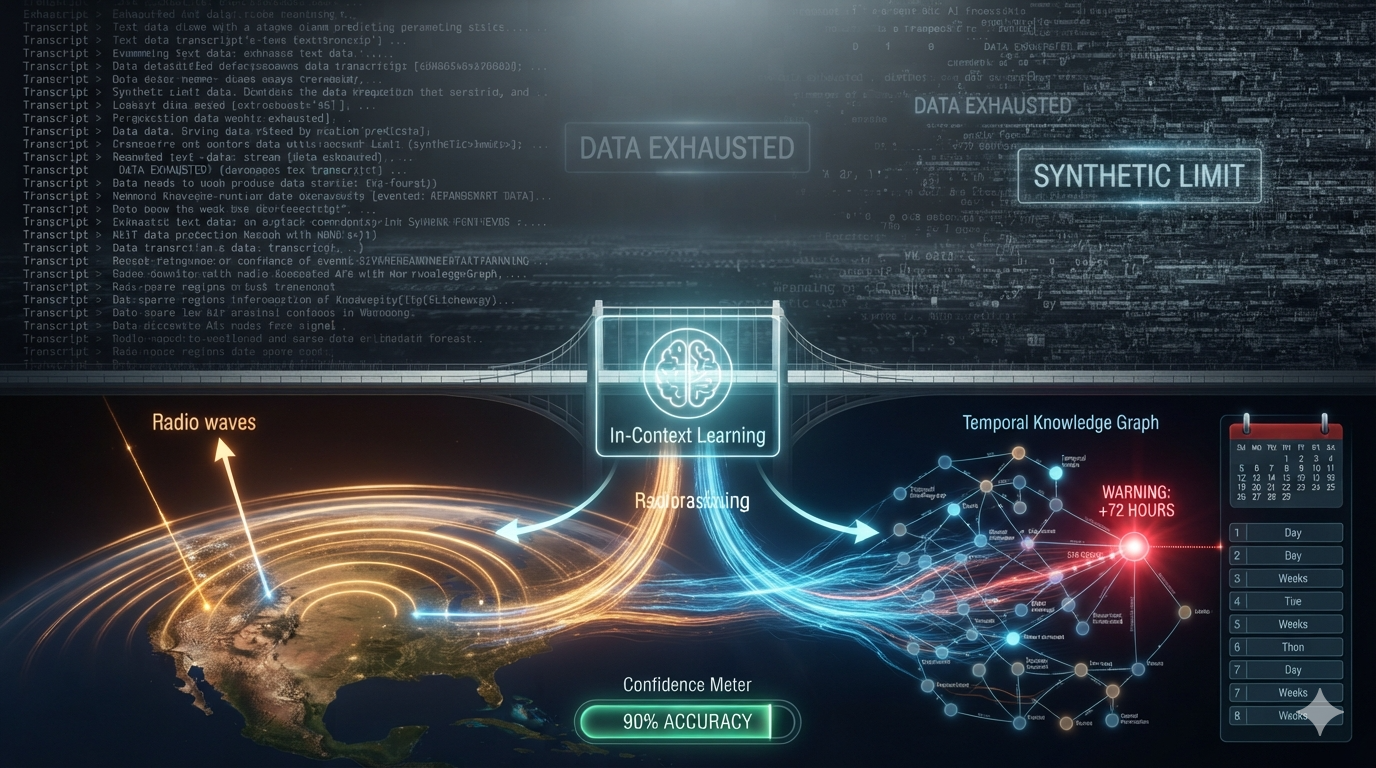
Beyond Open-Source Intelligence: How DARPA’s Novel Signals Initiative Could Transform AI-Powered Geopolitical Forecasting
Strategic Context: The Race for Predictive Intelligence Beyond the Data Wall For over a decade, artificial intelligence has transformed intelligence analysis by extracting patterns from vast repositories of news articles, satellite imagery, government reports, financial transactions, and social media. These advances have dramatically improved the speed of information processing, yet they have exposed a fundamental…
-
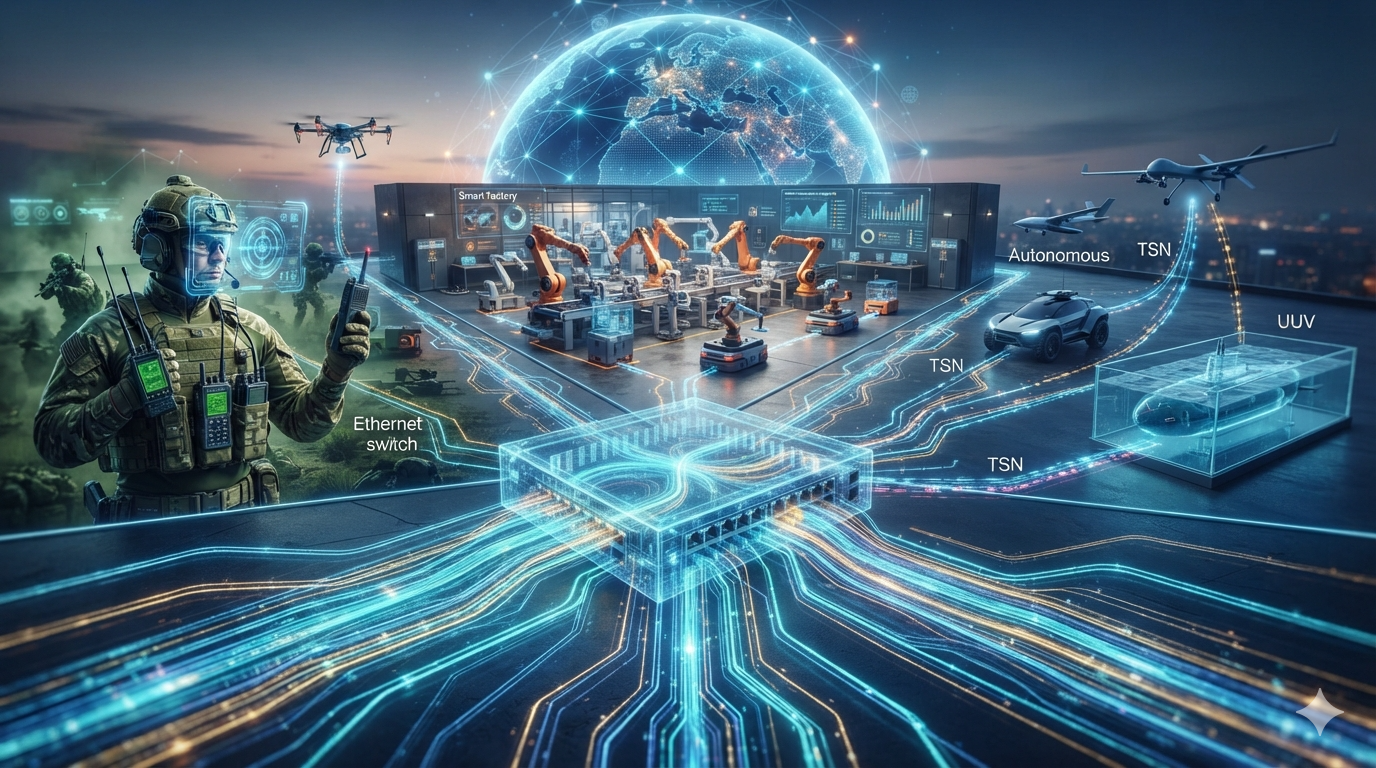
The Digital Backbone of Modern Warfare: How Next-Generation Ethernet is Transforming Defense, Industry, and Autonomous Systems
Strategic Context Control of information has become as decisive in modern conflict as control of territory. Across today’s multidomain battlespace, victory increasingly depends on the ability to collect, transport, process, and exploit enormous volumes of data with near-zero latency across land, sea, air, space, cyber, and electromagnetic domains. Whether coordinating autonomous drone swarms, integrating next-generation…
-
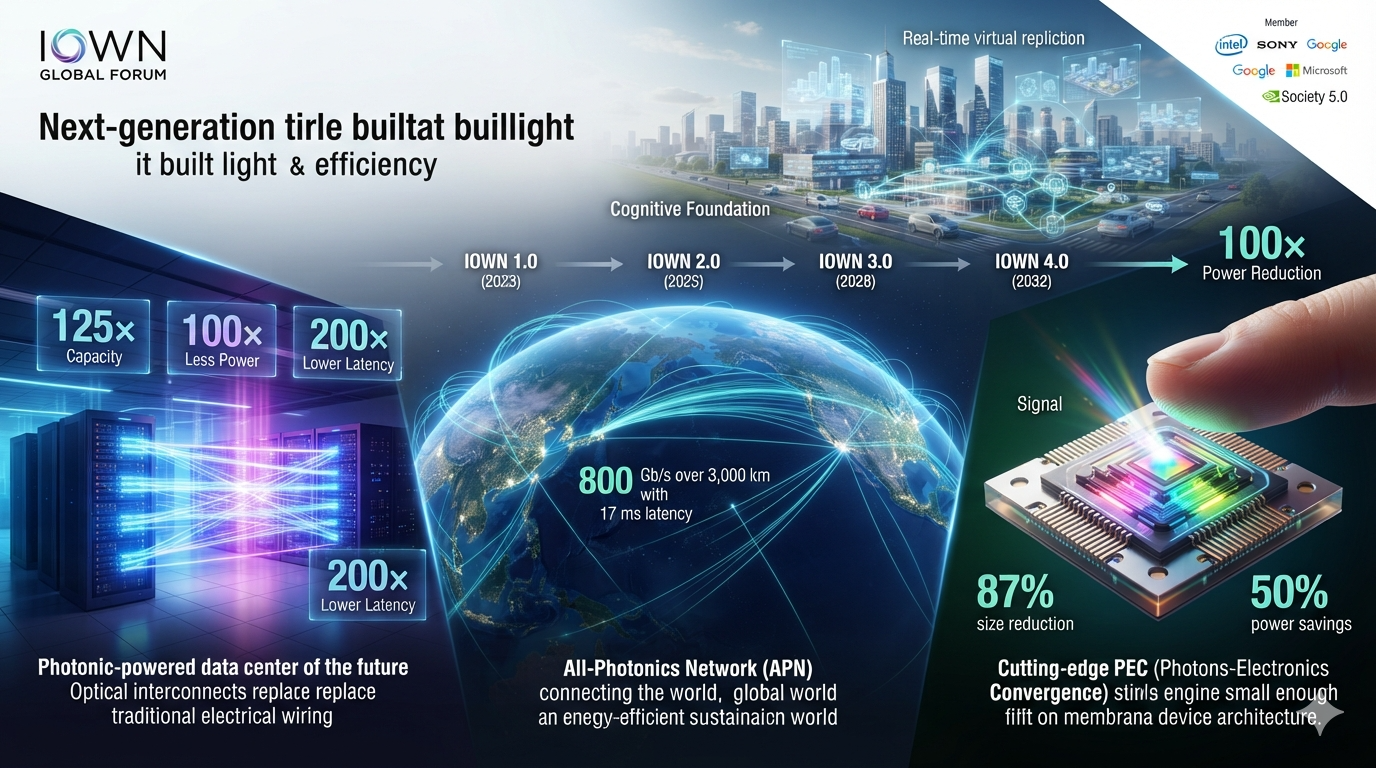
Building the Next Internet with Light: How IOWN is Transforming AI, Defense, and Sustainable Digital Infrastructure
Introduction: Strategic Context Artificial intelligence, hyperscale cloud computing, autonomous systems, and the explosion of data-intensive applications are fundamentally reshaping the world’s digital infrastructure. Every AI model trained, every autonomous vehicle deployed, every satellite constellation launched, and every digital twin constructed depends on communications networks capable of transporting enormous quantities of data with extremely low latency…
-
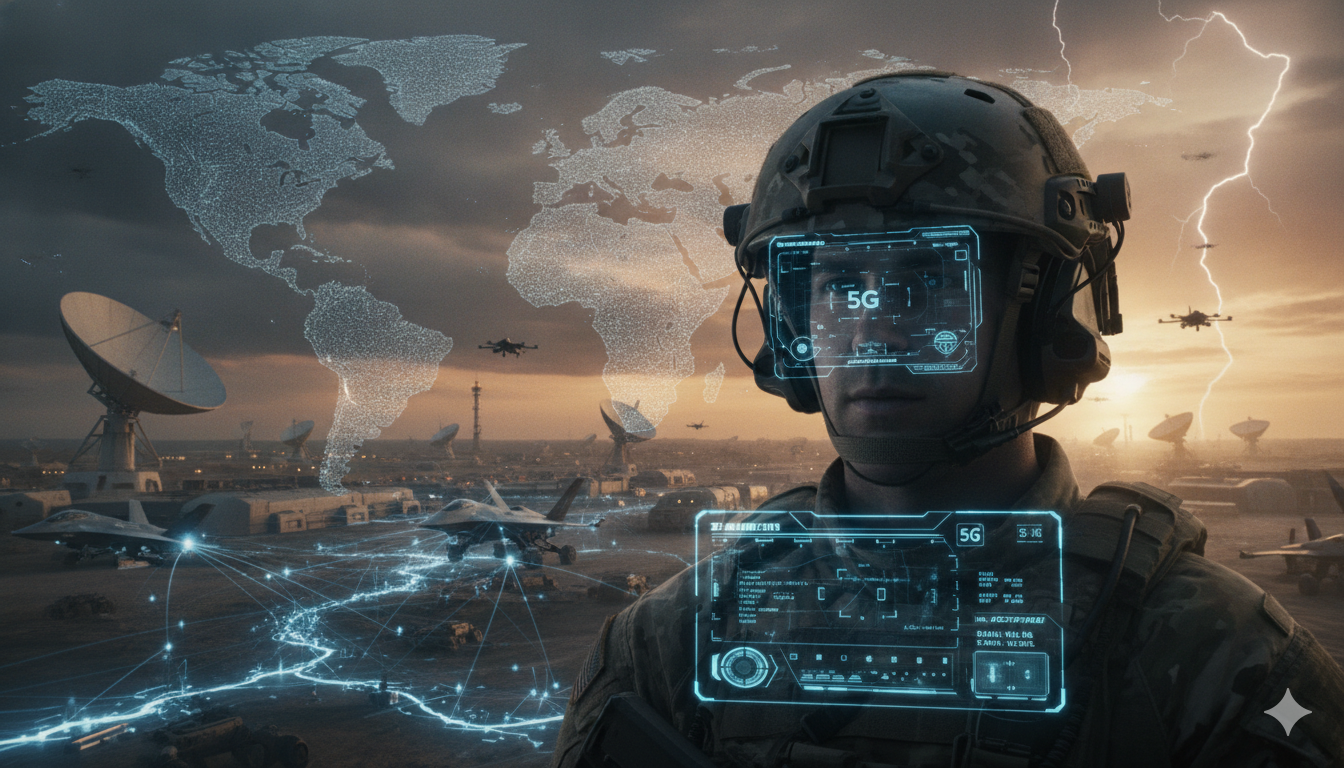
5G Dominance and the New Military Communications Arms Race: How 5G is Transforming Multi-Domain Warfare
Introduction: From Commercial Connectivity to Strategic Military Infrastructure The global race for 5G has evolved far beyond telecommunications competition and is increasingly viewed as a contest for military, economic, and technological advantage. Between 2024 and 2026, 5G transitioned from a commercial broadband technology into a foundational military capability supporting network-centric warfare, Joint All-Domain Command and…
-
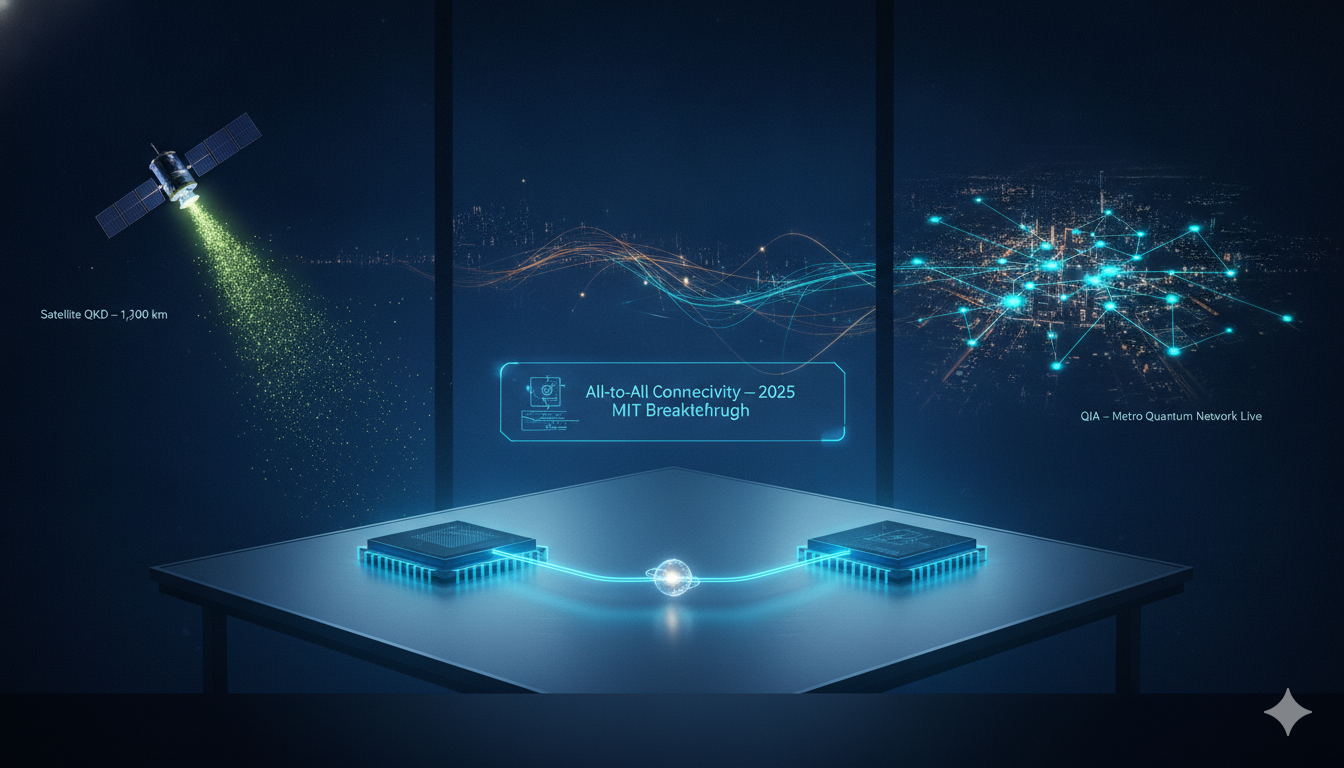
The Quantum Internet: Connecting Quantum Computers and Sensors for a New Era of Communication
Introduction: The Quantum Internet Becomes a Geopolitical Race The modern internet transformed civilization by allowing information to move instantly across the globe. Every financial transaction, military command, scientific collaboration, and social interaction depends upon networks that transmit classical bits represented as zeros and ones. For decades, advances in networking primarily focused on increasing bandwidth, reducing…
-

Optical Amplifiers and the Photonic Backbone of the AI Era (2026 Update)
From EDFAs to Chip-Scale Parametric Amplifiers, Quantum Photonics, and AI Data Center Networks IDST Internal Classification: Mid-Term (3–7 Years) | Strategic Impact | Technology & Capability Intelligence | Long-Term (8–15 Years) | Strategic Competition | Capability Intelligence | Operational Impact | Technology Watch | Near-Term (0–2 Years) | Threat Assessment Introduction: Optical Amplifiers Become Strategic…
-

Securing the Lifelines: Addressing Emerging Threats to Underwater Communication and Power Cables
Global Critical Infrastructure in an Era of Strategic Competition The twenty-first century economy is often described as operating “in the cloud,” creating the impression that digital information travels through an invisible and decentralized cyberspace. In reality, the global information economy rests upon one of the world’s largest and least visible pieces of physical infrastructure. More…
Related Domains & Cross-Cutting Themes
Cyber security, space systems, electronic warfare, command and control, and infrastructure protection.
Ethics, governance, and technology control
Industrial scaling and supply-chain constraints
Human–machine teaming and trust
Interoperability across platforms and institutions
Export controls and technological rivalry
Explore the Critical & Emerging Technologies Magazine →
Explore the Industry, Markets & Supply Chains Magazine →
Explore the Space Technology, Defense & Exploration Magazine →