Home / Critical & Emerging Technologies (page 250)

Critical & Emerging Technologies

DARPA developing software-reconfigurable Passive and Active (LIDAR) imaging sensors from ultraviolet (UV) through very long-wave infrared (VLWIR)
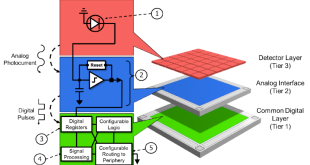

Digital cameras use a focal plane array (FPA) to convert light energy into electrical energy that can be processed and stored. The FPA is a two-dimensional (2-D) array of photodetectors (or pixels) fabricated on an electro-optical material. Modern digital cameras contain FPAs that have pixel counts on the order of …

Read More »

DARPA’s Communicating with Computers (CwC) developing technology to facilitate human-like communication between warfighters and their unamnned vehicles

The lifelong human imperative to communicate is so strong that people talk not only to other people but also to their pets, their plants and their computers. Straightforward as that may sound, communication involves several coordinated processes. The speaker puts ideas into words, the listener extracts ideas from words and, importantly, …

Read More »

US Army’s IT modernization strategy includes software-defined networking and “self-healing” networks

The Network enables the mission command warfighting function – allowing leaders to understand, visualize, describe, direct, lead and assess to accomplish Unified Land Operations. US Army vision is for “A network that is secure, integrated, standards-based, which ensures uninterrupted global access and enables collaboration and decisive action throughout all operational phases …

Read More »

DoD’s High Performance Computing Modernization Program to accelerate the development and acquisition of advanced military capabilites

Earlier in the year 2018,  Hewlett Packard Enterprise (HPE) announced that it had been awarded a large $57m contract from the US Department of Defense (DoD) to provide supercomputers. As supercomputing has become an ever bigger part of the toolset of the department’s scientists and engineers innovating around the most …

Read More »

Atomic clusters could lead to new materials from the bottom-up with unique and tailored properties.

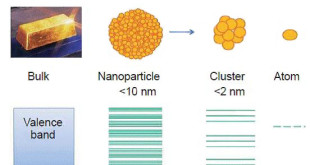
Atomic clusters, consisting of a few to a few thousand atoms, have emerged over the past 40 years as the ultimate nanoparticles, whose structure and properties can be controlled one atom at a time. More importantly, the possibility of creating a new class of materials, composed of clusters instead of …

Read More »

Next Generation AI and Robots can reproduce and Replicate themselves

Artificial intelligence expert George Zarkadakis believes robots could have sex with each other to evolve and produce superior offspring and this scary new world could be closer than we might imagine. He predicts that humans could even breed with machines to create new hybrid species. Mr Zarkadakis said robots that …

Read More »

China develops chip that allows for two-dimensional Quantum walks, have exponential superiority in quantum searching and quantum simulation applications

Quantum walks are the quantum version of classical random walks, which are a mathematical means for describing a natural random walk, e.g., simply wandering around randomly.   In a “classical random walk”, you could imagine someone starting at the centre of a city, and making a random decision at each …

Read More »

DARPA develops Testbed to test space warfare strategies integrated with air, cyber, land, and maritime domains

As the space domain has become more congested and militarized  the potential for intentional and unintentional threats to space system assets has increased. To mitigate these threats, the Department of Defense (DOD) has undertaken a variety of initiatives to enhance its network of sensors and systems to provide space situational awareness …

Read More »

DARPA’s APT to transform genetic modified plants into military sensors of chemical, biological, radiological, and electromagnetic signals.

DARPA has launched a new surveillance program which plans to use genetically engineered plant as battlefield surveillance sensors. DARPA’s new Advanced Plant Technologies (APT) program looks to seemingly simple plants as the next generation of intelligence gatherers. Traditional sensors are not always optimal for  obtaining timely, accurate information as national security …

Read More »

US and China to deploy quantum ghost imaging sensors on battlefield and satellites for stealth plane tracking

China is developing a new type of spy satellite using ghost imaging technology which could spot stealth aircraft and see through smokescreens and camouflage.   Ron Meyers, quantum physicist at the Army Research Laboratory. Meyers explained ghost imaging, a technique that allows a high resolution camera to produce an image …

Read More »
wpChatIcon
wpChatIcon