

Autonomous systems are increasingly critical to several current and future Department of Defense (DoD) mission needs. For example, the U.S. Army Robotics and Autonomous Systems (RAS) strategy report for 2015-2040 identifies a range of capability objectives, including enhanced situational awareness, cognitive workload reduction, force protection, cyber defense, logistics, etc, that rely on autonomous systems and higher levels of autonomy.
Achieving higher levels of autonomy in uncertain, unstructured, and dynamic environments, on the other hand, increasingly involves data-driven machine learning techniques with many open systems science and systems engineering challenges.
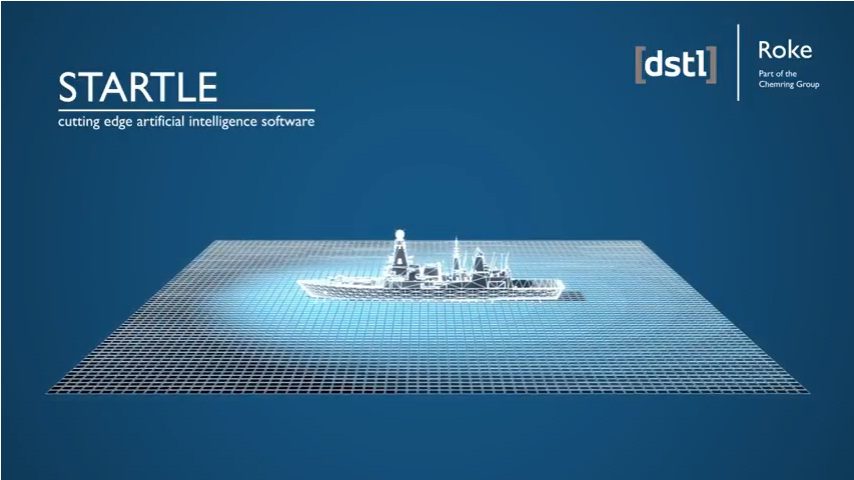
Navies are now planning to use Artificial Intelligence (AI) and Deep Machine Learning (DML) technologies to enhance situational awareness and battlespace decision making.
Britain’s Royal Navy is to use artificial intelligence situational awareness software to help humans assess threats in a maritime combat system demonstrator. British warships are to employ a voice-controlled system along the lines of Apple’s Siri assistant, the first sea lord, said Adm Sir Philip Jones.
Jones said the Royal Navy was witnessing the rapid speed at which warfare is being transformed by IT and had to move to embrace it. He cited the new Type-31 frigates, scheduled for deployment in 2023, as an example, with IT being integrated into their weapons systems as well as the running of the ship and offshore logistics.
“What this means in practice is that the Type 31e will feature different app-based tools which can access the ship’s data. These will be operated from a series of touchscreen displays, Siri-style voice-controlled assistants and perhaps even augmented reality technology,” Jones said on Tuesday. “This is not a gimmick or a fad. As modern warfare becomes ever faster, and ever more data driven, our greatest asset will be the ability to cut through the deluge of information to think and act decisively.”
While most people tend to ask voice assistant Siri questions such as “What’s the weather going to be like today?”, the navy may have more ambitious questions such as “Who fired that missile?” – but Jones did not elaborate.
The US Marine Corps seeks to leverage advanced artificial intelligence (AI) technologies to reduce information overload, improve situational awareness (SA) and collaboration, and aid in Commander Decision-making. It has issued a request with the objective to develop an artificial intelligence (AI)-based Command and Control (C2) digital assistant that uses advanced computing techniques such as machine learning and natural language processing to provide answers to complex mission-specific questions to enhance battlespace decision making.