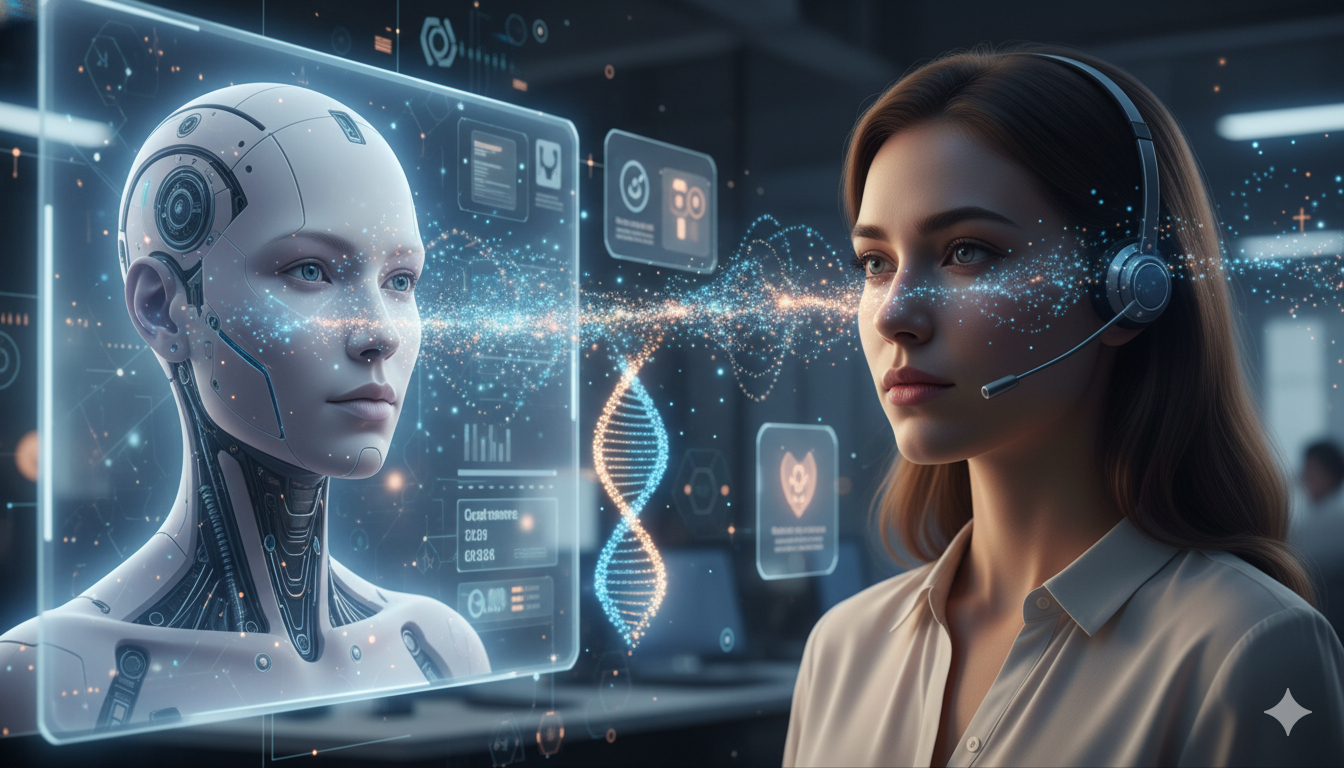
Beyond the Words: How Emotion AI is Humanizing Customer Service

In 2023, call center provider Cogito rolled out an Emotion AI platform to several Fortune 500 companies. The system monitored live customer conversations, detecting vocal stress, hesitation, and frustration in real time. Instead of replacing human agents, it acted as a coach, prompting them to slow down, listen more, or offer reassurance at the right moment. Within months, companies reported measurable improvements in customer satisfaction scores, reduced average handling times, and a significant drop in customer churn.

This story is just one of many that illustrates the growing power of Emotion AI. In the digital marketplace, where screens replace handshakes and text replaces tone of voice, building genuine customer connections has become the ultimate challenge. For years, businesses have relied on chatbots and automated systems to provide efficiency. But too often, these interactions feel sterile, frustrating, and devoid of the human understanding that builds loyalty.

As we look into the future of e-commerce, one emerging trend is poised to bridge this emotional gap: the rise of Emotion AI (also known as Affective Computing). This isn’t just another tech buzzword; it represents a fundamental shift from transactional support to empathetic engagement, and it is set to redefine the customer experience.

What is Emotion AI, Really?

At its core, Emotion AI is the capability of artificial intelligence to analyze, understand, and respond to human emotions. It goes far beyond keyword recognition. By analyzing textual cues, vocal tone in voice interactions, and even facial expressions during video calls, Emotion AI can detect nuances like frustration, confusion, excitement, or hesitation.

This means that when integrated into customer service, an Emotion AI-powered assistant can understand not just what a customer is saying, but how they feel about it. It can tell the difference between a calm inquiry and a frustrated demand, adjusting its responses with empathy and precision. Companies such as Microsoft and Amazon have already begun embedding these capabilities into their cloud-based customer service platforms, enabling businesses to deliver more natural, responsive digital interactions.

The Technology Behind Emotion AI

Emotion AI operates at the intersection of artificial intelligence, psychology, and human-computer interaction. The technology is powered by several interlocking components:

Machine learning algorithms form the foundation, training on massive datasets of annotated emotional expressions. These models learn to associate specific linguistic patterns, speech features, or facial movements with corresponding emotions.

Natural language processing (NLP) enables text-based systems to detect sentiment, urgency, and emotional context within customer messages. Subtle markers such as word choice, punctuation, and sentence structure provide clues about the customer’s mood.

Speech analysis comes into play during voice interactions. Emotion AI can evaluate pitch, volume, rhythm, and stress patterns to identify states like anger, excitement, or calmness, even if the words themselves sound neutral.

Computer vision expands these capabilities into the visual realm, particularly in video calls. Facial recognition systems track microexpressions, gaze direction, and body language to capture emotions that customers may not even articulate.

Finally, multimodal integration fuses all these inputs—text, voice, and visual—into a unified emotional profile. This holistic analysis ensures higher accuracy and allows the system to respond more naturally and empathetically in real time.

Together, these technologies enable Emotion AI not only to decode how customers feel, but also to adapt responses dynamically, striking a balance between efficiency and empathy.

Why Emotional Intelligence is the New Competitive Edge

In an increasingly crowded e-commerce landscape, product and price alone are no longer enough to win loyalty. Customers have endless choices, and what often drives trust and repeat business is emotional engagement.

If you had to choose between several unknown service providers, you’d likely gravitate toward the one that feels most attentive and genuinely supportive. Emotion AI enables automated systems to replicate that human-like empathy at scale, ensuring every customer feels heard and valued from the very first interaction.

Global brands are already experimenting with this. For example, H&M has piloted Emotion AI tools in its virtual assistants to better detect customer frustration and offer proactive support. In the automotive industry, BMW has explored in-car Emotion AI that monitors driver stress levels and adjusts cabin settings like lighting and music to create a calmer environment. These early use cases show how emotional intelligence is becoming a competitive differentiator across industries.

From Anxious Shopper to Confident Advocate: The Emotion AI Journey

The power of Emotion AI is most evident when it transforms uncertainty into confidence. It can act as a wise consultant, guiding customers through decisions with patience and care. Unlike human agents who may be under pressure to meet sales quotas, Emotion AI prioritizes satisfaction, scanning vast inventories to match products precisely with customer needs and emotional states.

It also alleviates purchase anxiety. Online shoppers often hesitate with questions like, “Is this the right size?” or “Am I getting the best deal?” Emotion AI can pick up on hesitation and proactively provide reassurance, detailed product insights, or even offer to transfer the customer to a live agent before frustration sets in.

Perhaps most importantly, it builds trust. When customers feel genuinely understood, they perceive a brand as credible and empathetic. For instance, Cogito’s real-time conversation monitoring helps human agents fine-tune their delivery, while ensuring that the customer walks away feeling valued. This not only strengthens loyalty but also turns satisfied customers into advocates who willingly promote the brand to others.

The Future is Empathetic

The integration of Emotion AI is more than an upgrade—it is a transformation. It turns customer service from a cost center into a core strategic asset, creating deeper emotional resonance with customers. By ensuring every digital interaction is infused with empathy, patience, and understanding, businesses can finally deliver the best of both worlds: the scalability and efficiency of AI with the warmth of human service. The result is happier customers, stronger loyalty, and a brand that doesn’t just sell products—it builds relationships.

Beyond Today: The Road Ahead for Emotion AI

The story of Emotion AI is only just beginning. As multimodal AI systems mature, the ability to process and integrate text, voice, gesture, and facial recognition in real time will give Emotion AI even greater sensitivity and accuracy. Imagine a customer support agent that not only detects frustration in a caller’s voice but also recognizes hesitation in their facial expressions during a video call, instantly adapting its tone and response.

The retail and service landscapes are also expanding into immersive environments. In the metaverse and augmented reality shopping spaces, Emotion AI could become the foundation of empathetic digital interactions. A virtual assistant might sense when a shopper is overwhelmed by too many choices, gently guiding them toward a decision while maintaining trust and comfort.

As adoption grows, Emotion AI will evolve into an invisible emotional layer woven through every customer touchpoint. It will anticipate needs, reduce friction, and make digital interactions feel profoundly personal. Businesses that embrace this early will not just gain efficiency—they will cultivate loyalty and emotional bonds that competitors will struggle to replicate.

In the end, Emotion AI represents more than the automation of empathy. It is the humanization of technology. And as the lines between digital and physical experiences continue to blur, the brands that thrive will be those that remember a timeless truth: emotions drive decisions, and technology that understands emotions will define the future of customer connection.

The Ethics of Emotional Intelligence in AI

Yet as with all powerful technologies, the rise of Emotion AI raises important ethical questions. The ability to analyze emotions from voice, text, or facial data requires collecting highly sensitive personal information. Without strict safeguards, this could lead to invasive profiling, misuse of private data, or emotional manipulation. For example, an AI that knows a customer feels anxious could exploit that vulnerability by nudging them toward unnecessary purchases.

Bias is another concern. Emotion recognition systems are only as fair as the data they are trained on. If trained primarily on certain demographics, they risk misinterpreting the emotions of others, leading to discriminatory outcomes. A sigh of relief in one culture could be misread as frustration in another, undermining trust rather than building it.

Transparency and consent will therefore be crucial. Customers should always know when their emotional data is being analyzed and have the ability to opt out. Businesses that use Emotion AI responsibly—focusing on empowerment, respect, and trust—will be the ones that truly benefit from its promise.

In short, Emotion AI offers immense potential to transform customer service, but it must be guided by strong ethical principles. Only then can it fulfill its promise of making technology more human without crossing the line into manipulation or exploitation.