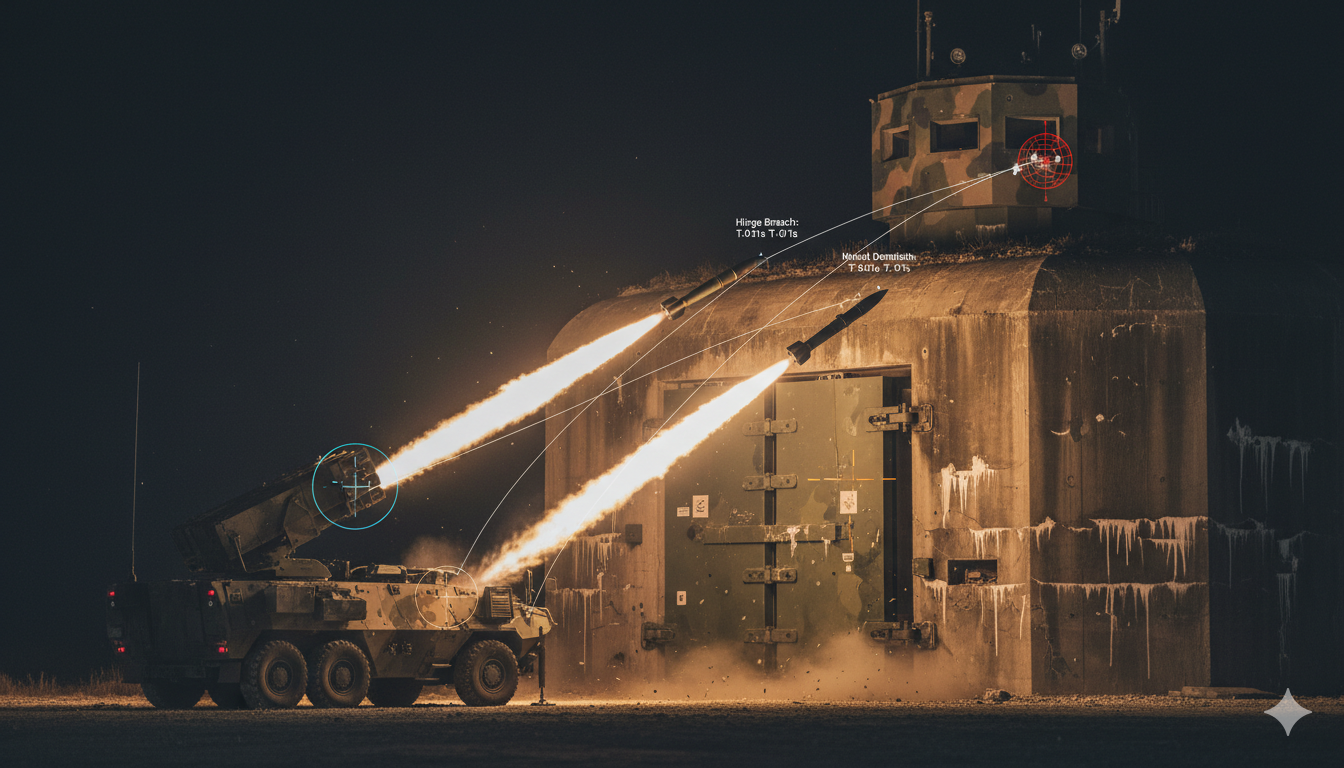
Beyond the Blast Radius: The Multi-Target Launcher Revolutionizes Breaching and Demolition

In the high-stakes world of military breaching and demolition, distance equals safety, precision ensures success, and control determines survivability. For decades, combat engineers and special operations personnel tasked with destroying enemy caches, breaching fortified positions, or neutralizing improvised explosive devices relied on technology that, while reliable, came with severe limitations in flexibility and safety. Today, however, a new generation of portable detonation systems is redefining the battlefield. By moving from crude analog devices to microprocessor-driven platforms, militaries around the world are gaining unprecedented control over explosive effects.

India, the United States, NATO allies, and even smaller nations with advanced defense technology programs are embracing this revolution. What was once a risky, close-proximity task has now become a highly controlled operation executed from several kilometers away with surgical precision.

From Analog to Digital: Moving Beyond the WEDC

In the analog era of military demolition, blasting machines were built for rugged reliability but offered little in the way of flexibility or safety. Across the Cold War landscape, the U.S. Army, NATO allies, and the Soviet bloc all relied on devices that required operators to be within dangerously close range of their charges. These tools were dependable in function but crude in design, allowing only simultaneous detonation with no option for sequencing or selectivity. Every operation forced combat engineers into high-risk zones, where even a few extra seconds near explosives could prove fatal. India’s adoption of the Exploder Dynamo Capacitor (WEDC) reflected this same global standard, emphasizing durability and simplicity but falling short in terms of operator safety and tactical control.

It required operators to manually generate electrical charge by pumping a handle—a method that was functional but limiting. The biggest drawback was its short range, typically around 400 meters, forcing demolition teams dangerously close to the blast radius and vulnerable to debris, secondary explosions, or even direct enemy fire. Furthermore, its design allowed only one option: the simultaneous detonation of all connected charges, leaving no room for selective or sequenced operations.

The introduction of microprocessor-driven detonators represents a generational leap. They replace brute-force simplicity with digital intelligence, enabling safe standoff, greater precision, and vastly expanded tactical options.

The Rise of the Multi-Target Detonation Device

The shift from analog blasting machines to digital detonation systems represents a true generational leap in combat engineering. Modern devices now extend safe operating distances from just a few hundred meters to several kilometers, effectively removing operators from the immediate dangers of the blast radius and enemy fire. Equally important, they introduce digital interfaces that allow charges to be fired simultaneously, selectively, or in precisely sequenced patterns measured in microseconds—capabilities that were unimaginable in the analog age.

The United States has invested heavily in this transformation, with the Army and Marine Corps fielding systems such as the M152 Multi-Option Firing Device and newer Remote Firing Systems, which combine encrypted wireless control, built-in diagnostics, and networked blasting capabilities. These tools are designed not only for demolition but also for counter-IED missions, where sequencing and remote reliability are mission-critical.

Across Europe, NATO partners including Germany, the United Kingdom, and France have embraced digital demolition systems that emphasize interoperability and modularity, ensuring that allied forces can integrate seamlessly during joint operations. Israel, drawing on decades of experience in dense urban combat, has pioneered compact, high-precision devices tailored for rapid breaching, hostage rescue, and tunnel neutralization. In Asia, India’s Portable Multi-Target Detonation Device exemplifies this new generation by extending operator reach from 400 meters to 2.5 kilometers and introducing advanced digital control for simultaneous, selective, or sequenced detonations.

Taken together, these innovations reflect a clear global trend: militaries are no longer willing to accept “good enough” solutions when safety and precision are at stake. The future of demolition lies in intelligent, adaptable, and secure digital detonation systems that give warfighters unmatched control over the battlefield.

Expanding Tactical Capabilities

The real revolution lies not only in range but in the flexibility of effects. The new generation of devices allows multiple modes of operation. Operators can trigger all charges simultaneously, delivering overwhelming shock against bunkers, bridges, or supply depots. They can also program detonations in a carefully timed sequence, enabling complex breaching maneuvers such as blasting successive doors during a hostage rescue or coordinating multiple charges to collapse a structure in stages. Selective detonation adds another layer of control, allowing one target to be neutralized while preserving another for intelligence exploitation.

For example, U.S. Special Forces often rely on sequential charges when entering fortified compounds, ensuring maximum shock and surprise. Indian counter-terrorism units can now destroy a booby-trapped hideout while leaving nearby structures untouched, reducing collateral damage in urban environments. European forces in peacekeeping or stabilization missions gain the ability to neutralize a single threat while minimizing civilian disruption. These capabilities extend far beyond traditional demolition—they reshape the tactical playbook.

For commanders, this means greater tactical freedom. For operators, it means enhanced survivability. For militaries, it signals a shift toward smarter, digitally enabled warfare. What began as India’s replacement for the analog WEDC is now part of a broader global evolution, as forces from the United States, NATO, Israel, and beyond adopt similar technologies to strengthen their capabilities.

Mission Profiles Across Different Militaries

The adaptability of these modern systems ensures their value across diverse operational contexts.

In counter-terrorism and urban operations, India’s Multi-Target Launcher allows teams to destroy improvised explosive device factories and hidden weapon caches from a safe distance, minimizing risk to nearby civilians. Israeli forces employ similar digital systems to breach successive doors during hostage rescues or eliminate militant stockpiles in crowded neighborhoods, where precision and control are paramount.

In conventional warfare, long-range digital initiators have become integral for U.S. and NATO forces. Devices like the IRFD and DFS enable engineers to demolish bunkers, defensive obstacles, and supply depots without exposing themselves to enemy fire. India’s adoption of similar systems ensures its forces can match these standards in cross-border and high-intensity conflicts.

Special operations forces across multiple nations also rely heavily on these tools. Long-range, programmable detonation allows small teams to infiltrate, emplace charges on high-value targets, and exfiltrate before triggering demolition. Whether it is U.S. Special Forces neutralizing enemy command posts, the UK’s SAS collapsing tunnel networks, or India’s Para SF destroying fortified hideouts, the capability to control explosive effects remotely and precisely is a common thread.

Comparative Snapshot: Key Systems in Service

Country System Range Channels / Control Safety Features Key Use Cases
India Portable Multi-Target Detonation Device 2.5 km Multi-target, simultaneous, sequenced, selective Encrypted signals, diagnostics, failsafes Breaching, cache destruction, tunnel demolition
United States M152 Improved Remote Firing Device (IRFD) Up to 4 km Up to 5 independent channels Encrypted digital control, system status check Multi-charge battlefield demolitions, bunker neutralization
United Kingdom Demolition Firing System (DFS) 2–3 km Multi-circuit digital control Secure initiation, built-in redundancy Obstacle clearance, precision breaching
Israel Compact Digital Initiation Kits 1–2 km (urban-optimized) Selective engagement, rapid setup Encrypted remote initiation, compact design Urban counter-terrorism, selective demolition


The Global Impact: Safer, Smarter, and More Lethal

The spread of microprocessor-driven detonation devices marks a fundamental shift in how militaries worldwide approach the use of explosives. By expanding standoff distances, improving safety protocols, and enabling flexible detonation strategies, these systems transform controlled explosions from brute-force acts into instruments of precision warfare.

For commanders, this means greater tactical freedom. For operators, it means enhanced survivability. For militaries, it signals a shift toward smarter, digitally enabled warfare. What began as India’s replacement for the analog WEDC is now part of a broader global evolution, as forces from the United States, NATO, Israel, and beyond adopt similar technologies to strengthen their capabilities.

The bottom line is clear: modern warfighters are becoming not only more lethal but also significantly safer. These devices represent the future of breaching and demolition—a future where intelligent control replaces dangerous proximity, and precision replaces risk-laden simplicity.

Looking Ahead: The Future of Digital Demolition

The next evolution of these systems is already visible. Future devices are expected to integrate artificial intelligence, enabling real-time adjustment of detonation sequences based on battlefield conditions. Artificial intelligence could optimize the order of charges to maximize structural collapse while minimizing collateral damage, or cancel detonation altogether if civilians unexpectedly enter the blast zone.

Networked firing systems will also expand capability, allowing multiple teams across a wide battlespace to coordinate simultaneous or cascading demolitions. Instead of operating as isolated devices, detonation systems will become nodes in a larger, integrated combat network.

Finally, the rise of unmanned deployment platforms promises to extend safety even further. Robots and drones may be tasked with placing charges inside dangerous environments, while human operators remain kilometers away. Once combined with AI and secure networking, this approach could transform breaching and demolition from a high-risk manual task into a fully remote, autonomous operation.

Conclusion: A Global Shift Toward Intelligent Demolition

The emergence of portable, multi-target detonation systems is not the achievement of a single nation but the hallmark of a worldwide transformation in how militaries approach breaching and demolition. From the United States to Europe, from Israel to India, engineers are moving beyond brute-force analog tools and embracing digital precision, intelligent sequencing, and long-range control.

The convergence is clear: modern forces now prioritize extended standoff distances that keep operators well outside danger zones, programmable flexibility that adapts to diverse mission profiles, and built-in safeguards that reduce the risk of accidental or hostile initiation. These advancements are reshaping the role of combat engineers, transforming them from operators tied to risky proximity into controllers of precision effects delivered from secure distances.

As digital technology continues to advance, the battlefield of the future will not be defined by how close soldiers must get to danger, but by how effectively they can project control from afar. In this new era, demolition becomes not just a means of destruction but a finely tuned instrument of strategy—safer, smarter, and far more decisive.